We went on a 9 days roadtrip from Pune to Madhya Pradesh. The table below shows the itenary of our road trip:
| Before lunch | After lunch | |
| Day 01: Journey from Pune to Burhanpur | Pune to Ajanta | Ajanta to Burhanpur |
| Day 02: Burhanpur | Black Taj, Paandan Mahal, Shahi Qila, Raj ghat, Akbari Saray. | Ahukhana, Raja Jaisingh ki Chhatri, Barah Dari, Mahal Gul Aarah. |
| Day 3: Burhanpur & Asirgarh | Kundi Bhandara, Dargah-e-Hakimi, Gurudwara Badi Sangat, Tomb of Shah Shuja, Tomb of Nadir Shah, | Asireshwar Temple, Moti Mahal, Old Idgah. Journey to Omkareshwar. |
| Day 04: Omkareshwar | Narmada Parikrama, Mamleshwar Temple, Shankaracharya Statue, Omkareshwar Jyotirlinga Temple, Mandhata Palace, Shree Siddhanath Temple, Gouri Somnath Temple, Kashi Vishwanath Mandir. | Rest at the resort. |
| Day 05: Indore | Journey from Omkareshwar to Indore. | Annapurna Mandir, Lalbag palace, Harorao Holkar Chhatri at Gangour ghat, Chhatribag, Rajwada palace, Chhappan Dukaan. |
| Day 06: Indore & Mandu | Gandhi Hall, Boliya Sarkar ki Chhatri, Krishnapura Chhatri. Journey from Indore to Mandu | Baz Bahadur’s Palace, Rani Roopmati Palace, Rewa Kund, Jamnya Mahal, Caravan Sarai. |
| Day 07: Mandu (Part 1) Day 07: Mandu (Part 2) | Ujala Baodi, Gada Shah’s Shop, Hoshang Shah Tomb, Jami Mosque, Ashrafi Mahal, Jahaz Mahal, Malik Mughith’s Tomb, Carvan Sarai, Malik Mughith’s Tomb, Dai Ki Chhoti Behnen Ka Mahal, Dai Ka Mahal, Hathi Mahal. | Journey from Mandu to Maheshwar. Evening Arati at Kashi Vishweshwar Temple in Maheshwar. |
| Day 08: Maheshwar | Rajwada, Ahilya Devi Fort, Maheshwar ghat, Shri Raj Rajeshwar Temple | Journey from Maheshwar to Malegaon. |
| Day 09: Kokamthan | Kokamthan Shiva temple | Return journey from Malegaon to Pune. |
Day 01: Pune to Burhanpur
Our adventure began at the crack of dawn as we set off from Pune at 5:00 AM, eager to explore the historical marvels of Burhanpur. The road trip was smooth, with the early morning breeze making the drive even more enjoyable.
By 8:00 AM, we stopped for breakfast at Kanhaiyya Pure Veg in Ahilyanagar. The warm hospitality and delicious breakfast energized us for the journey ahead. We continued on our way, passing through scenic landscapes and lush greenery.
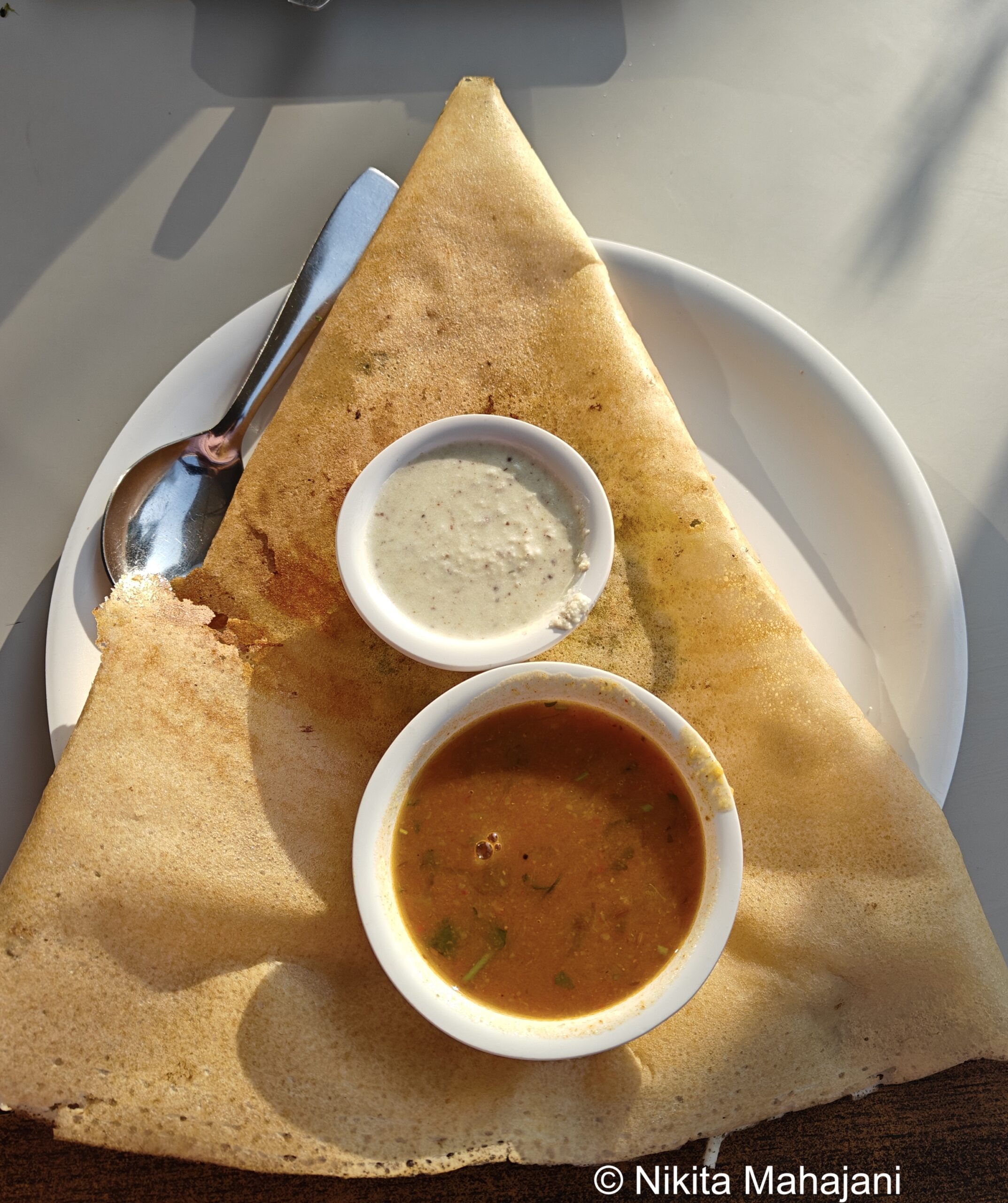
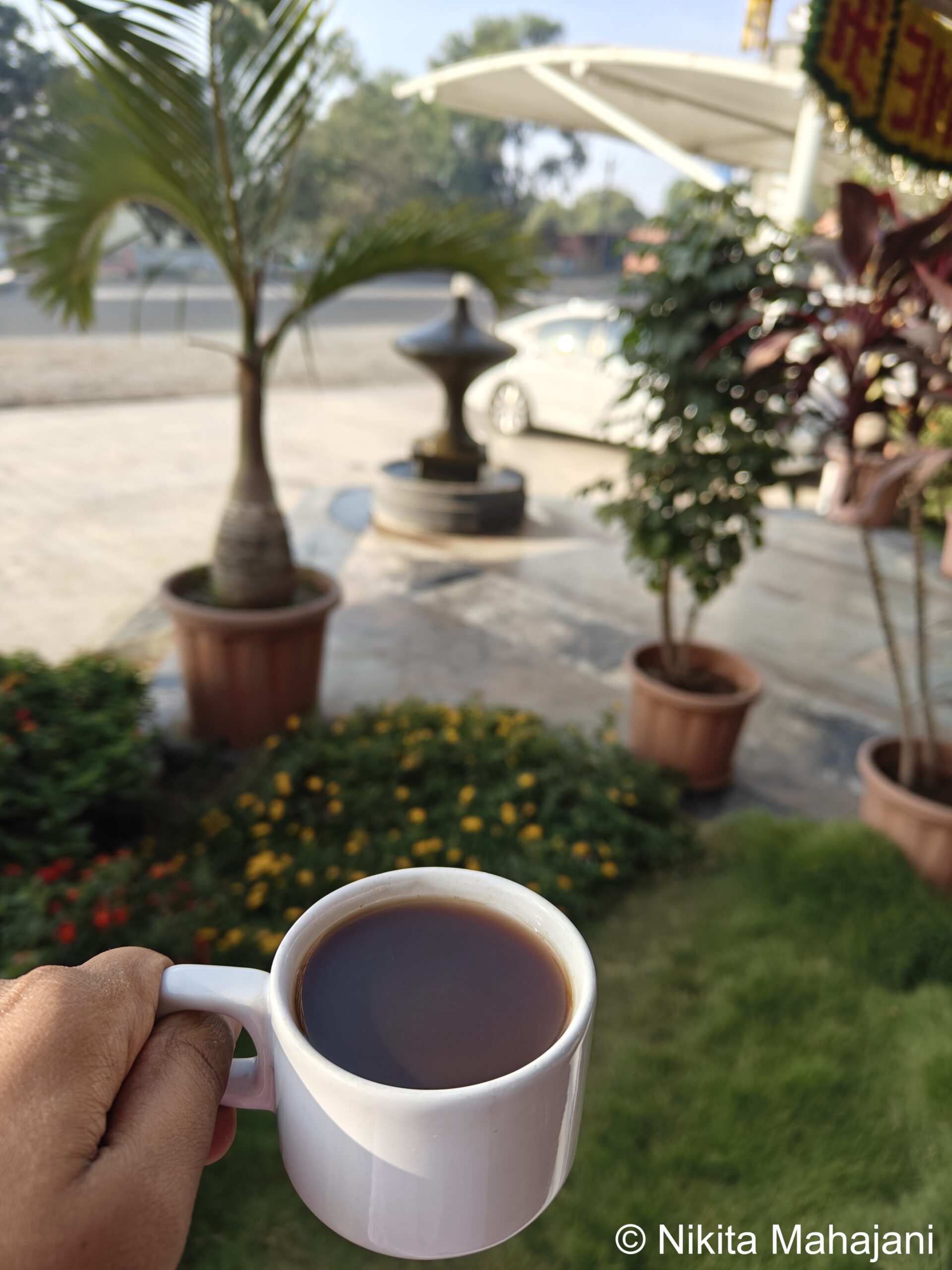
At 1:00 PM, we took a lunch break at Hotel Ajanta Green Pure Veg, where we relished a wholesome meal before resuming our journey. Hotel Ajanta Green Restaurant & Resort is undoubtedly one of the cleanest and most reliable stops along this route. I often pause here for lunch or tea during my travels. What stands out the most is the exceptionally well-maintained washrooms—especially the ladies’ restroom, which is a rarity at highway rest stops.
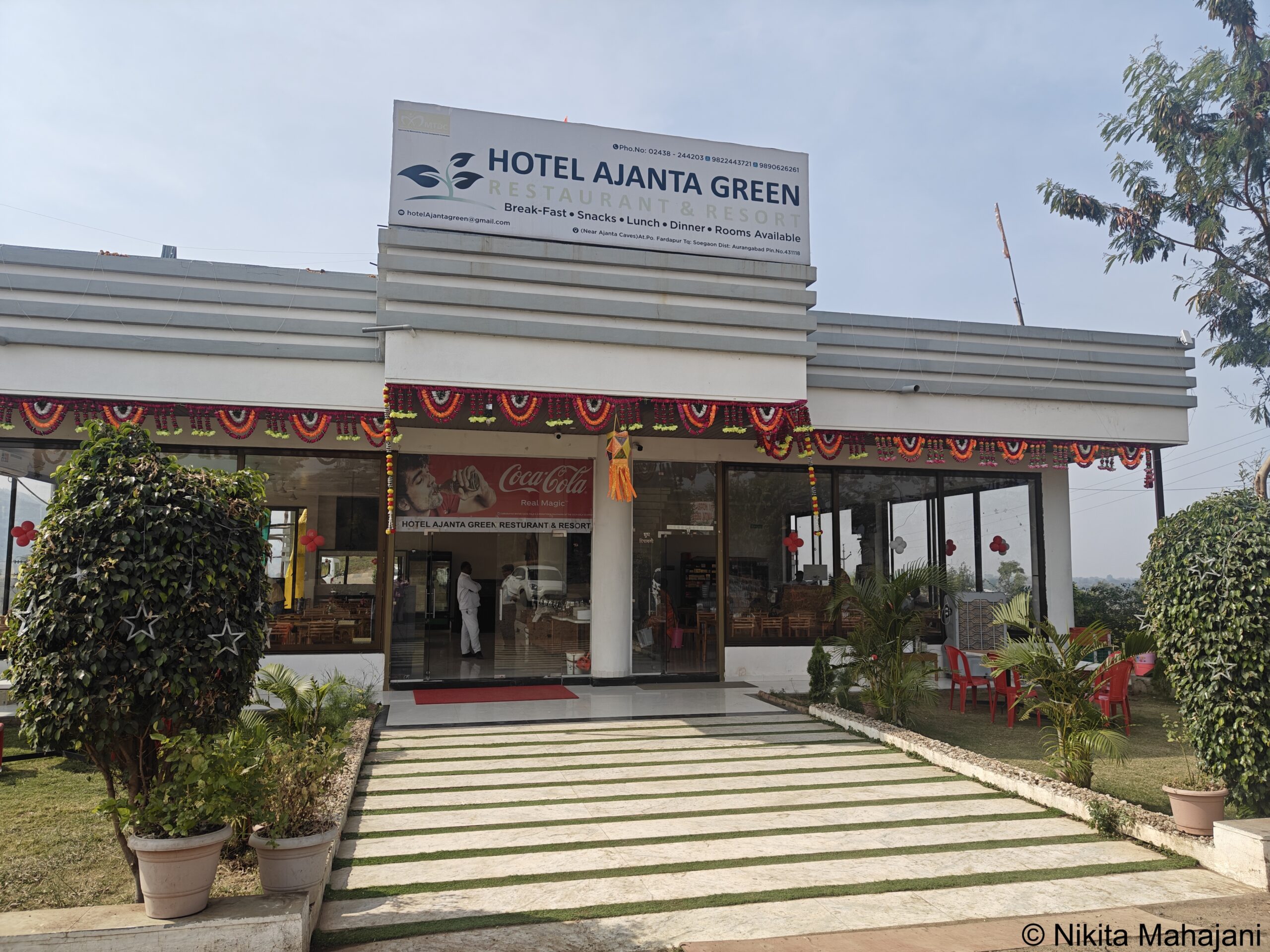
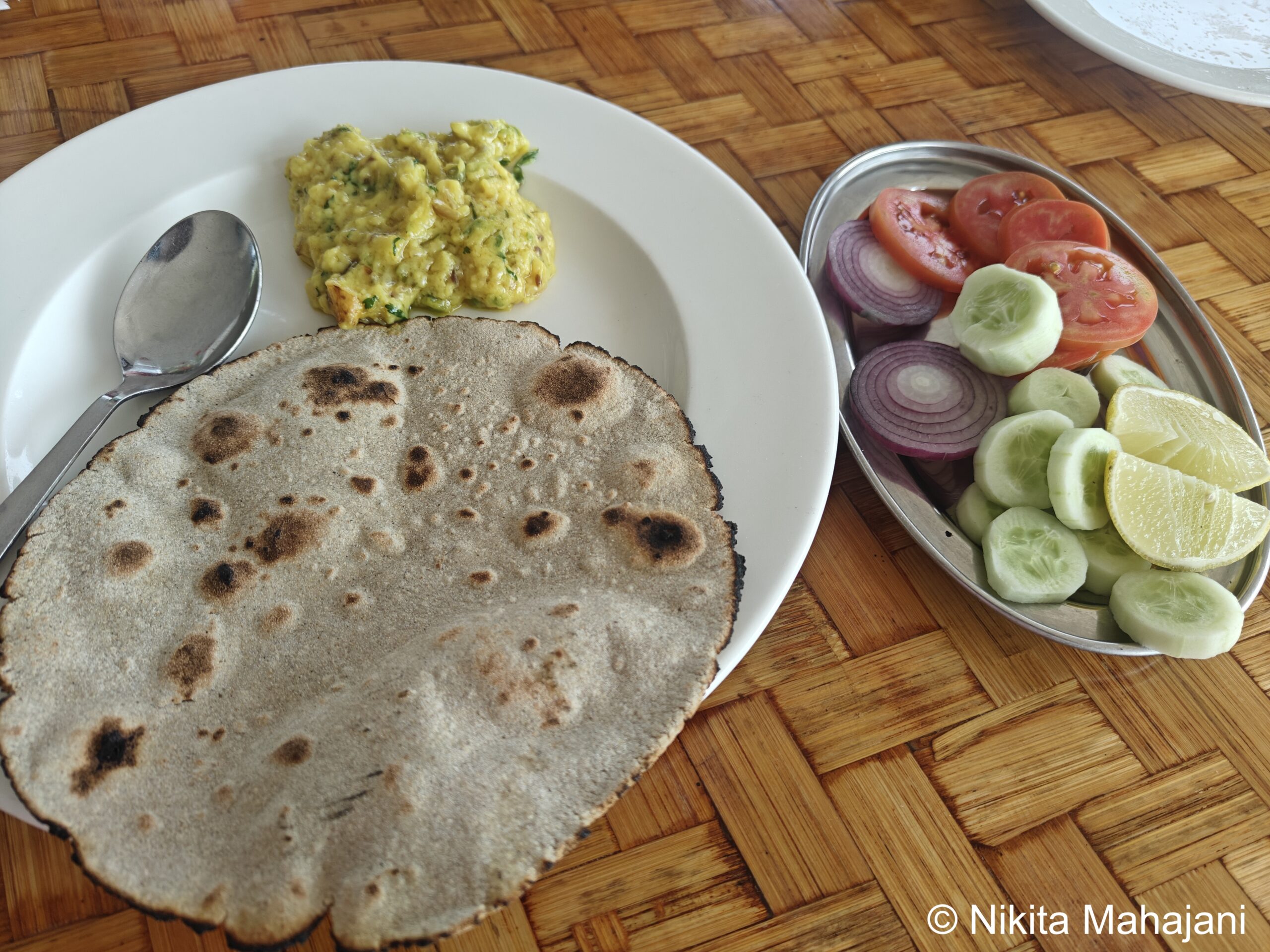
Delicious food with a wide range of freshly prepared, flavorful dishes are served at Hotel Ajanta Green Restaurant & Resort. The staff is courteous, professional, and attentive, which adds a touch of luxury and comfort to the experience. Their warm hospitality made my visit truly enjoyable.
This was my second time at Ajanta Green; I first visited during a trip to Sambhajinagar. Another huge plus—it’s pet-friendly. I wholeheartedly recommend this place for its excellent service, great food, cleanliness, and welcoming atmosphere. As we neared Burhanpur, the anticipation grew, knowing we were stepping into a city filled with Mughal-era splendor.
By 7:00 PM, we finally reached our destination and checked into Hotel Highrise Regency. Hotel Highrise Regency, located within the Gursikh Mall, stands as Burhanpur’s only luxury accommodation. The hotel offers 56 well-appointed rooms and is part of a vibrant commercial complex that features a shopping mall on the ground and first floors, Nirvana Spa, Gursikh Multiplex, both vegetarian (Veggie Delight – Fine Dining Restaurant) and non-vegetarian restaurants, two banquet halls, and a rooftop bar. A Domino’s outlet is also housed in the same building.
At the rear of the premises, you’ll find a series of charming shacks serving chai, momos, South Indian dishes, chocolates, ice creams, and more—creating a lively chowpatty-like vibe in the evenings.
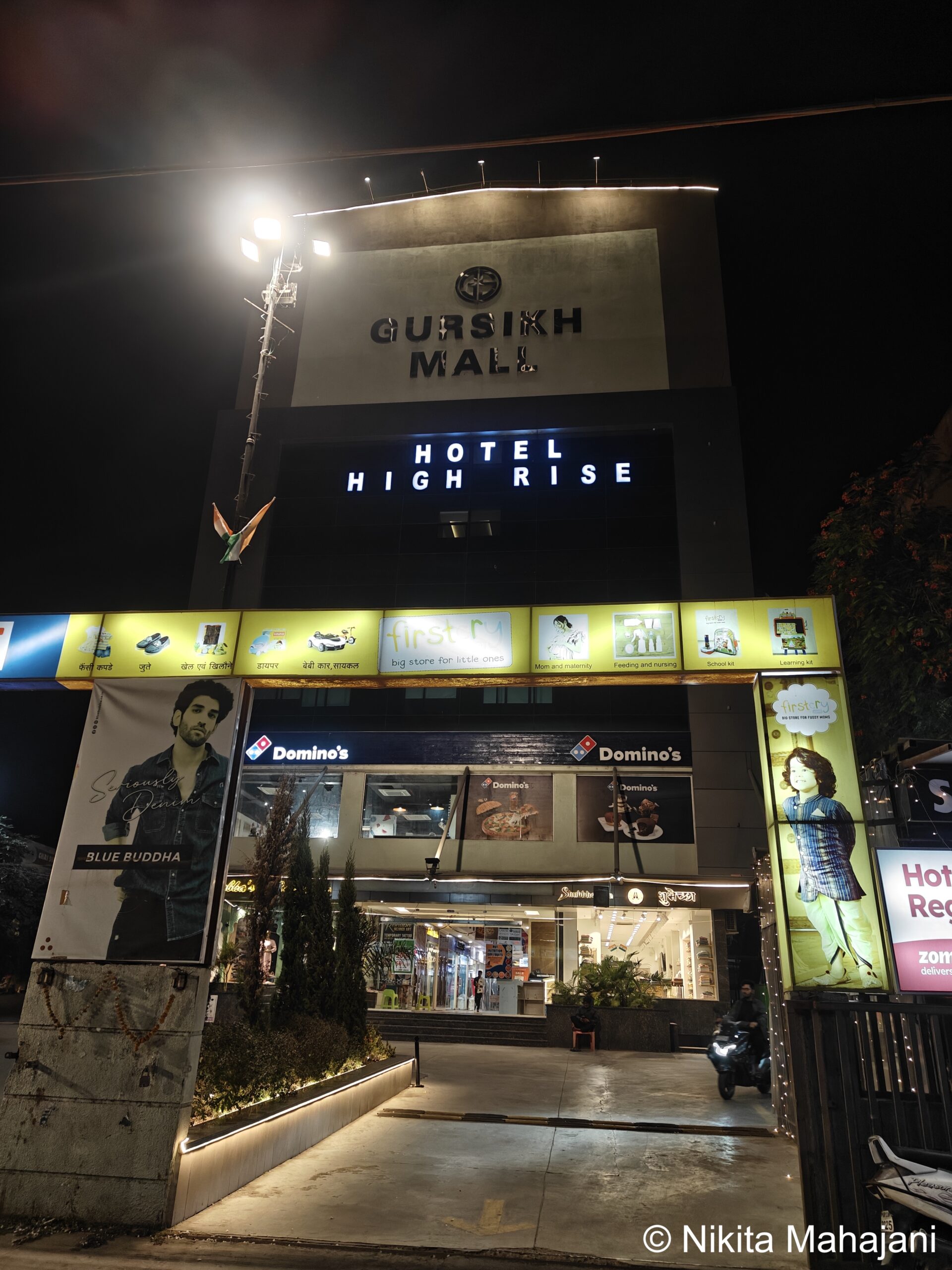
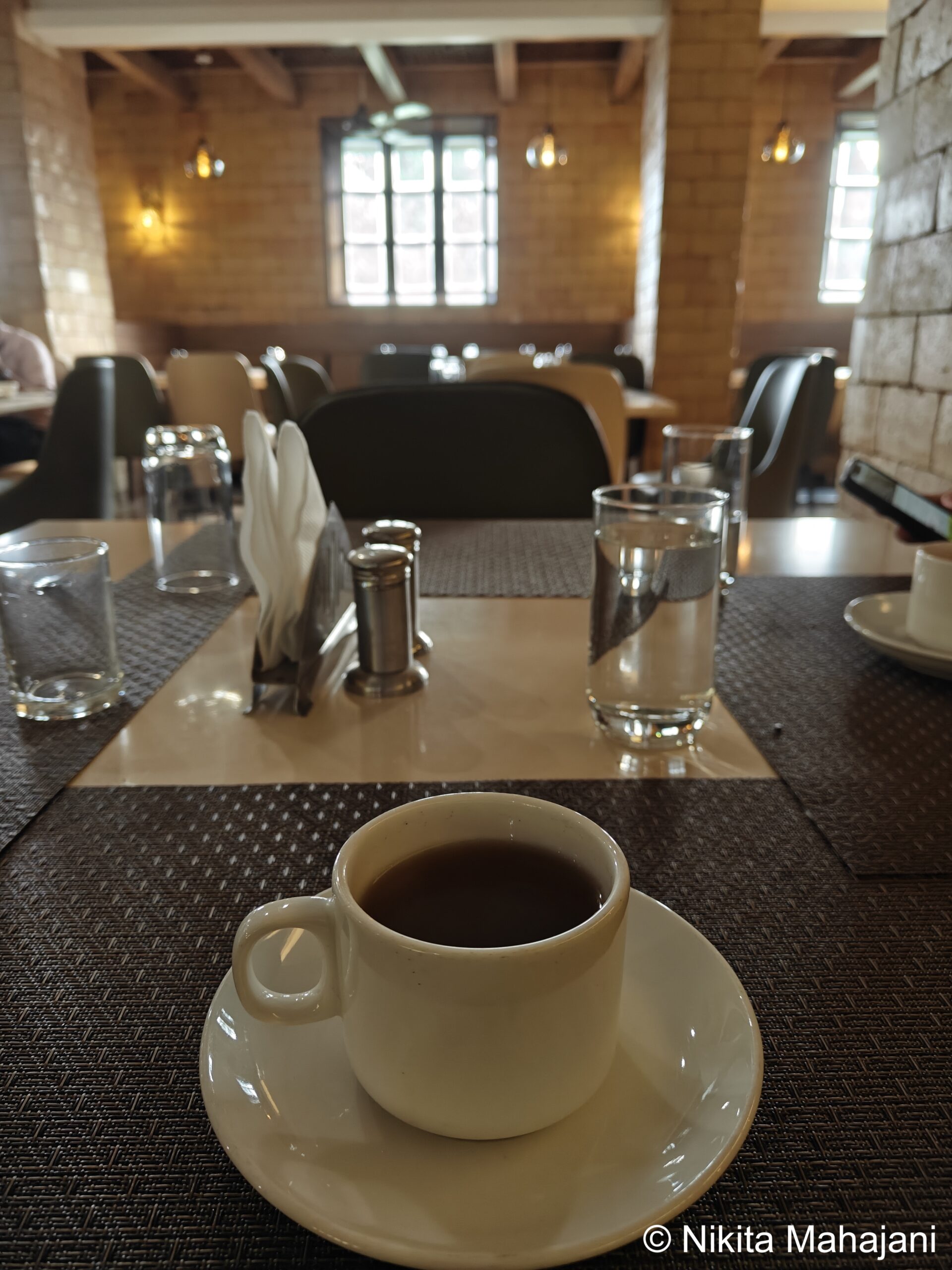
This fully-equipped establishment caters to nearly every travel need, making it an ideal base for your stay. All major historical sites in Burhanpur are just a 10–20 minute drive away. The rooms are spacious, clean, and luxurious, and I would wholeheartedly recommend this hotel.
After a long road trip, our stay here was truly refreshing. The pricing felt fair for the amenities offered, and the rooms were tidy and comfortable. What really stood out was the hospitality—the staff went out of their way to make us feel welcome. Given that Burhanpur isn’t a mainstream tourist destination, we had modest expectations, but the hotel surpassed them. The food, too, deserves a special mention.

The comfortable rooms and welcoming ambiance provided the perfect retreat after a long day of travel. After freshening up, we had a relaxed evening, preparing for the historical exploration awaiting us the next day.
Day 02: Burhanpur sightseeing
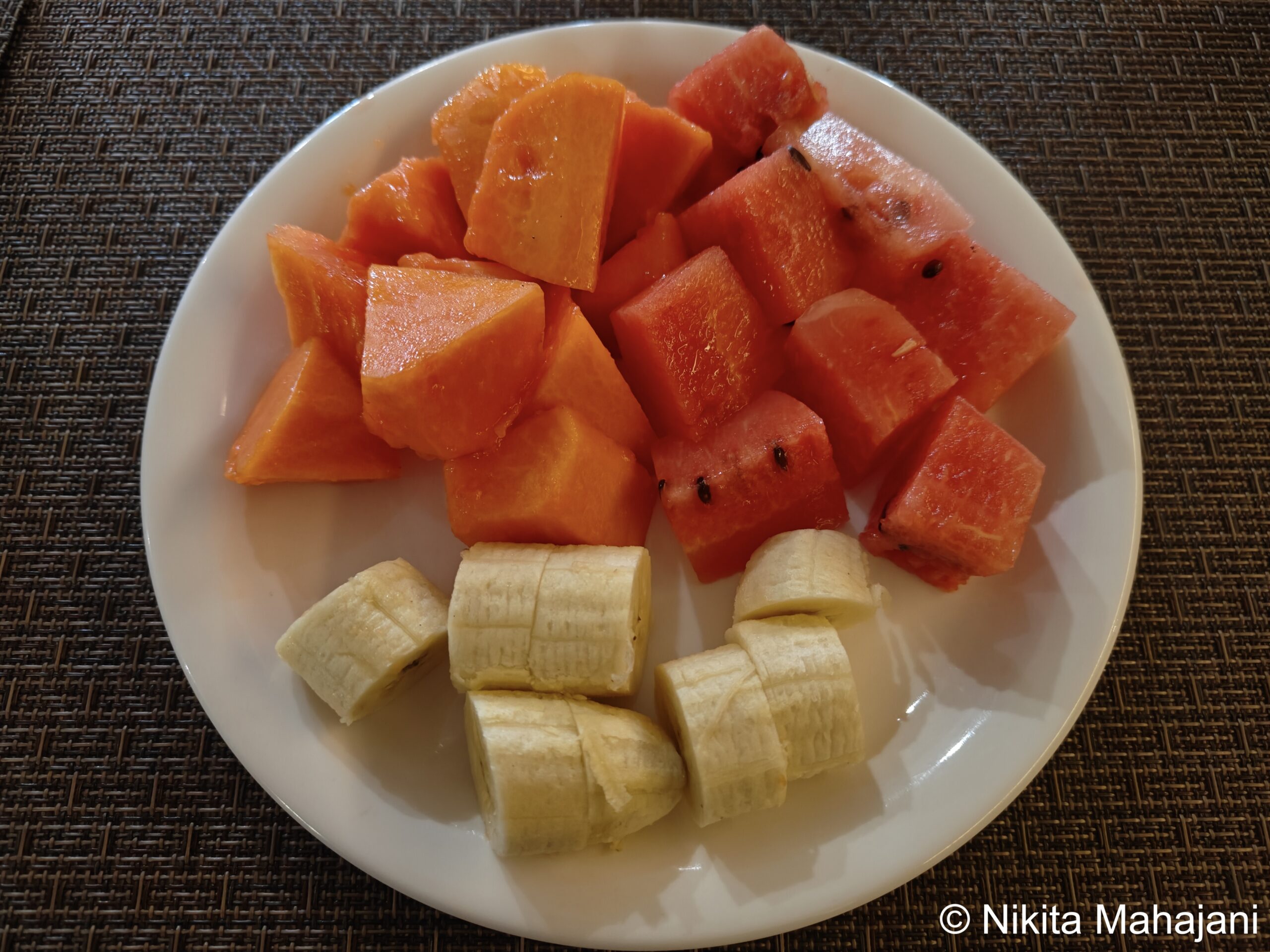
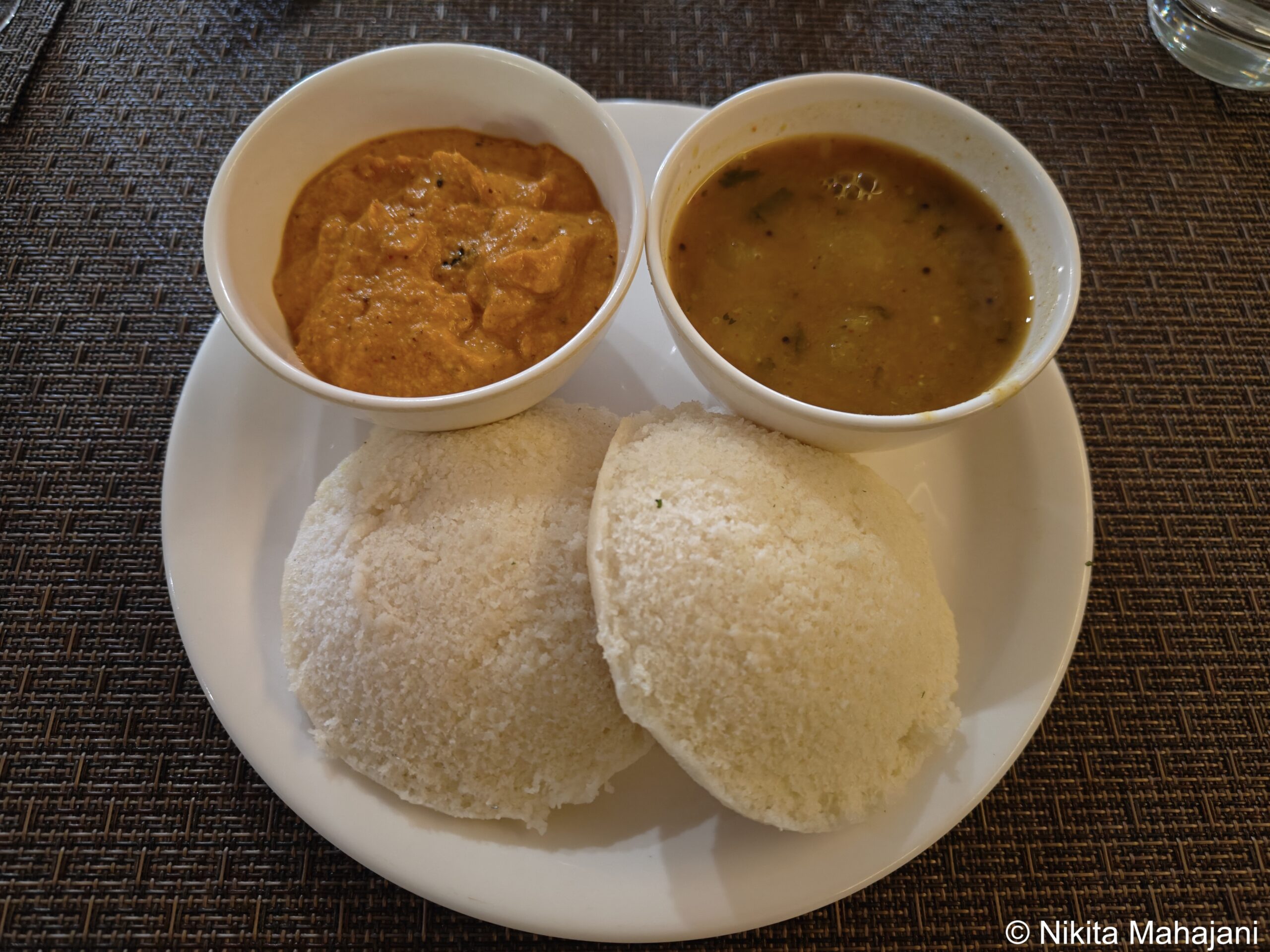
We started our day with a hearty breakfast at Hotel Highrise Regency at 8:30 AM before diving into Burhanpur’s rich history.
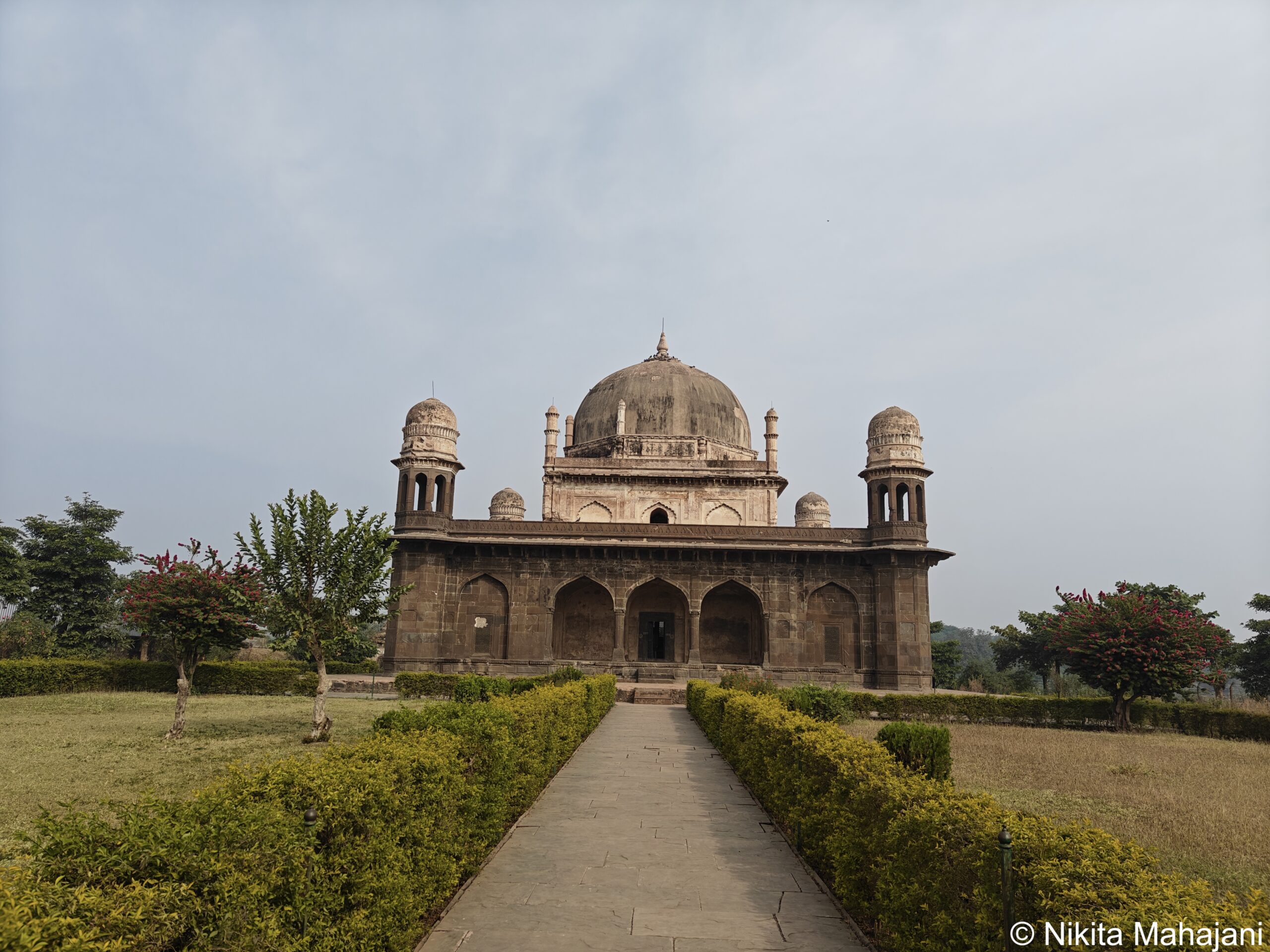
Our first stop was the Black Taj Mahal of Burhanpur, a lesser-known yet fascinating monument said to be a prototype for the Taj Mahal. The route to the Black Taj Mahal of Burhanpur is quite narrow and passes through slums. There is an open space next to the monument where we parked our cars. There is no entry fee. We just have to make an entry of our names in the guard’s register. Burhanpur is not a very commercial tourist place. There was a group of foreigners in the hotel where we were staying. We met this same group at most of the places that we visited in Burhanpur. Apart from them, there were no other tourists in any places. If you are looking forward to spend your vacation in a historic place with no crowd around, then Burhanpur is the perfect choice for you.

The Tomb of Shah Nawaz Khan—popularly known as the ‘Kala Taj Mahal’ or ‘Black Taj Mahal’– is located in the Teressa area of Burhanpur, Madhya Pradesh, along the banks of the Utavali River. It is one of the city’s most notable historical landmarks.
Built between 1622 and 1623 AD, the tomb commemorates Shah Nawaz Khan, the eldest son of the renowned Mughal courtier Abdul Rahim Khankhana. Raised in Burhanpur, Shah Nawaz Khan earned the position of Mughal army commander due to his valor. He passed away at the age of 44 and was laid to rest at this site, alongside his wife.
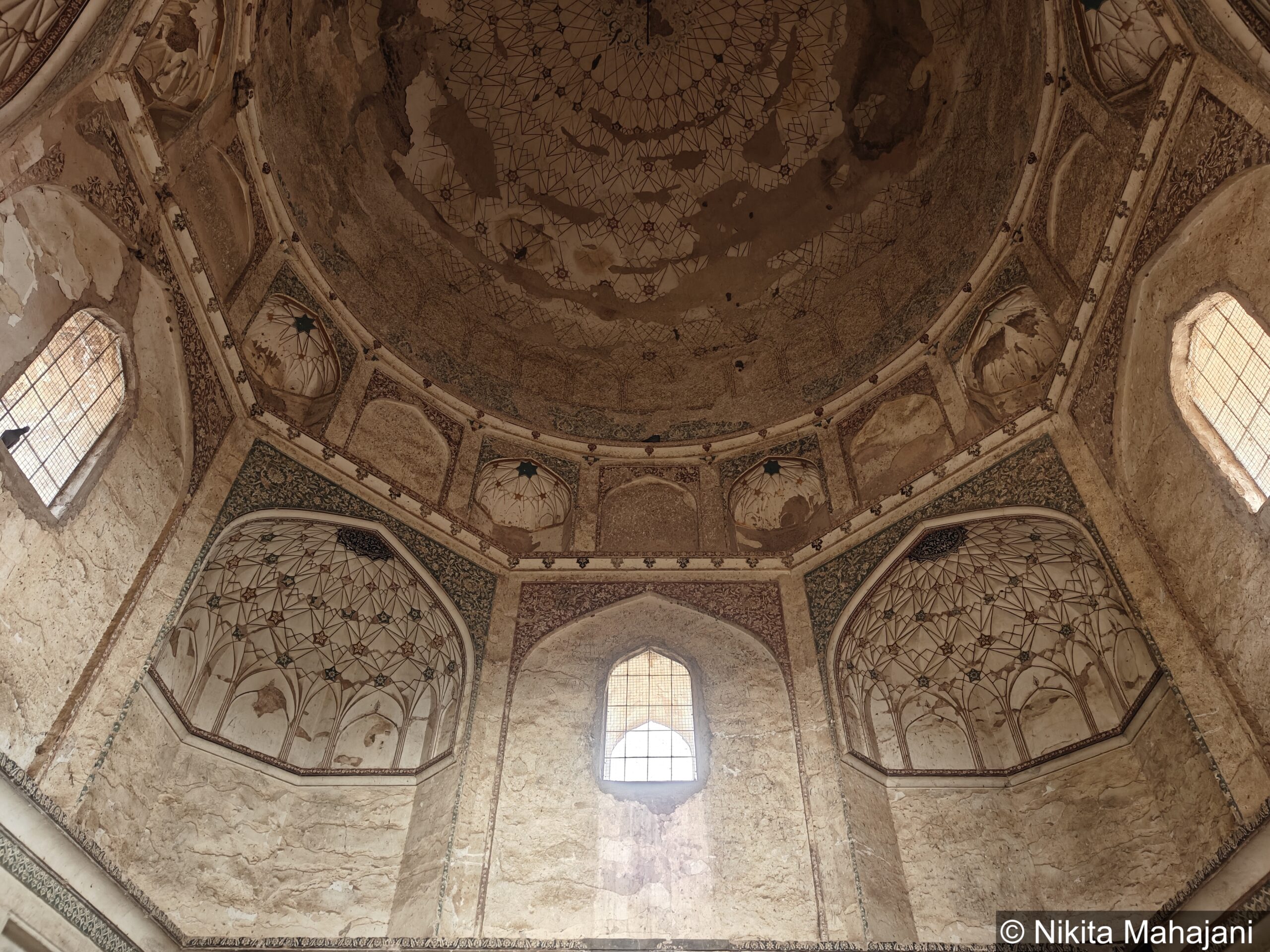
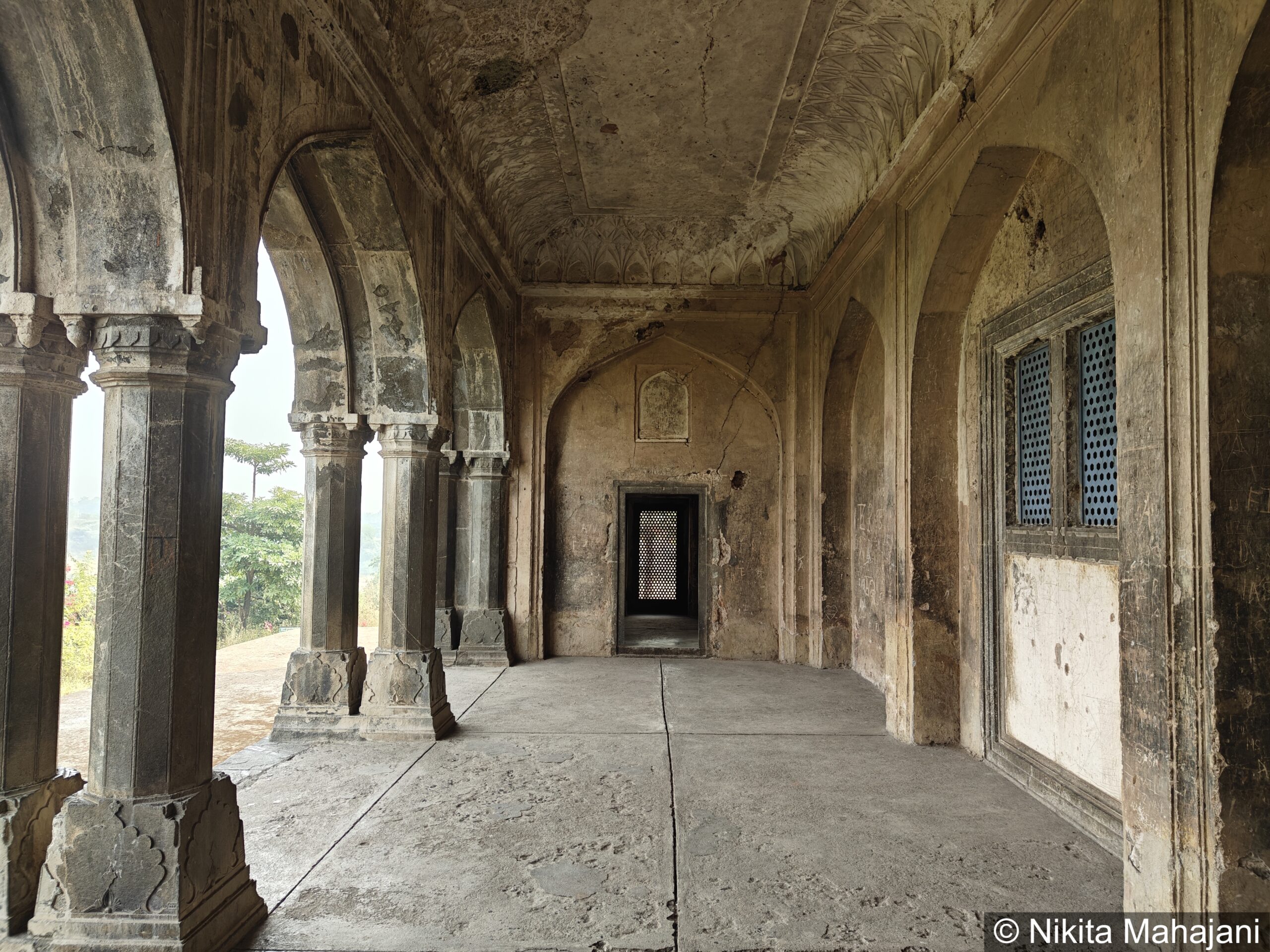
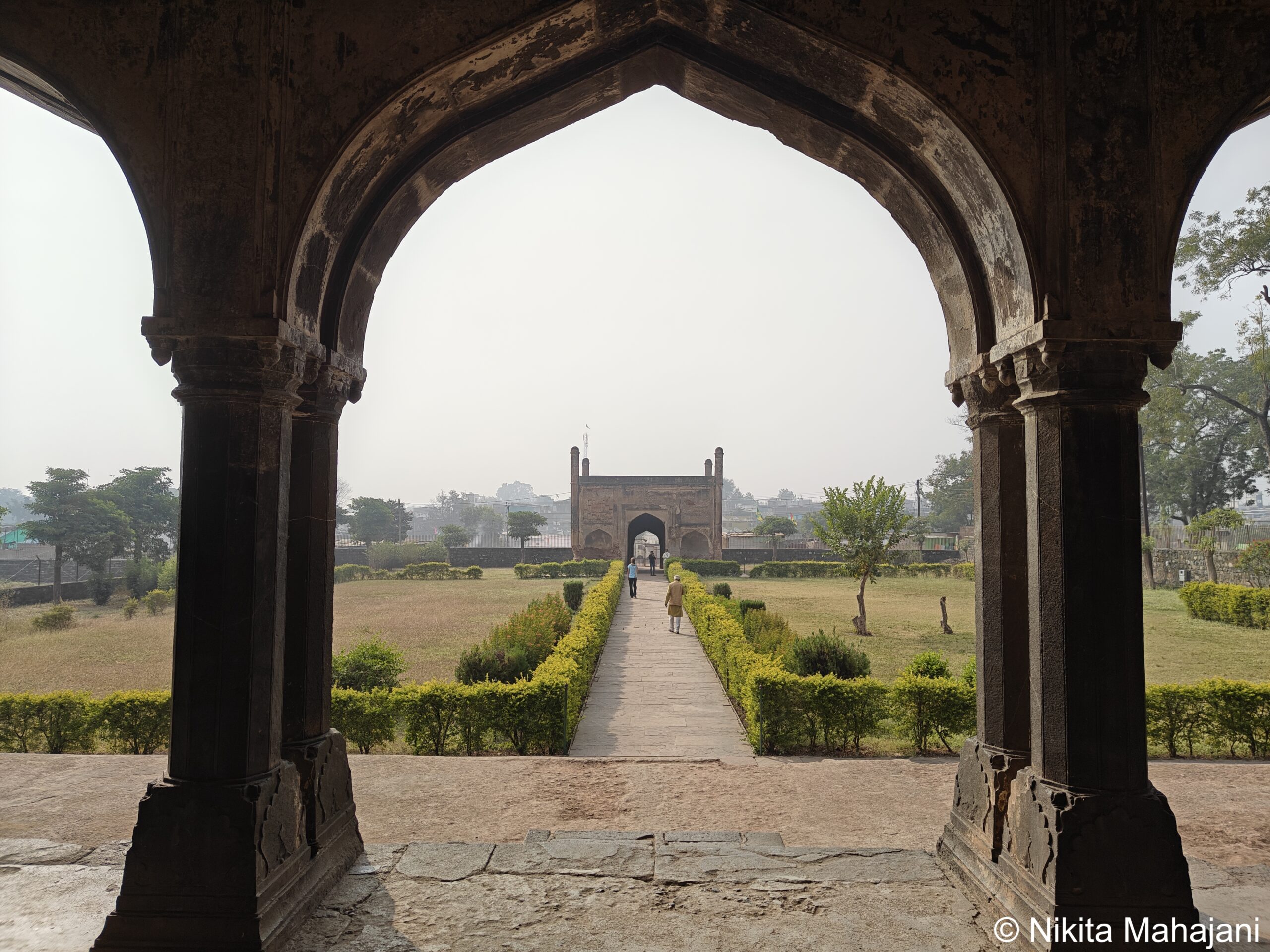
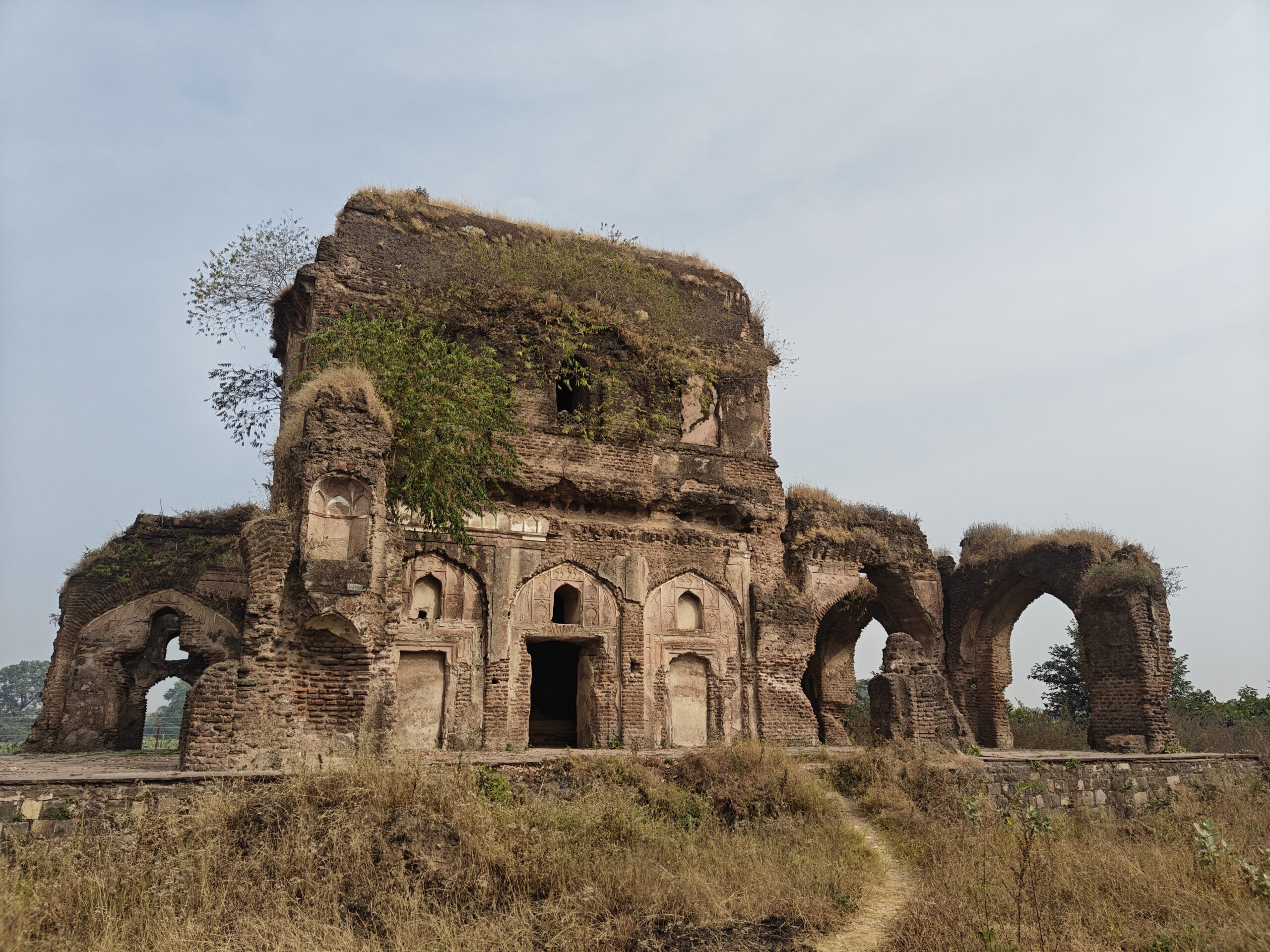
The structure is an elegant miniature version of the Taj Mahal, made from locally sourced black stone, giving rise to its nickname. The square-shaped tomb features classic Mughal architectural elements such as a large central dome, corner minarets with hexagonal bases, arched verandas, and surrounding gardens. The interior dome walls are adorned with delicate paintings. Beneath the main structure lies the actual burial chamber, accessible via a small staircase. Nearby is a dilapidated monument known as the Paandan Mahal, named for its resemblance to a traditional betel-leaf container.
Next, we visited Shahi Qila, a grand fort on the banks of the Tapti River. The route to Shahi Qila is through a very crowded street market where the roads are very narrow. Our car got stuck many times in the market as we were unaware of this locality. It is advisable to go walking or by auto to Shahi Qila.
Access to the fort requires a ticket costing ₹20, which can be purchased online. Entry is from the topmost level of the fort. This royal fort and palace complex is situated along the banks of the Tapti River, offering picturesque views, especially in the mornings. Once a grand and imposing structure likely linking the northern regions to the Deccan, the fort now stands in ruins.
The city of Burhanpur has gradually grown around this historic site. Initially constructed by the Faruqi dynasty and later expanded by Emperor Shah Jahan, the fort showcases fascinating architectural elements.
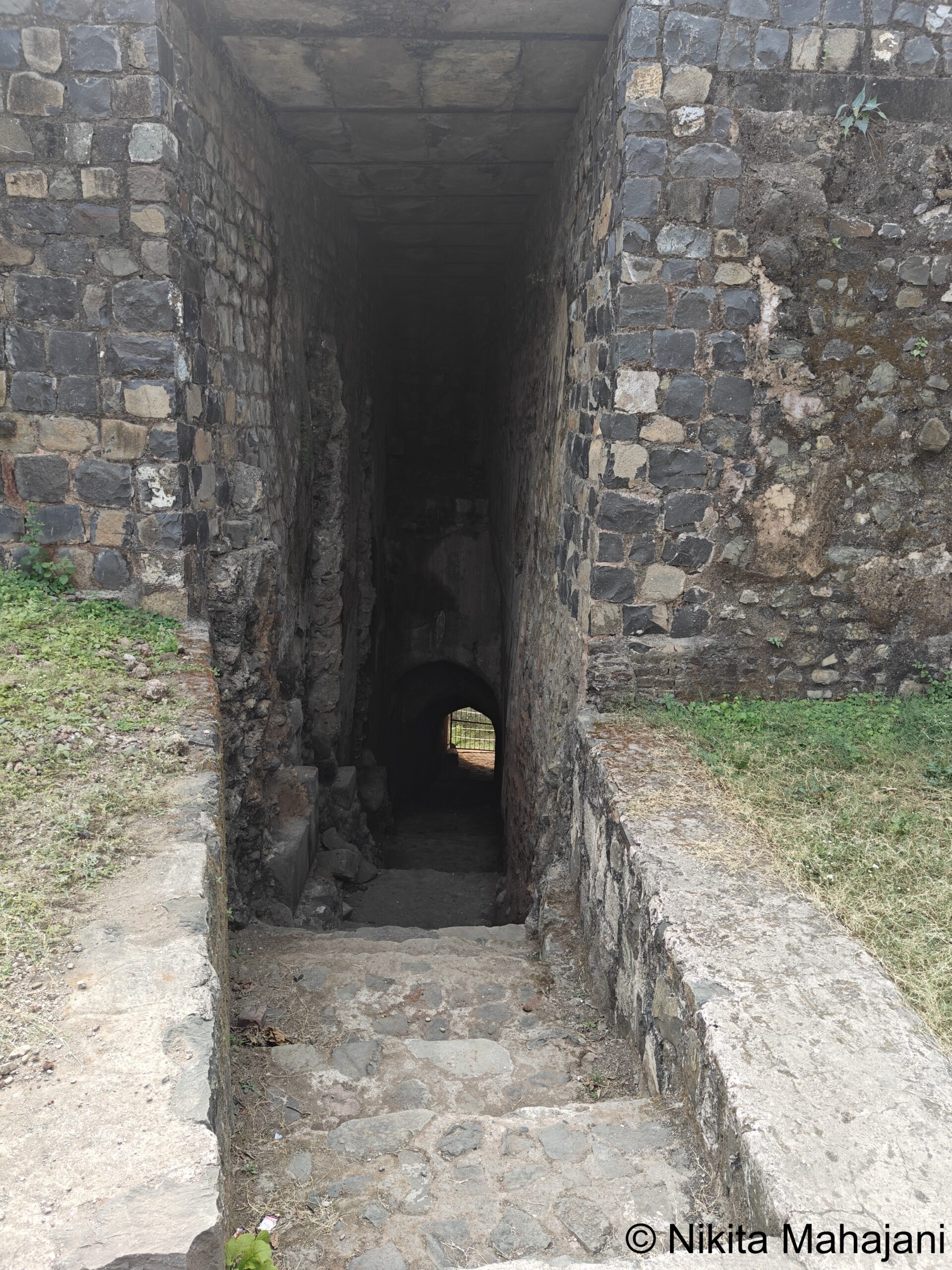
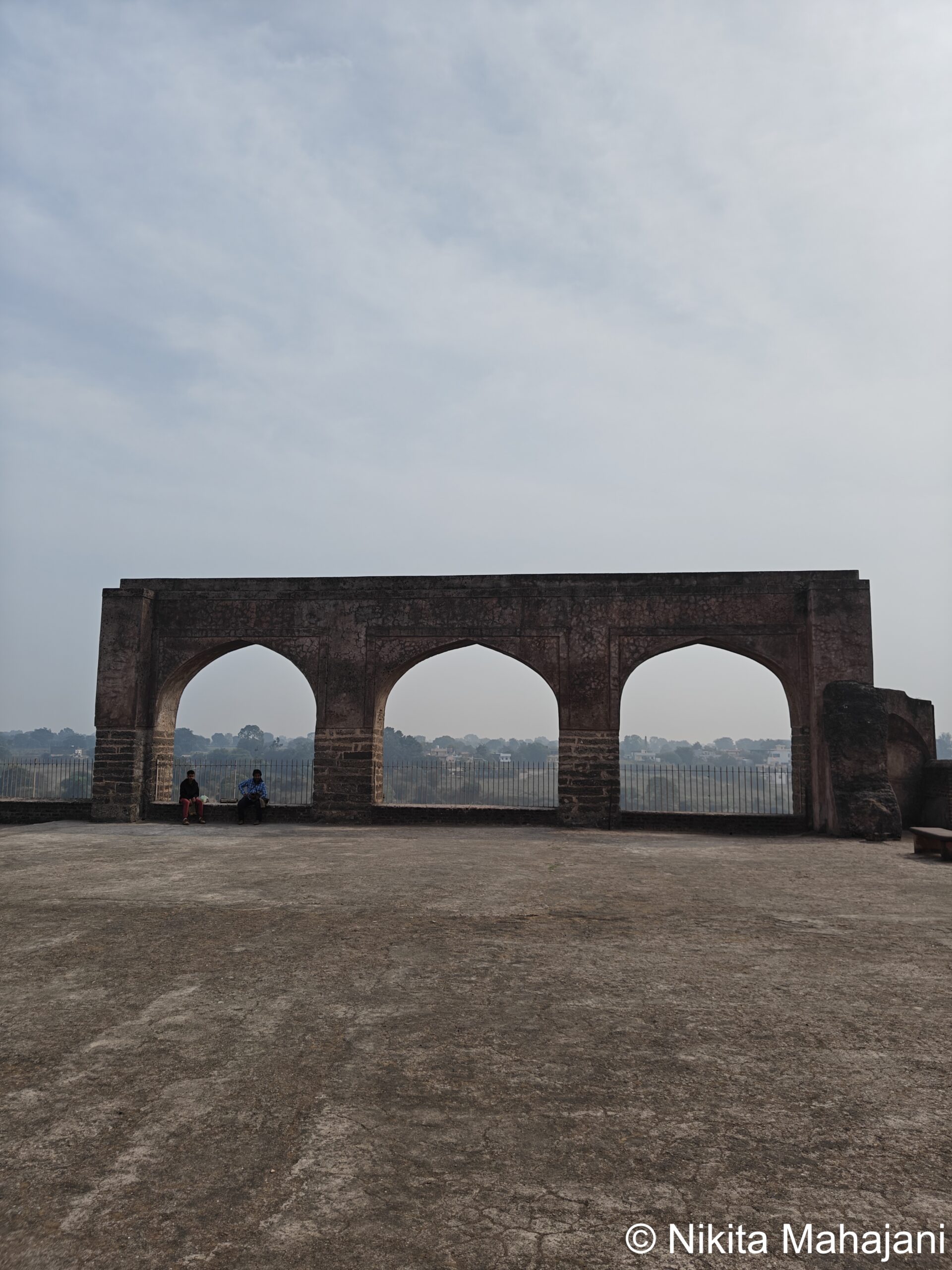
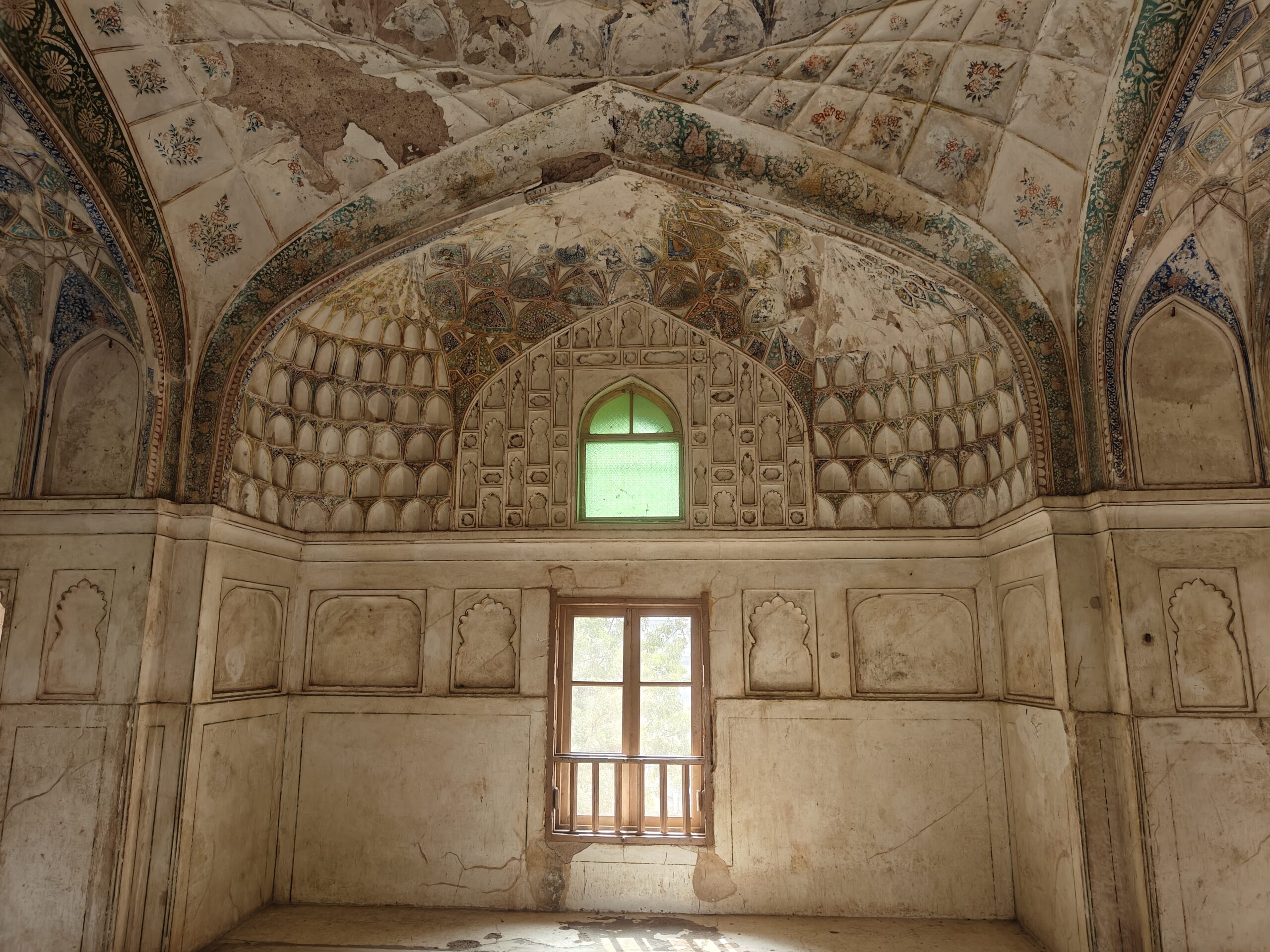
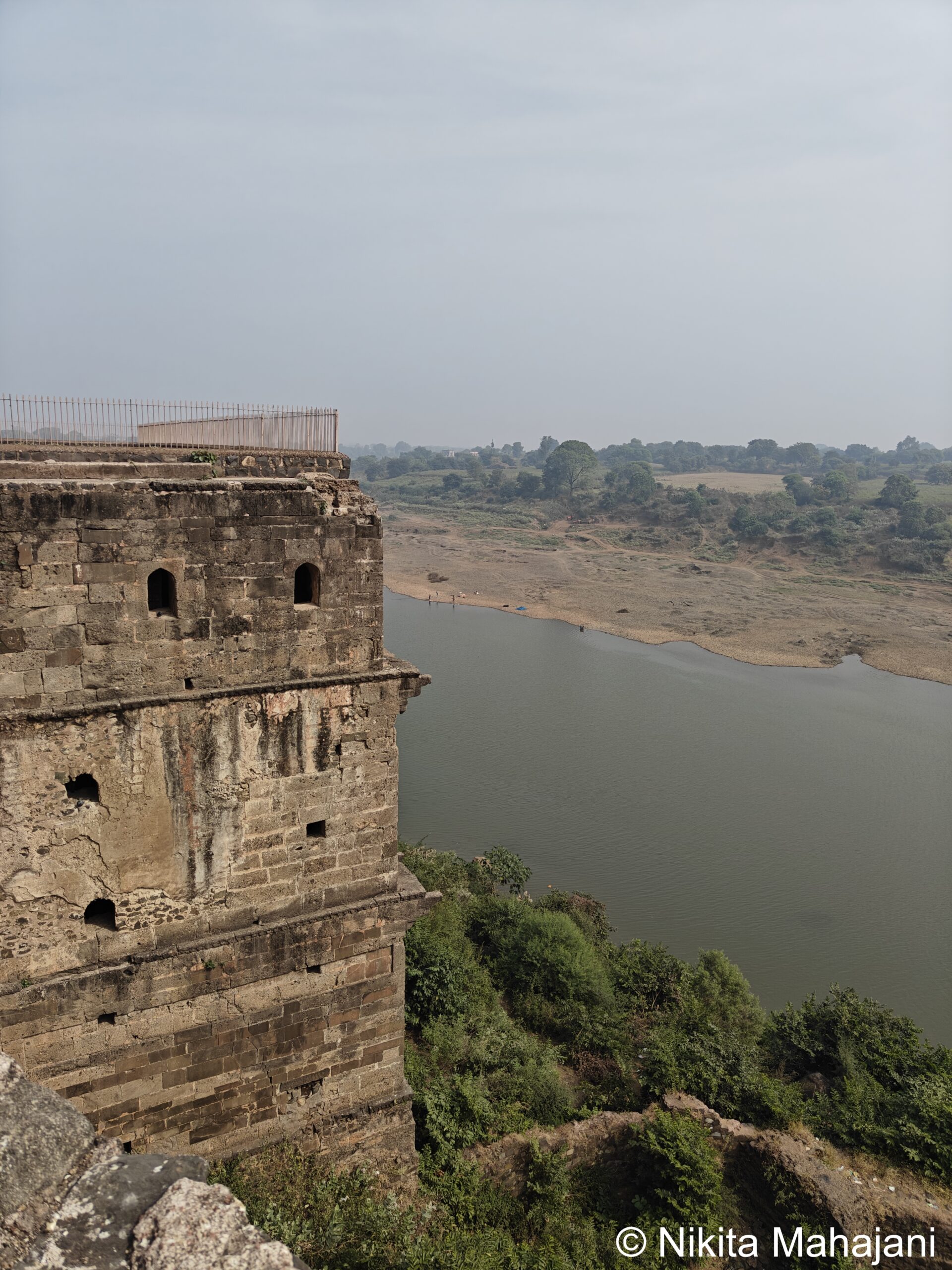

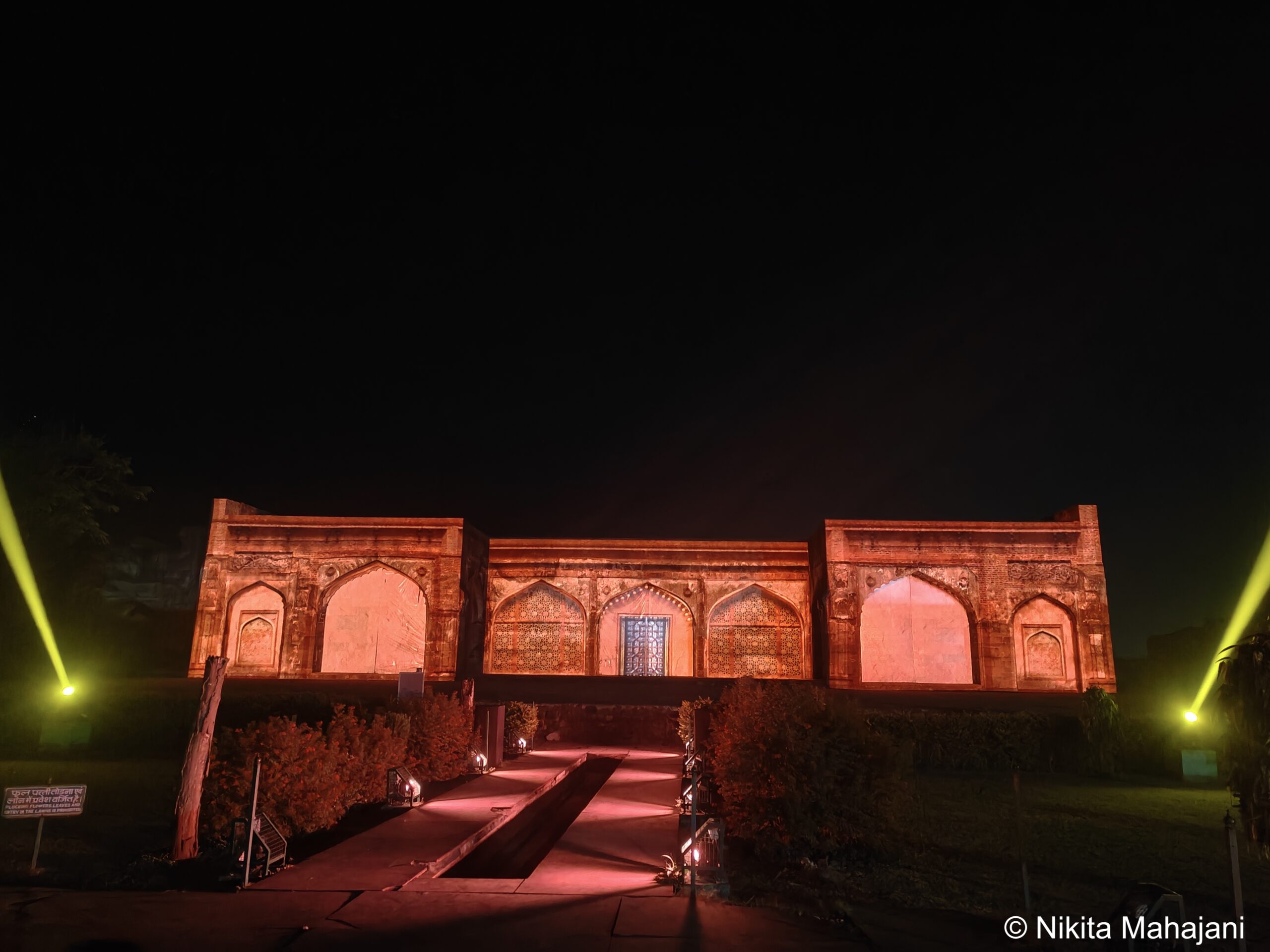
A sound and light show is held here in the evenings, adding to the experience for visitors. Though originally built with seven levels, only three remain intact today. While there are stairways leading down to the lower levels, the ASI staff on-site recommend avoiding them for safety reasons.
A highlight of the visit is the Shahi Hamam, where the intricately decorated walls and ceiling reflect the refined artistry of a bygone era. Restoration efforts by the ASI are visible, with patches of cement and red bricks used to reinforce the structure—though these modern additions somewhat disrupt the visual appeal of the otherwise stunning monument. The garden surrounding the fort is well-kept, making it a pleasant spot to explore for about an hour.
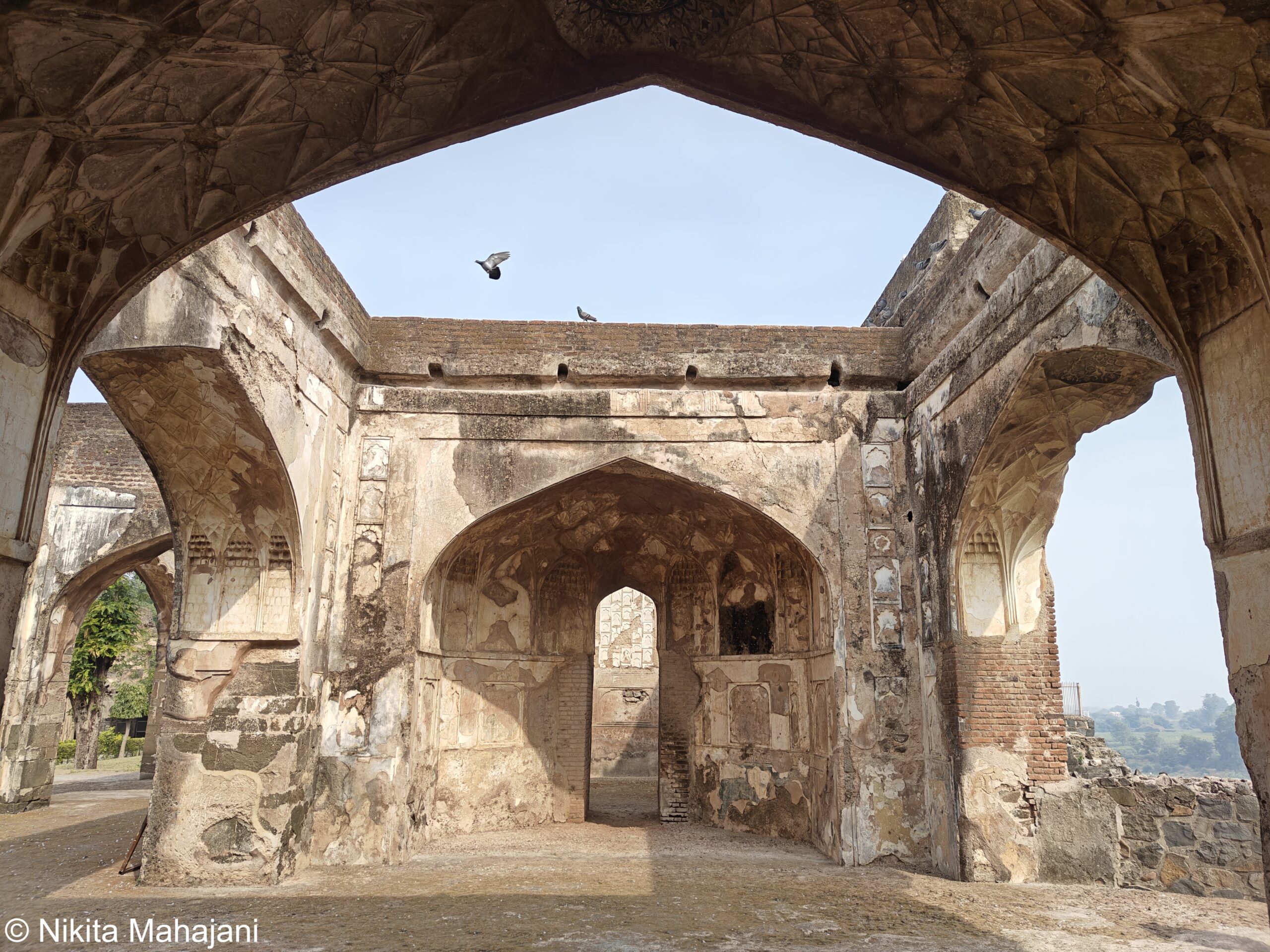
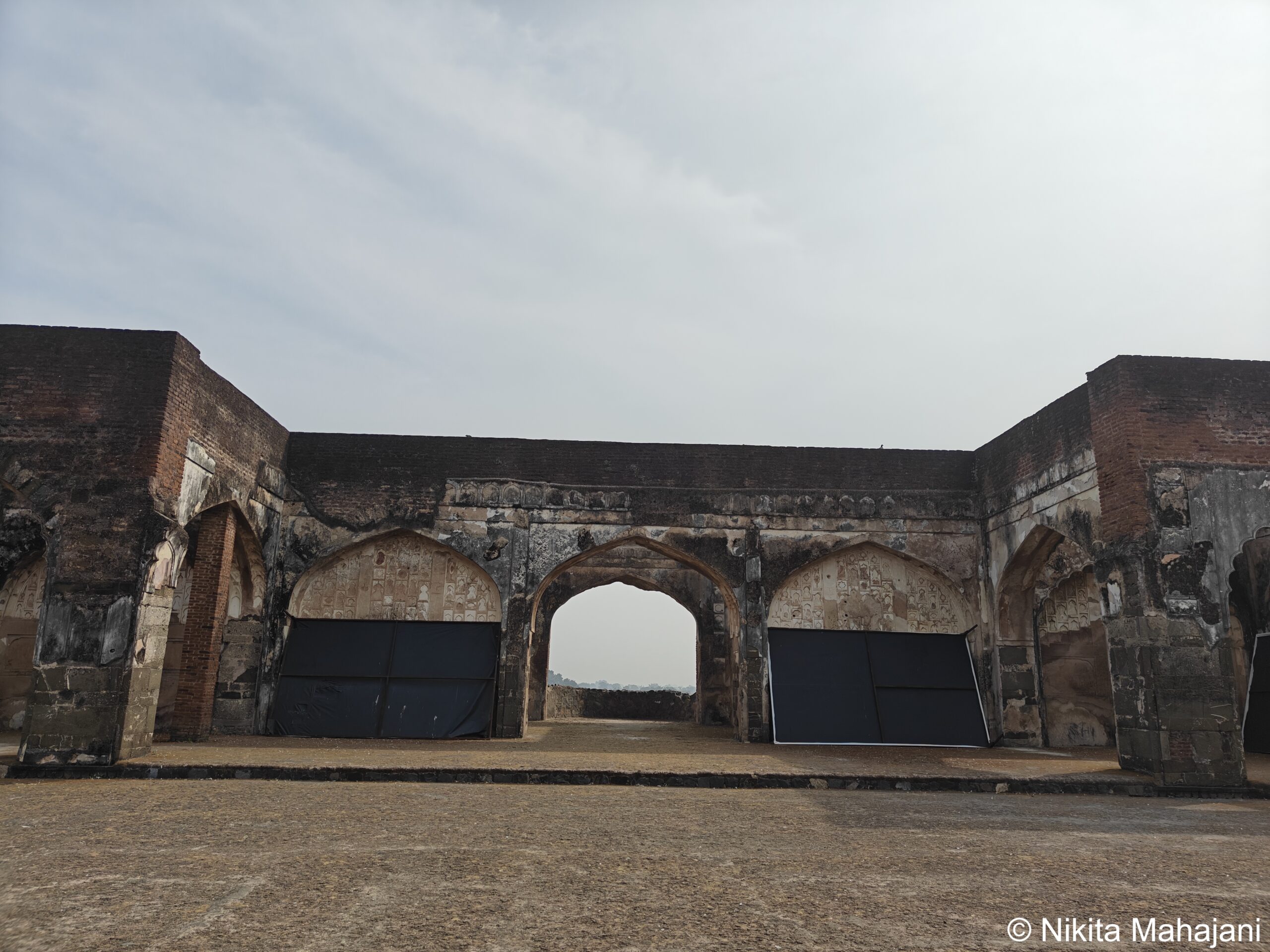

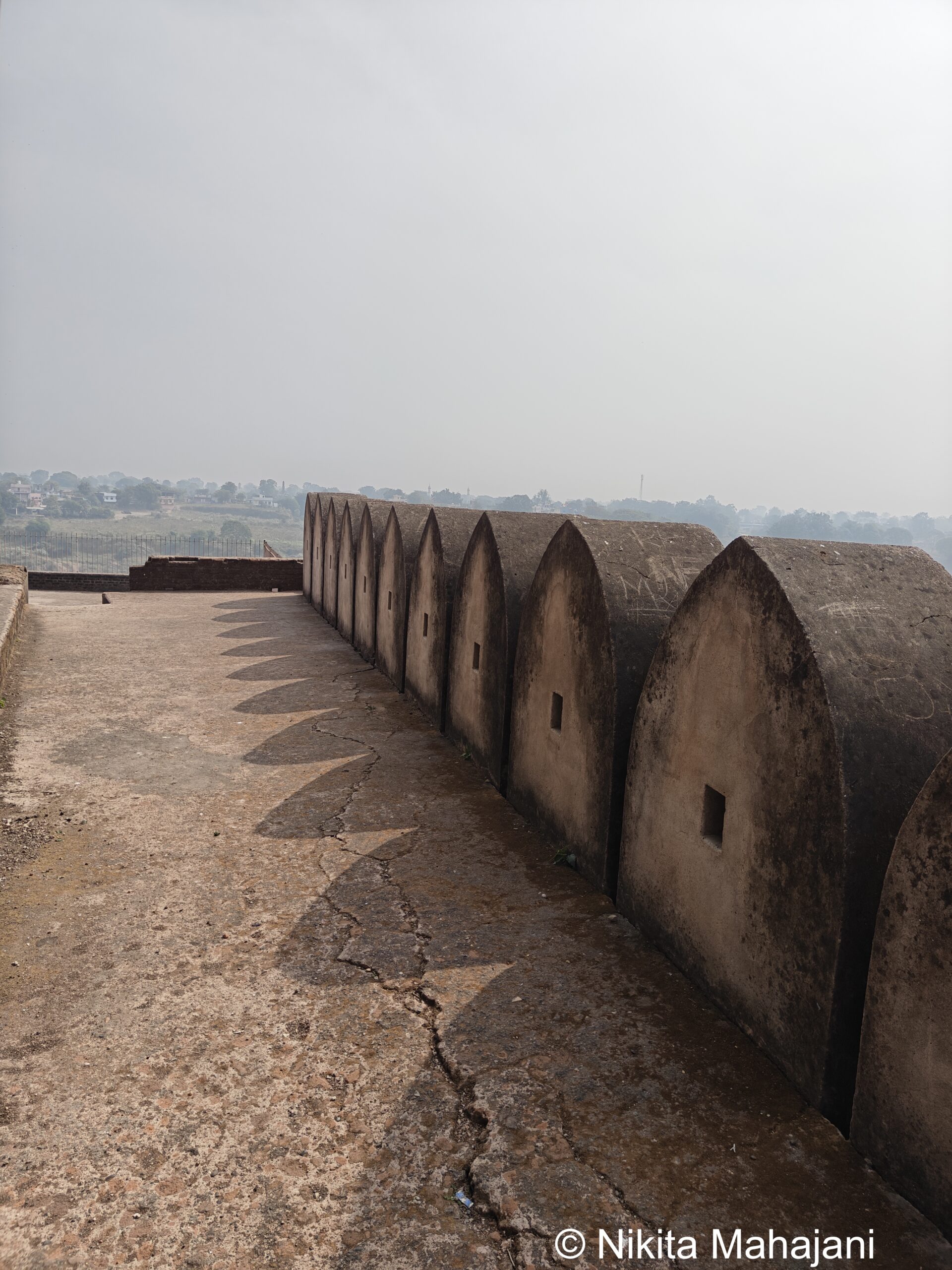
A short walk led us to Akbari Saray, an ancient rest house built during Emperor Akbar’s reign. This sarai was constructed during the reign of Mughal Emperor Jehangir. It is historically significant as Sir Thomas Roe, the ambassador of British King James I, stayed here while Jehangir was residing in the nearby royal fort.
The main entrance of the sarai stands about 30 feet tall and is built from black stone. A Persian inscription above the gate mentions that the sarai was built in Hijri year 1027 by a subedar, under the supervision of Lashkar Khan, who was in charge of the construction department. The structure contains a total of 110 rooms.
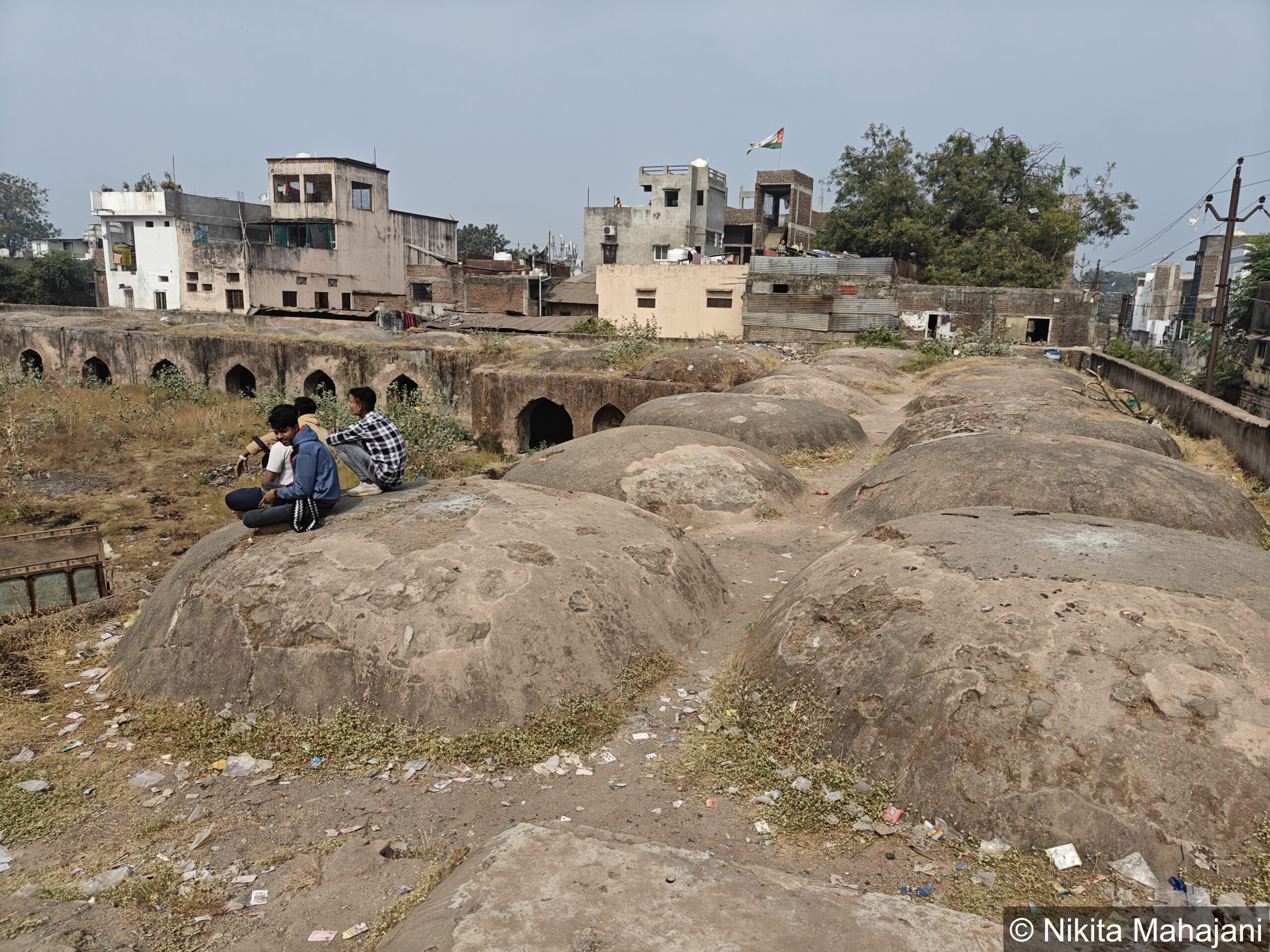
Currently this building is in a dilapidated state. Local boys come here to smoke and booze. It is also used as a place to dump garbage.
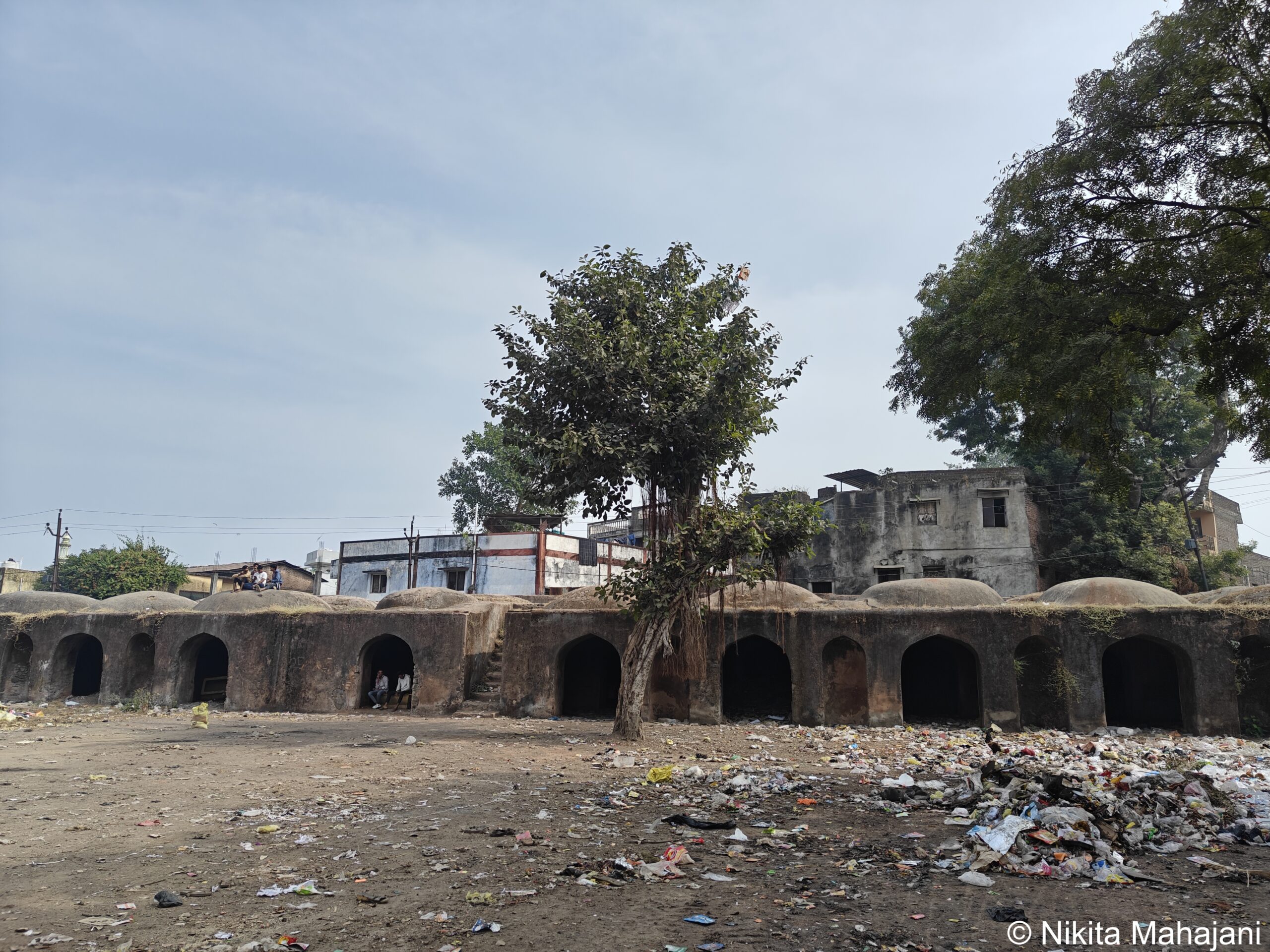
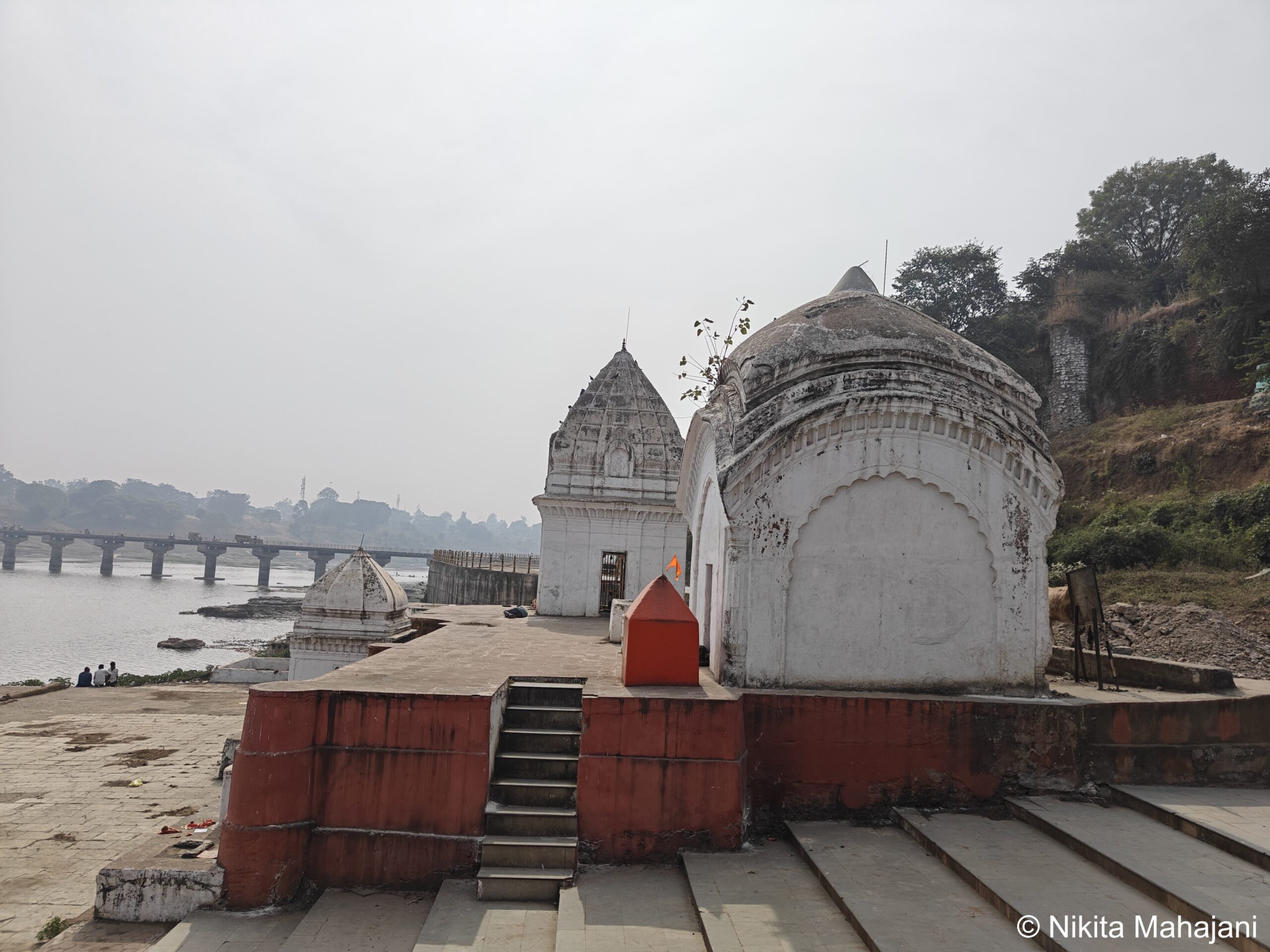
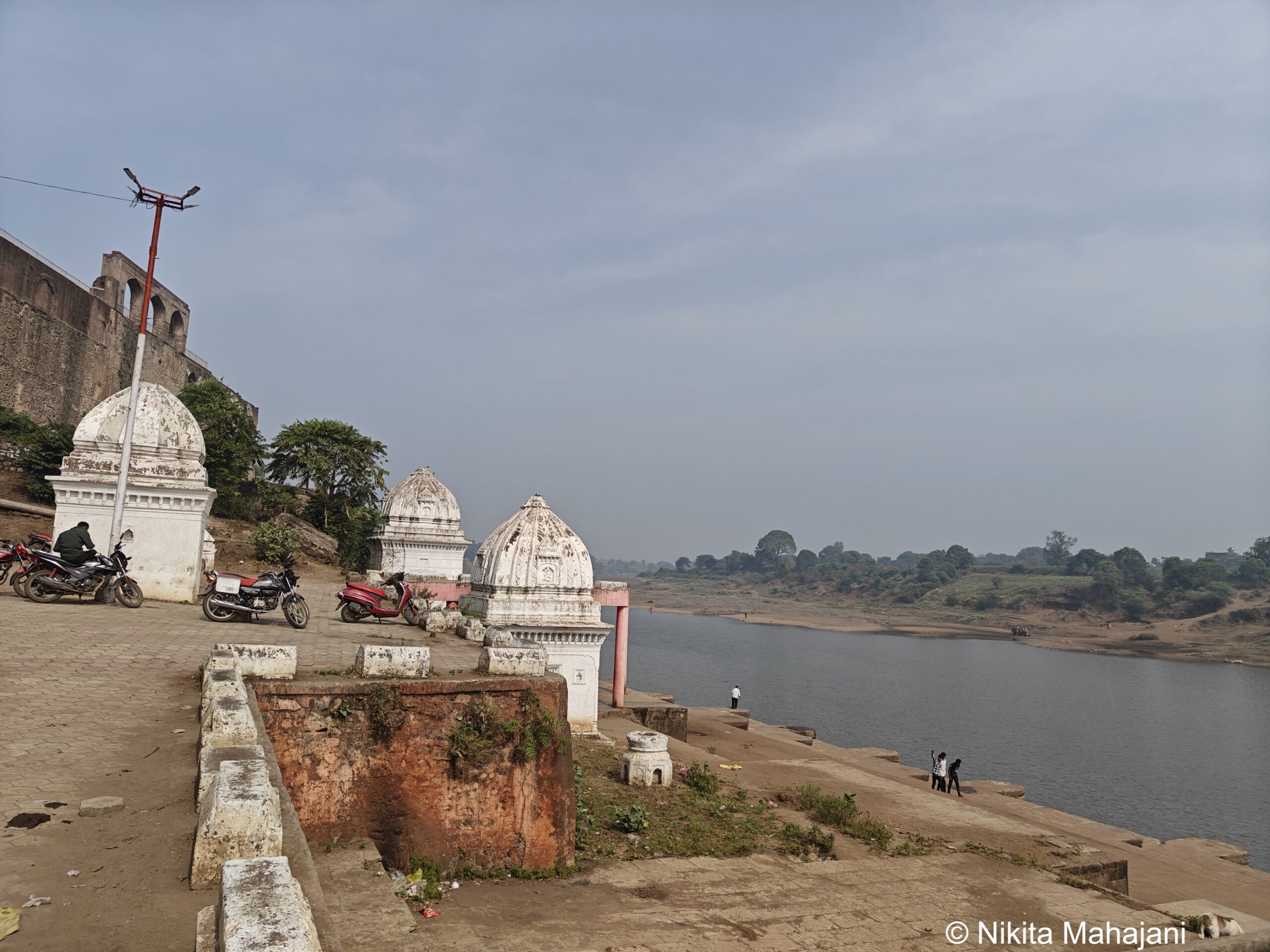
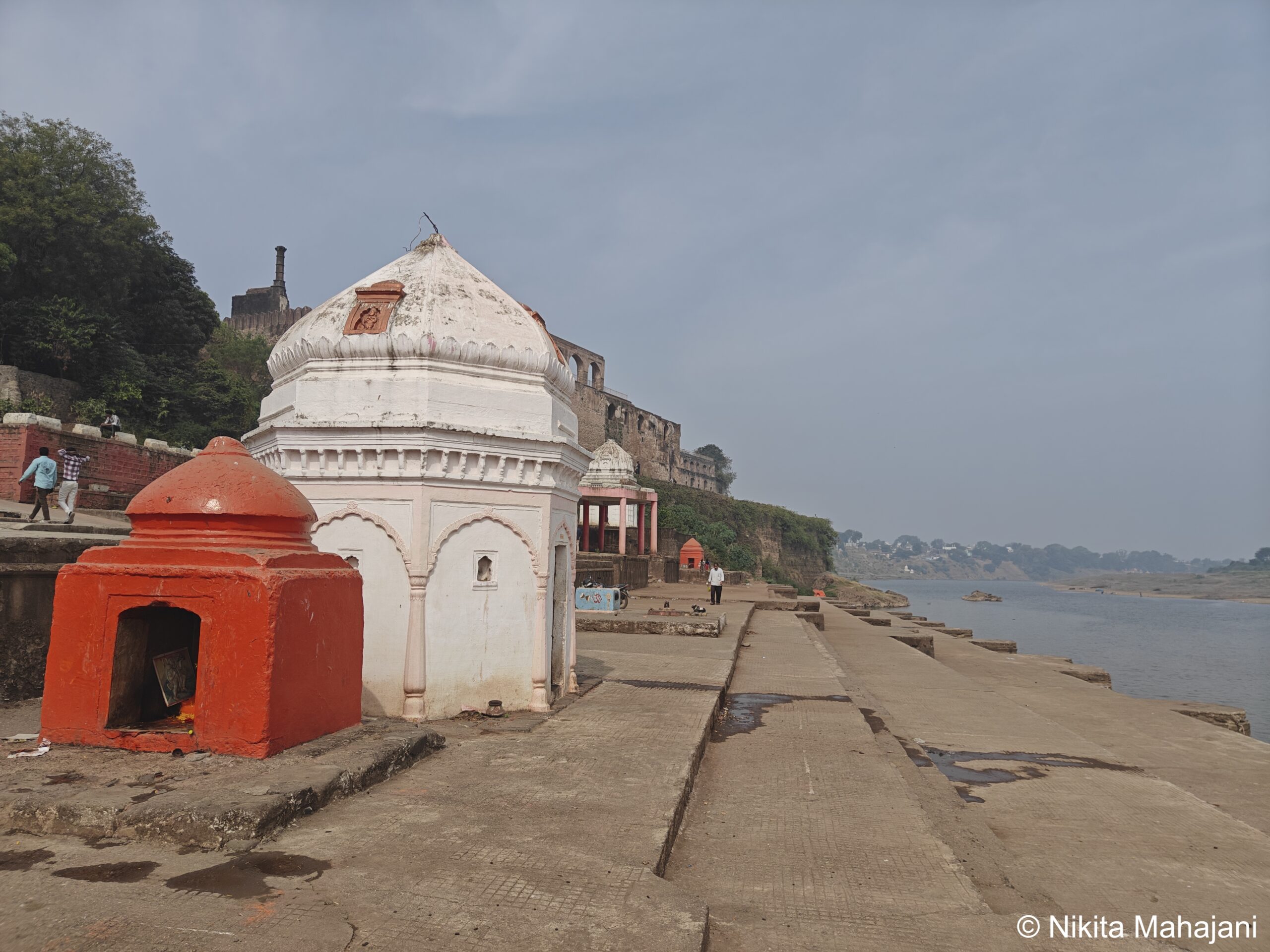
We then made our way to Rajghat, a peaceful riverside spot on the banks of the Tapti river. Rajghat is at a walking distance from Shahi Qila. This picturesque ghat on the banks of the Tapti River is a serene spot, surrounded by numerous temples and a designated bathing area. The river flows with clear, unpolluted water, enhancing the tranquil atmosphere. Across the river, the majestic Shahi Qila rises proudly, serving as a powerful reminder of the region’s glorious past.


We visited Ahukhana, an erstwhile royal garden and resting place of Mumtaz Mahal before her remains were shifted to Agra. Ahukhana, located on the right bank of the Tapti River, was built by Emperor Shah Jahan. His wife, Mumtaz Mahal—originally from Burhanpur—passed away here in 1631 during the birth of their 14th child. Deeply grieving, Shah Jahan envisioned creating an extraordinary memorial for her, one that would be remembered forever. However, he was informed that the region lacked quality marble and the soil wasn’t suitable for such a grand structure.
Mumtaz Mahal was temporarily buried at this site for six months before her remains were moved to Agra, where the Taj Mahal was eventually built. It is believed that Shah Jahan had initially intended to construct the Taj Mahal in Burhanpur, but logistical challenges led him to choose Agra instead.
Today, Ahukhana stands alone in a vast, mostly deserted plot of land. The site appears neglected, with poorly maintained approach roads and no nearby restaurants or facilities. Entry is free.
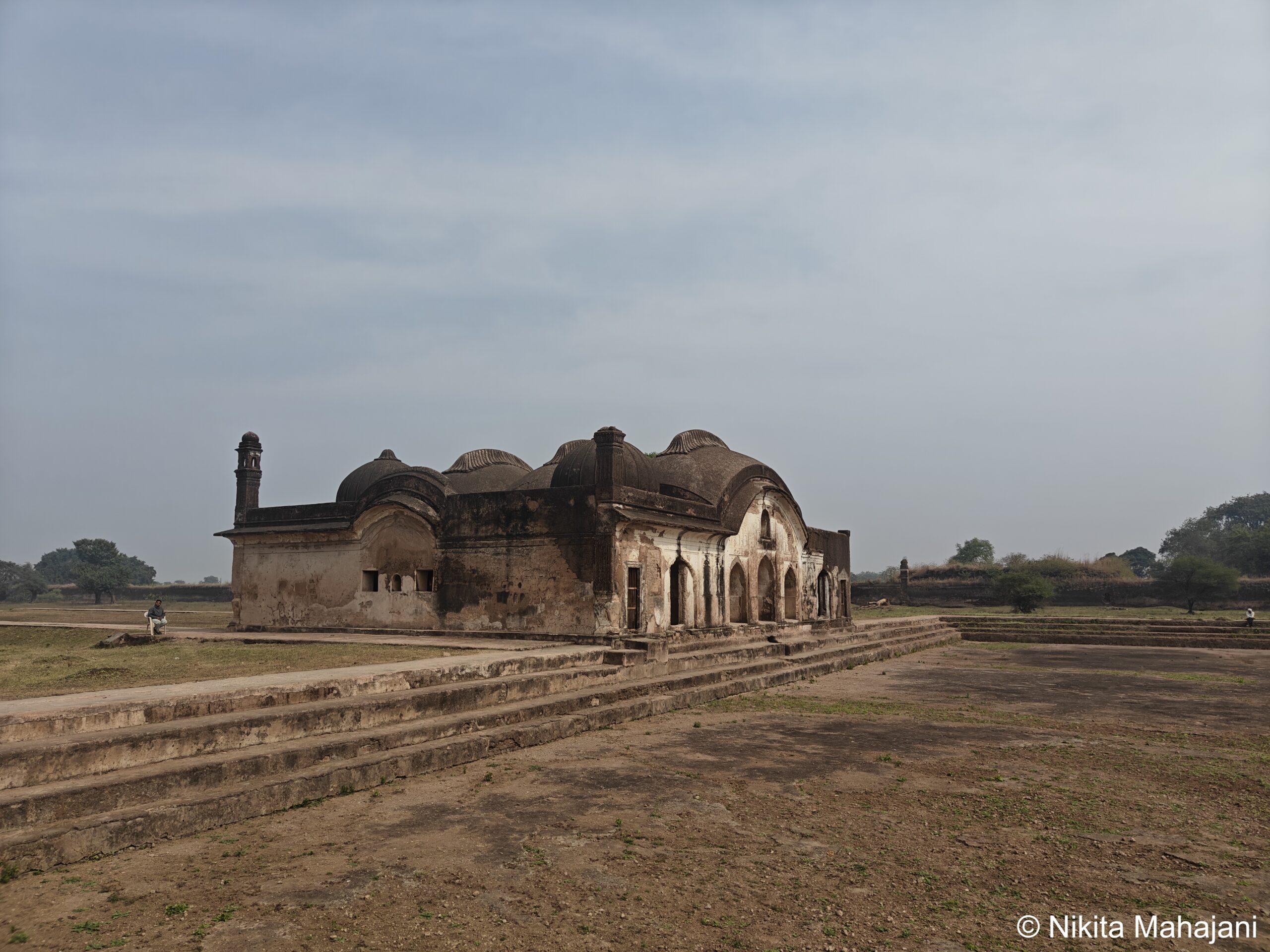
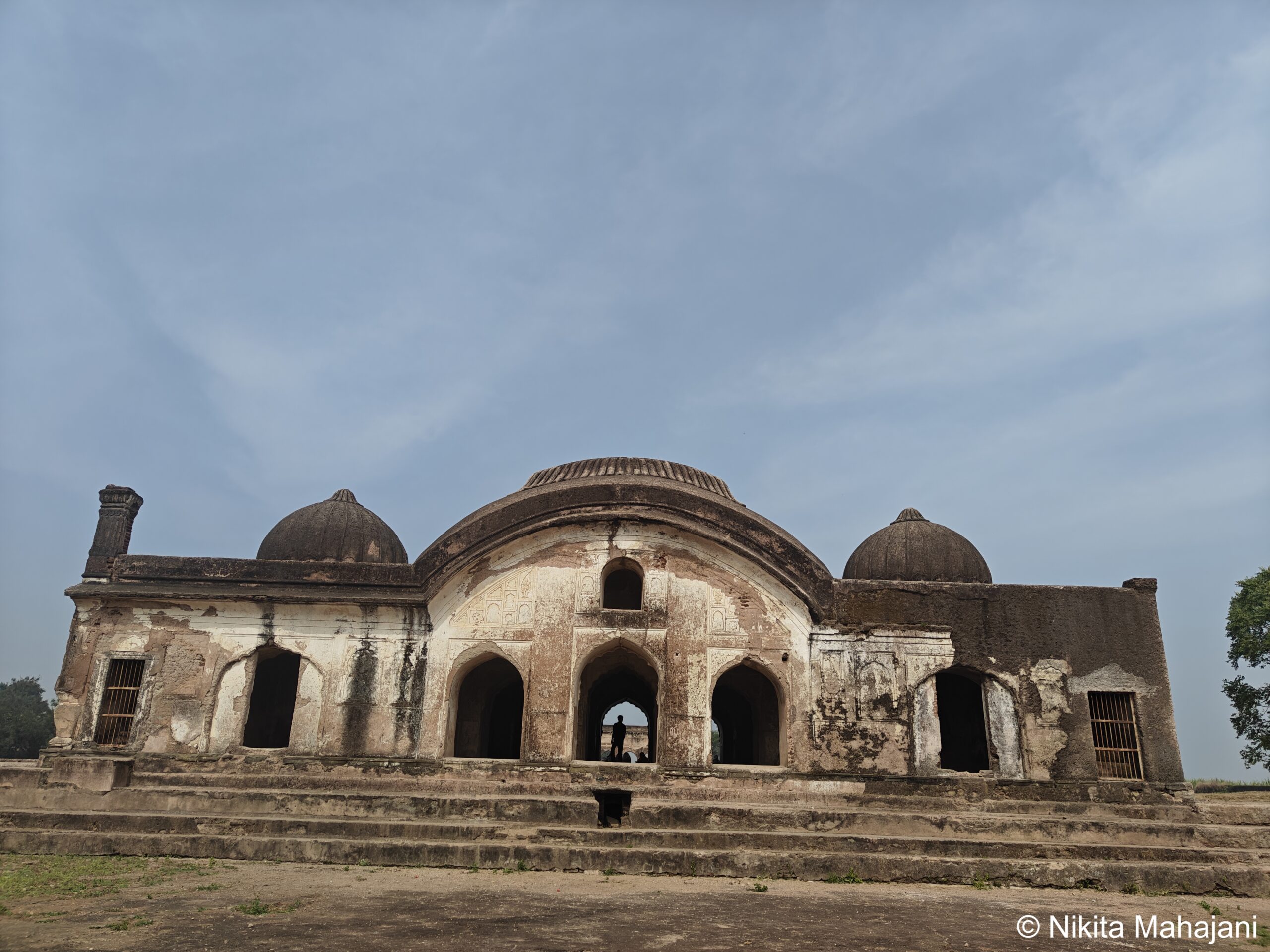
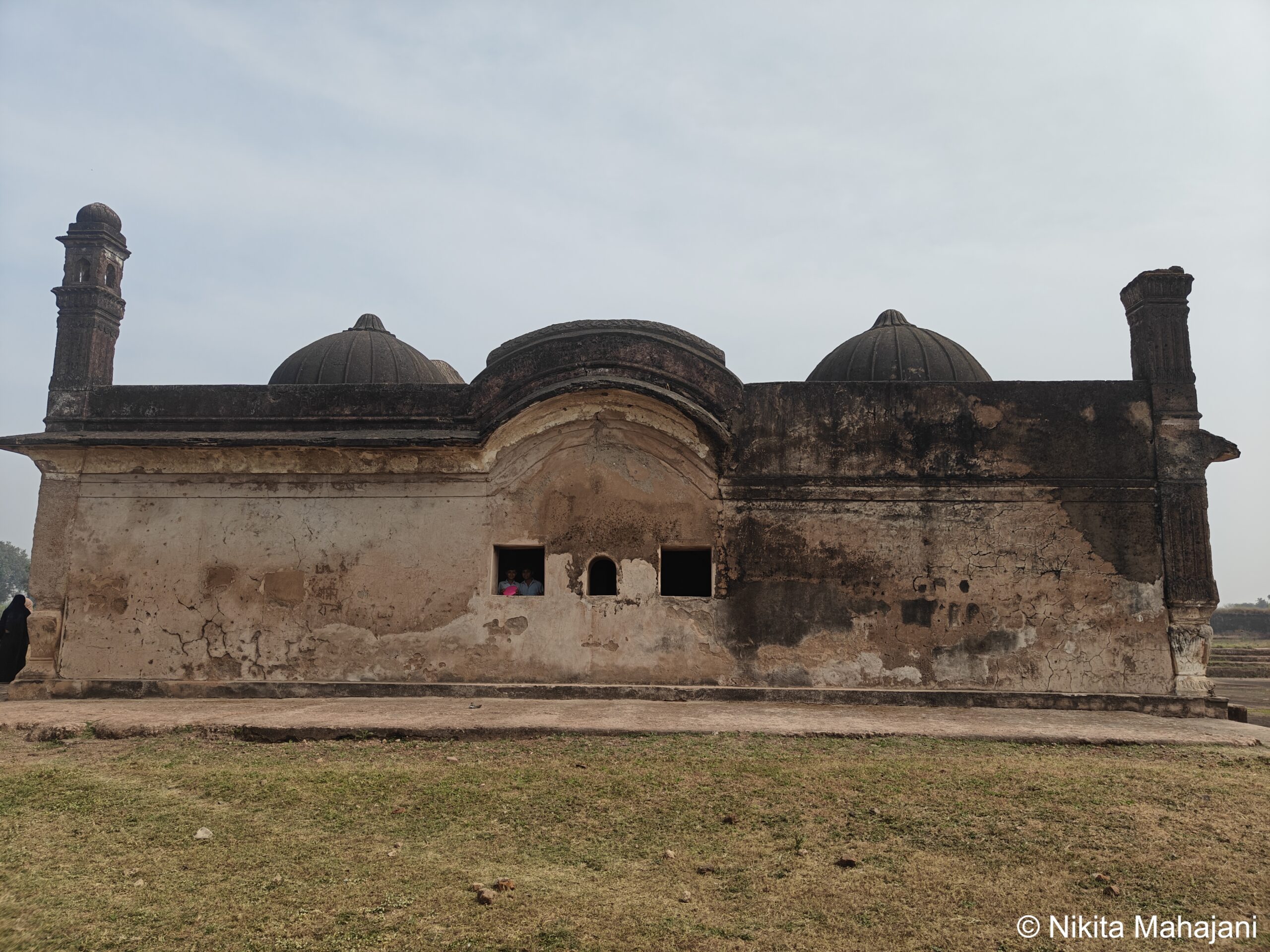
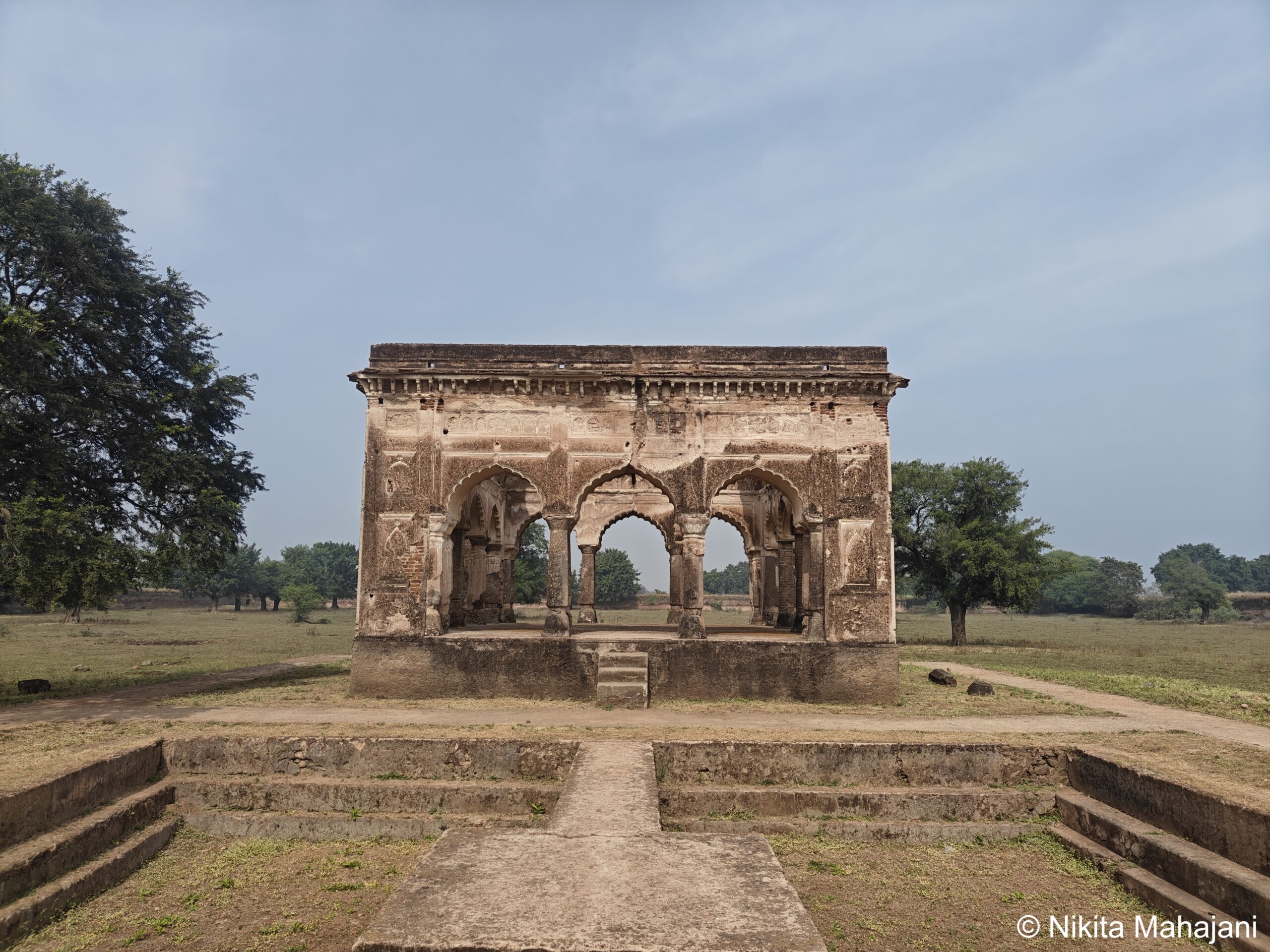
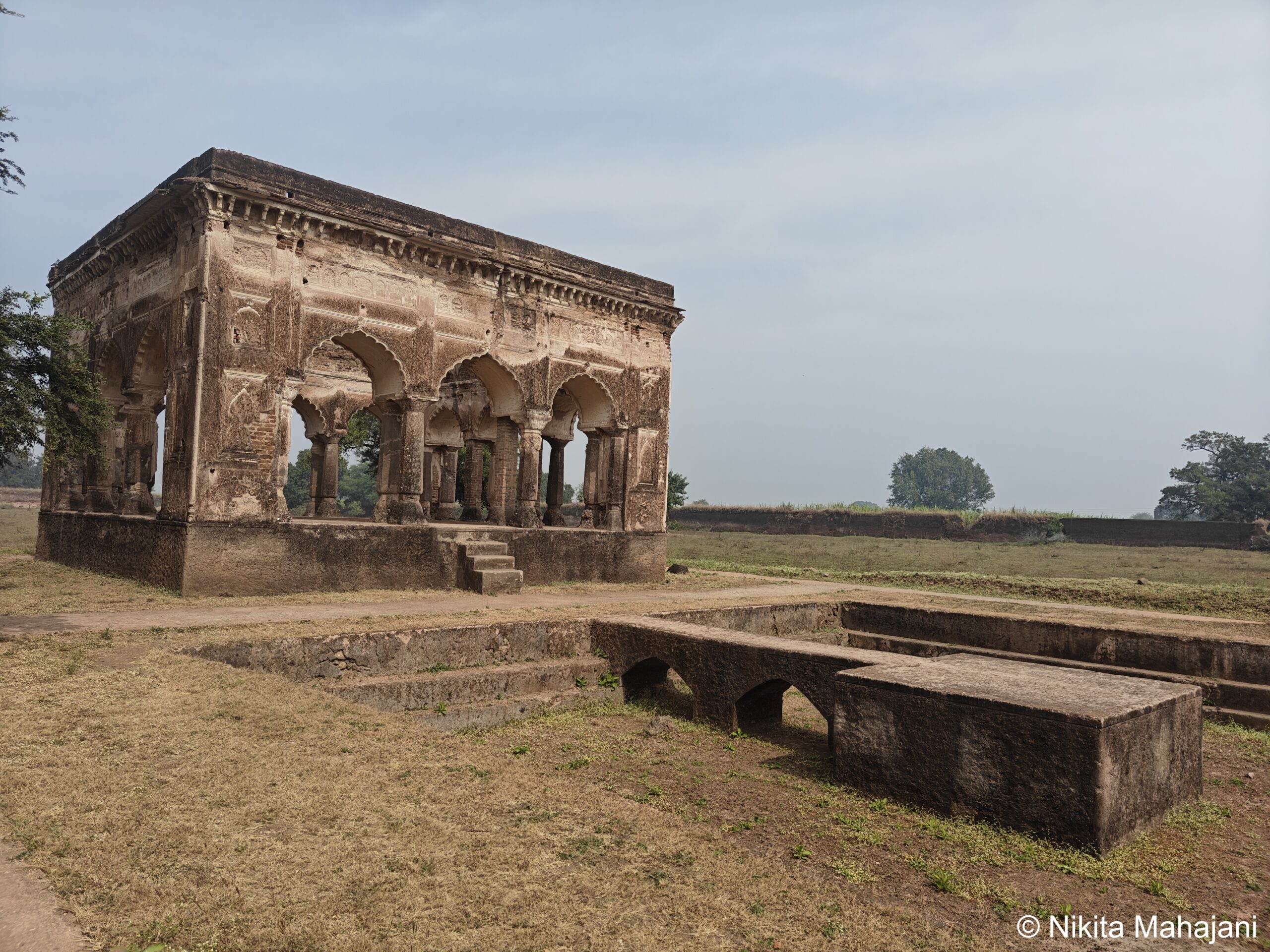
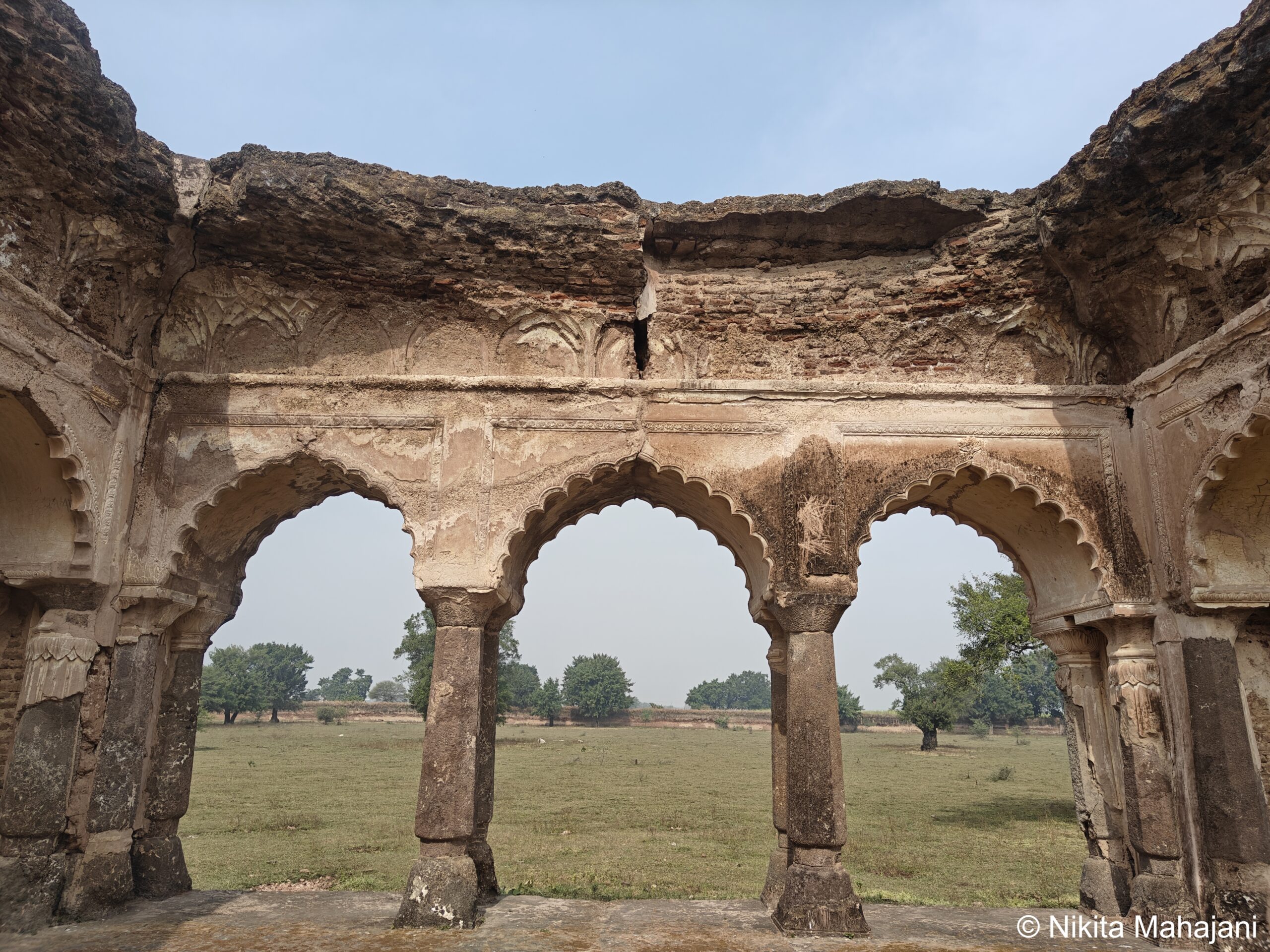
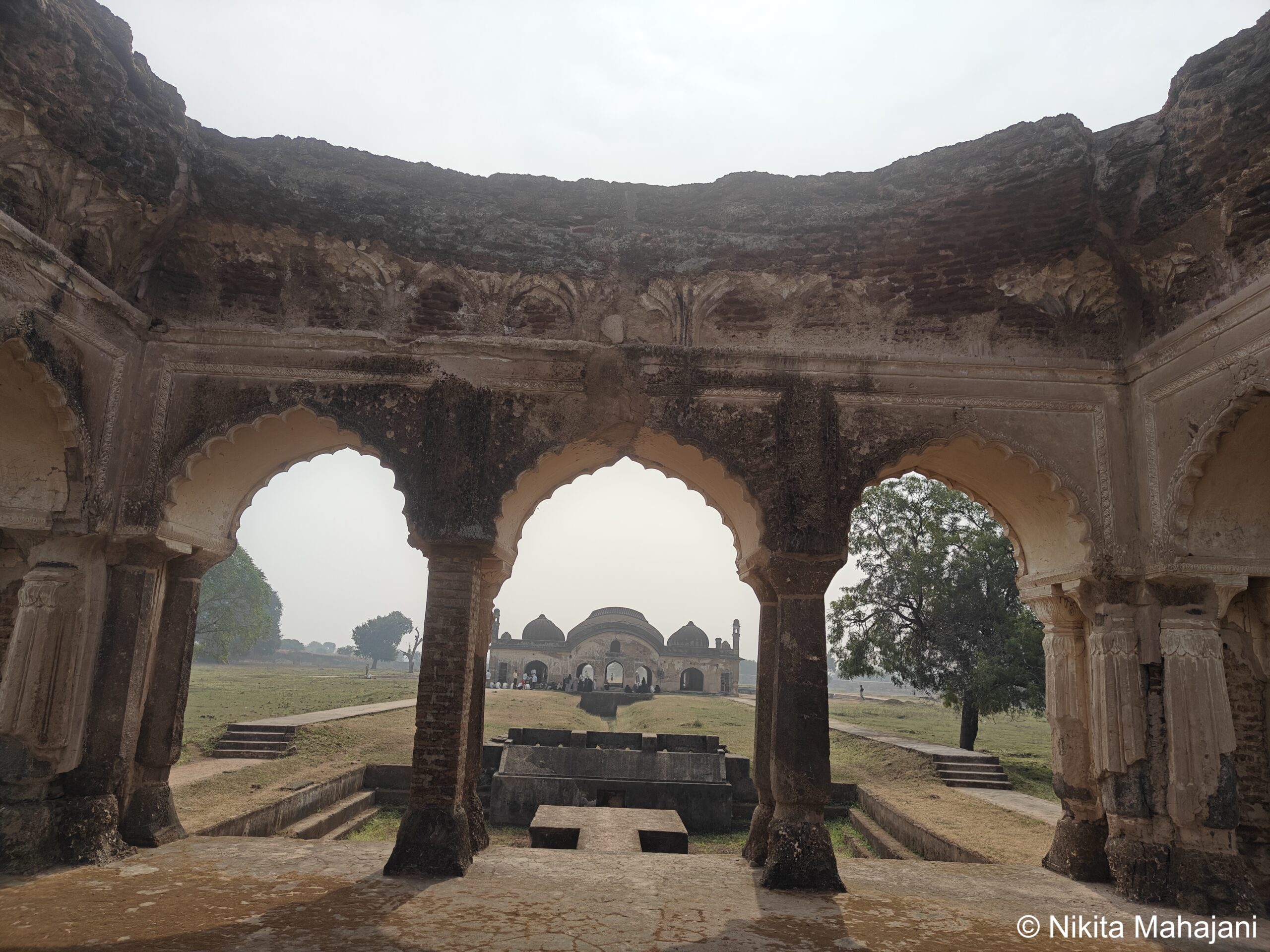
Our next visit was to Masjid Baigum Mumtaz Mahal, a beautiful mosque showcasing exquisite Mughal architecture.
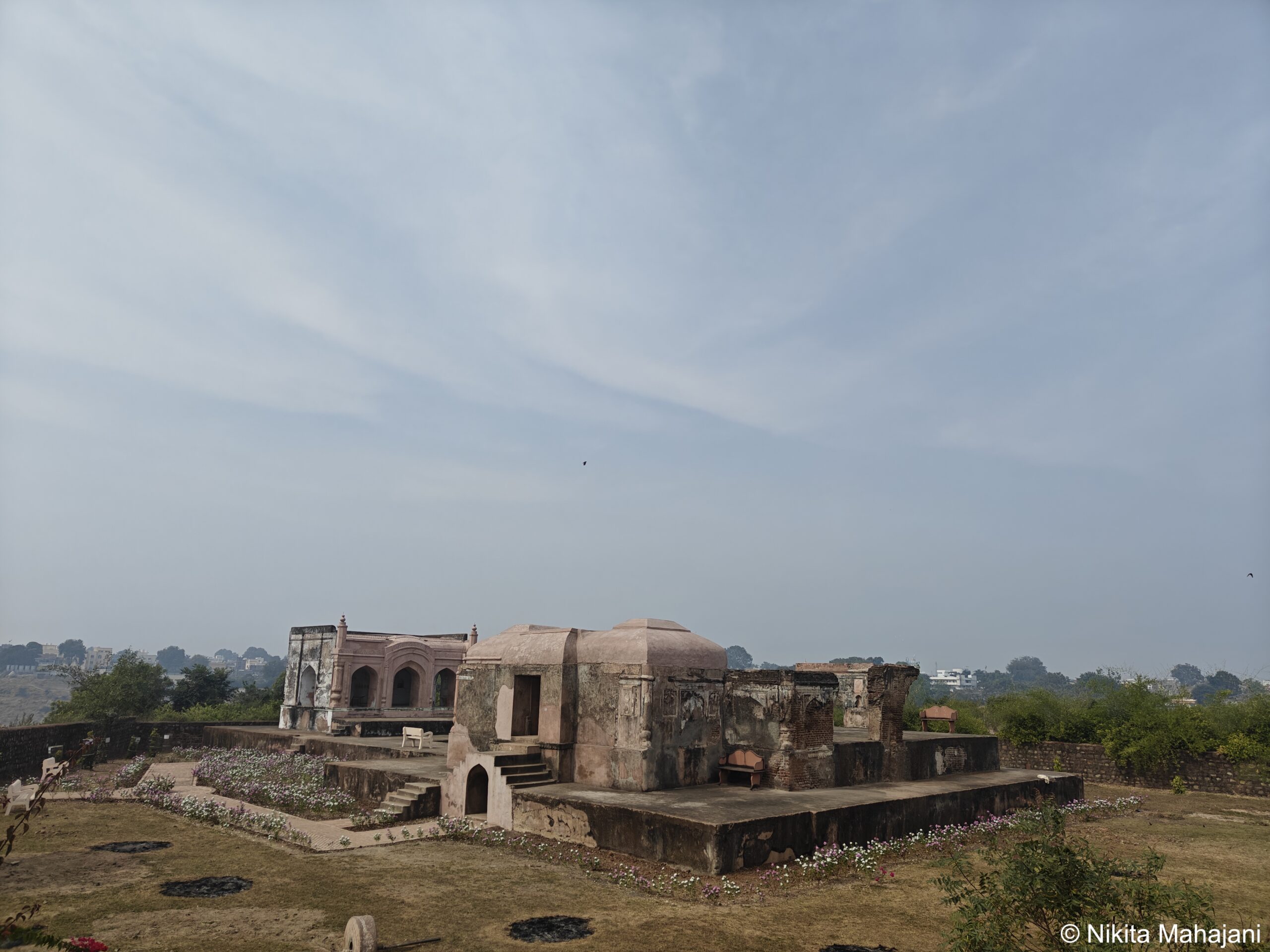

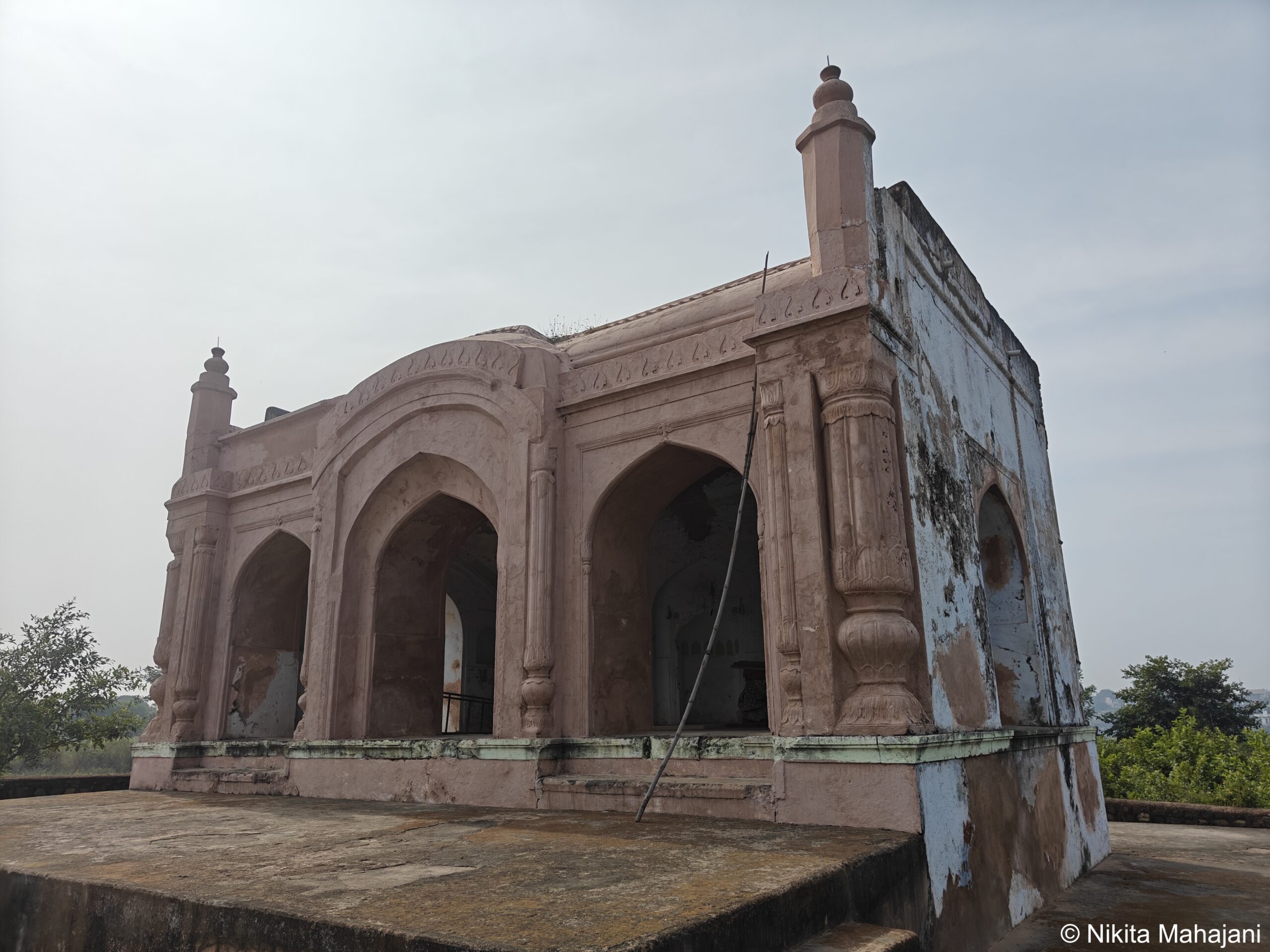

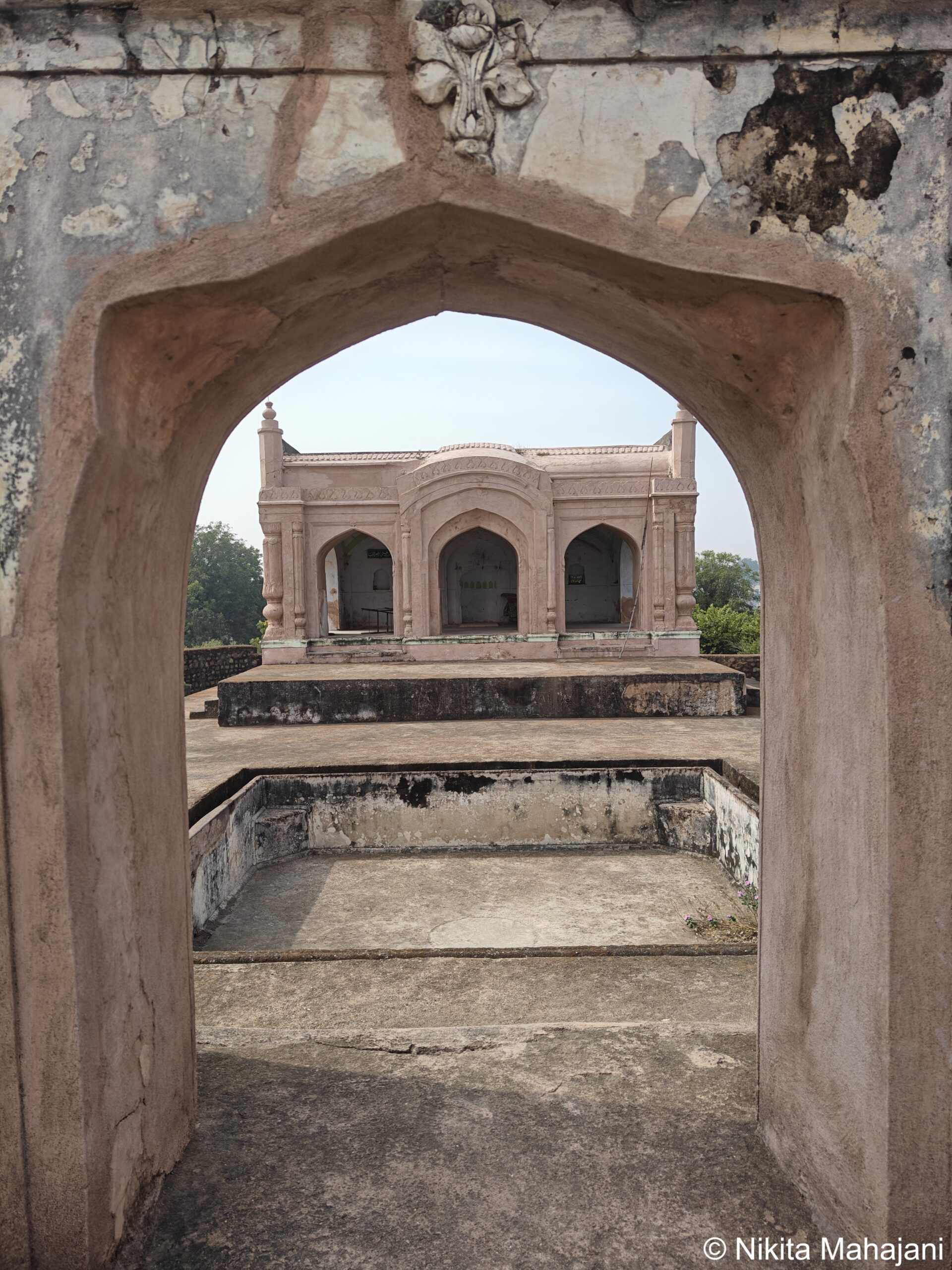
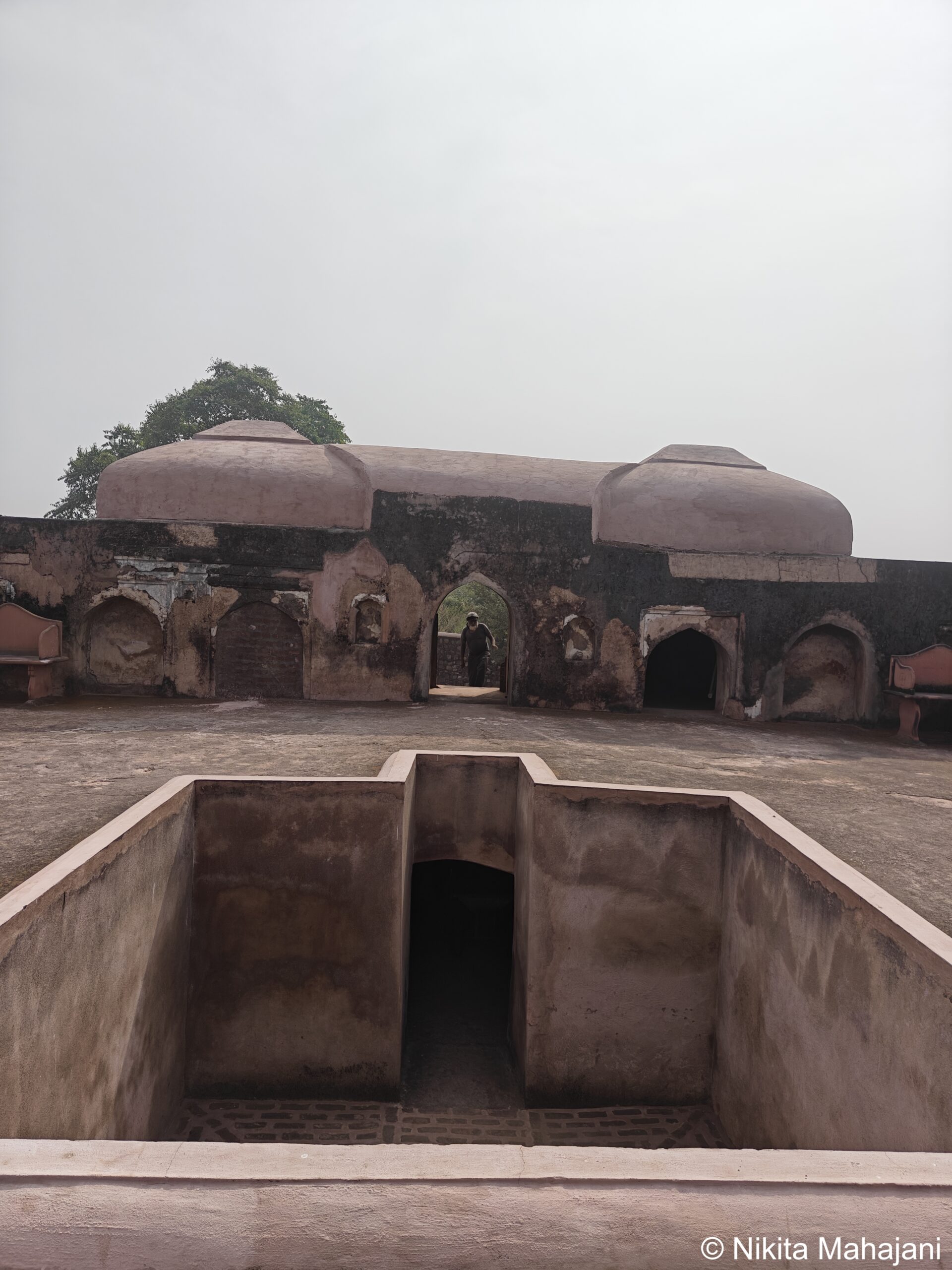
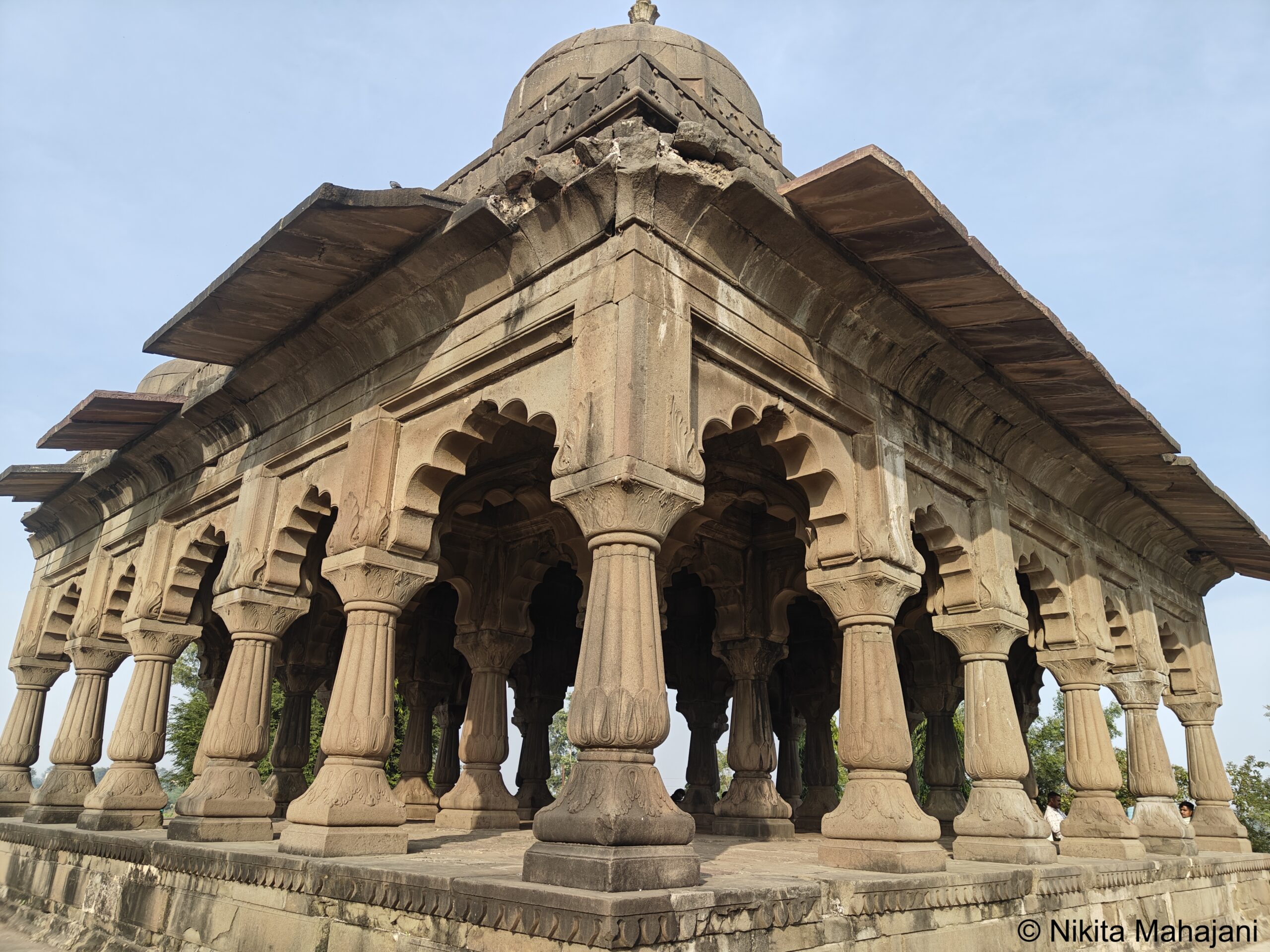
By lunchtime, we returned to Hotel Highrise Regency for a refreshing break. Post lunch, we explored Raja Jay Singh Ki Chhatri. It is situated at the union of Mohana and Tapti river and display’s Rajasthan’s sculptural art and Mughal period’s art. Four big and four small domes are built around this 32 pillared attractive chhatri which adds more beauty to it.
Entry to visit this place is free of cost. There is no parking as such. There was space for a couple of cars in the dense vegetation outside this monument.

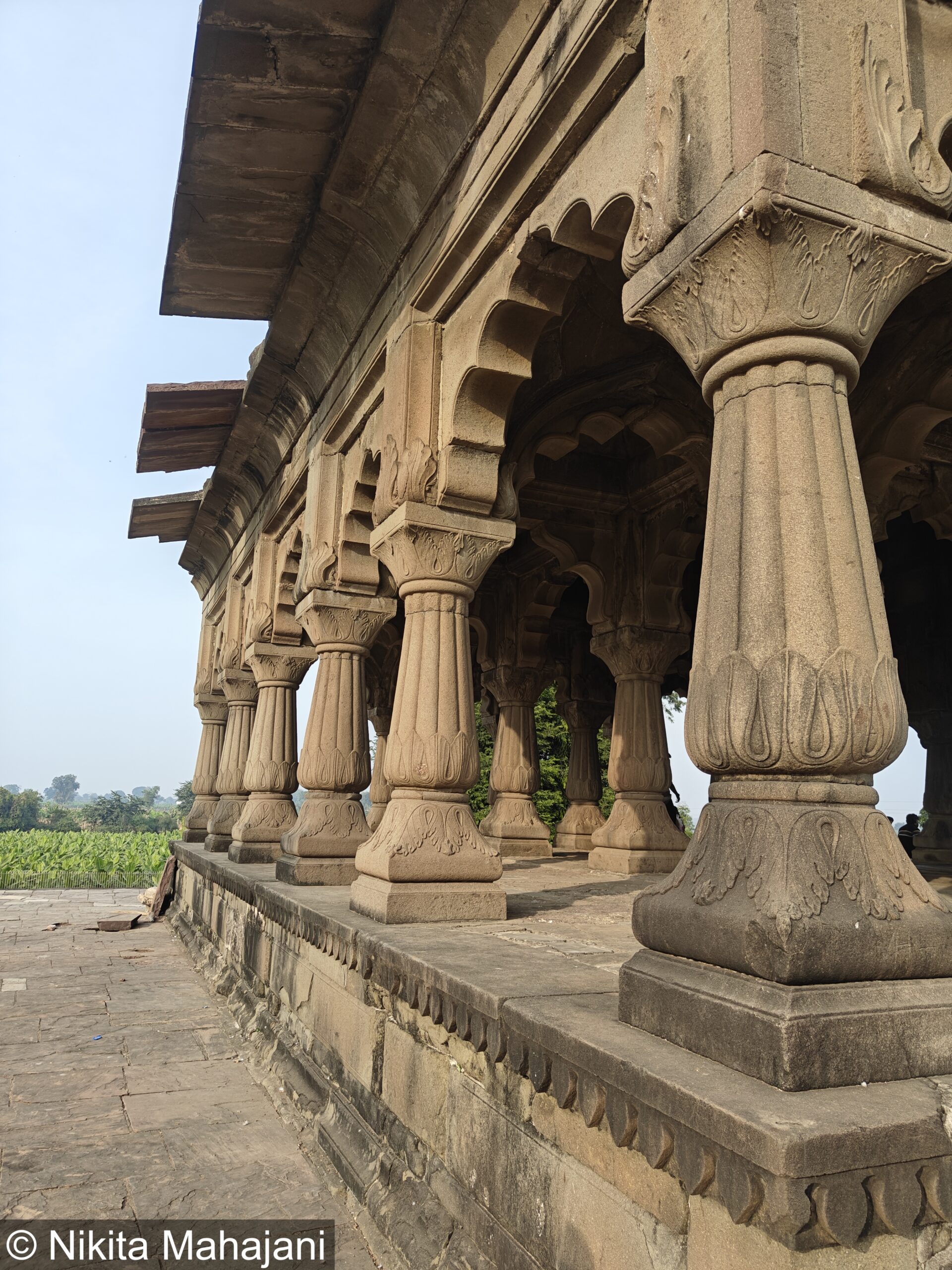
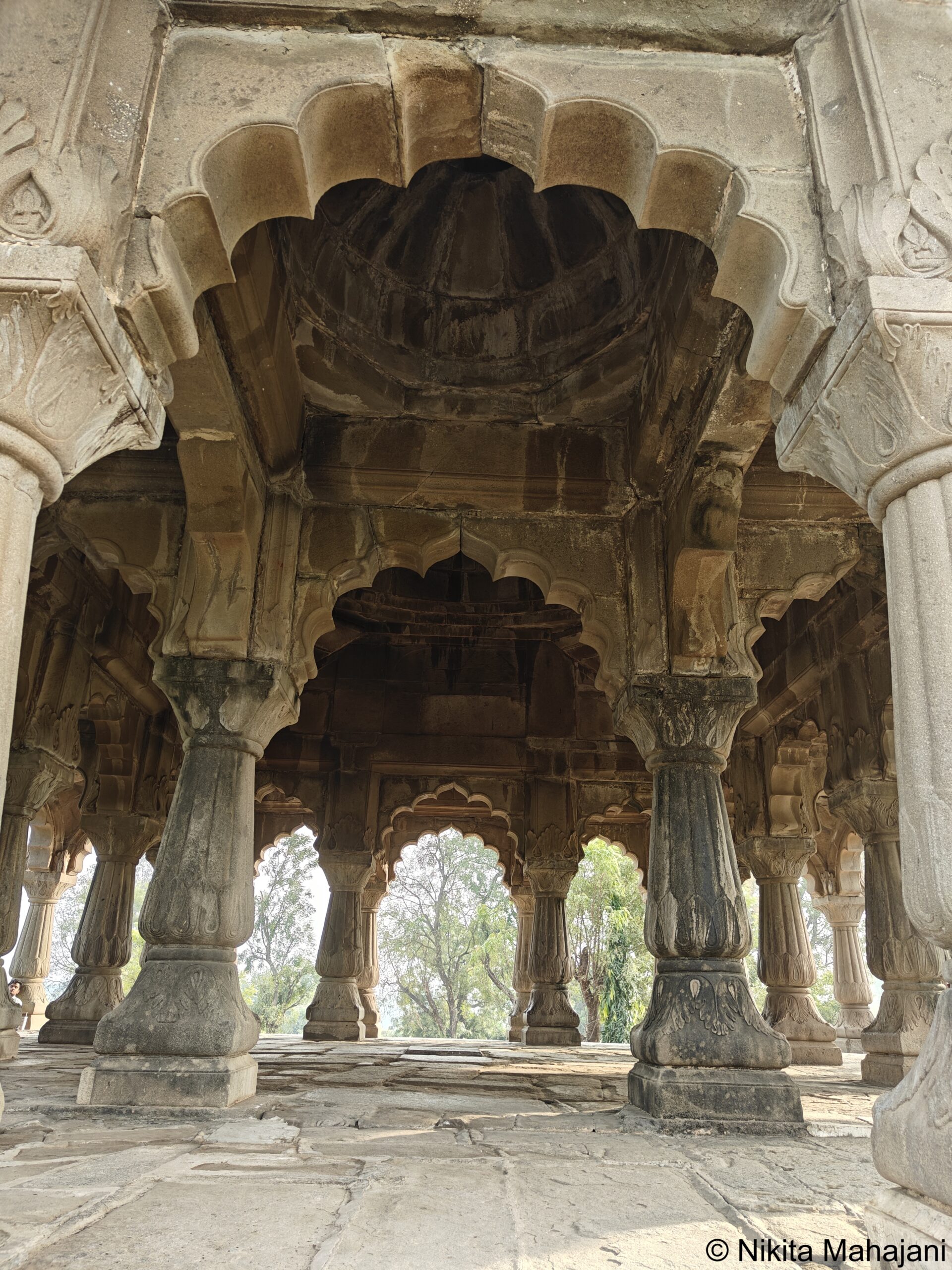
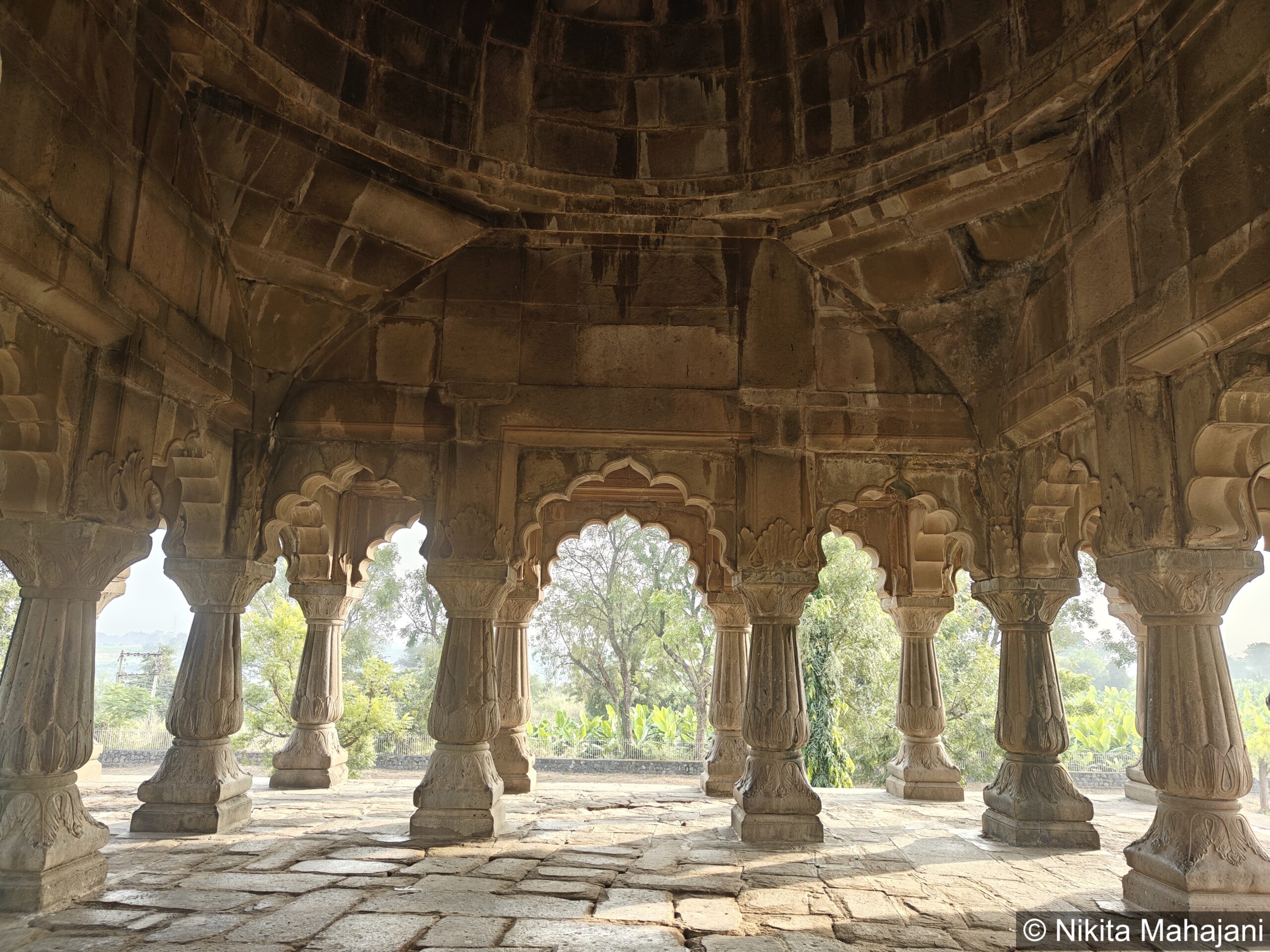
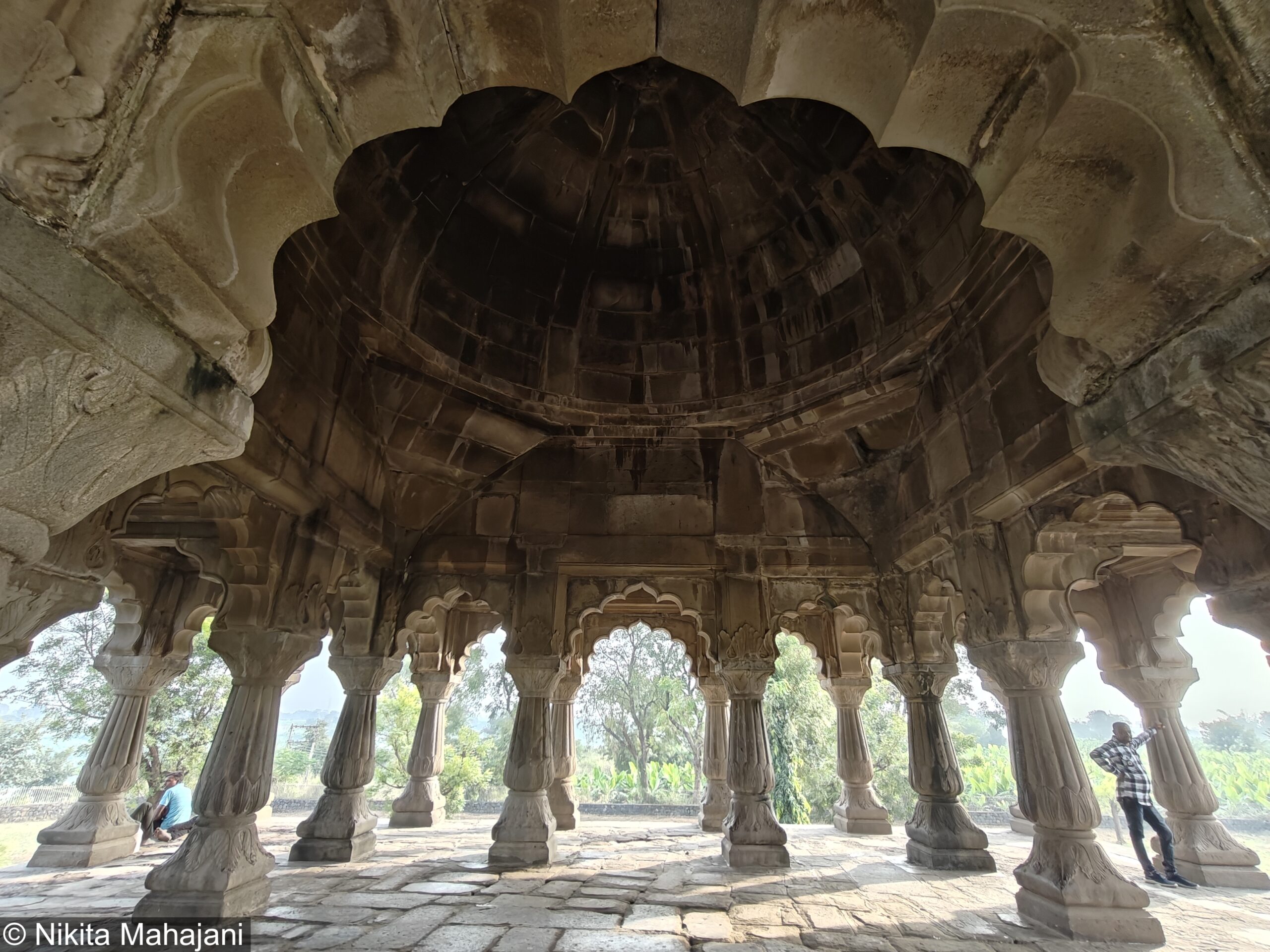
Barah Dari, a pavilion with twelve doors offering a panoramic view of the surroundings. It is used as a public park by local people. It is a pavilion-style structure featuring twelve doorways, designed to ensure natural ventilation and the free flow of air. Typically square in shape, it has three arched openings on each of its four sides.
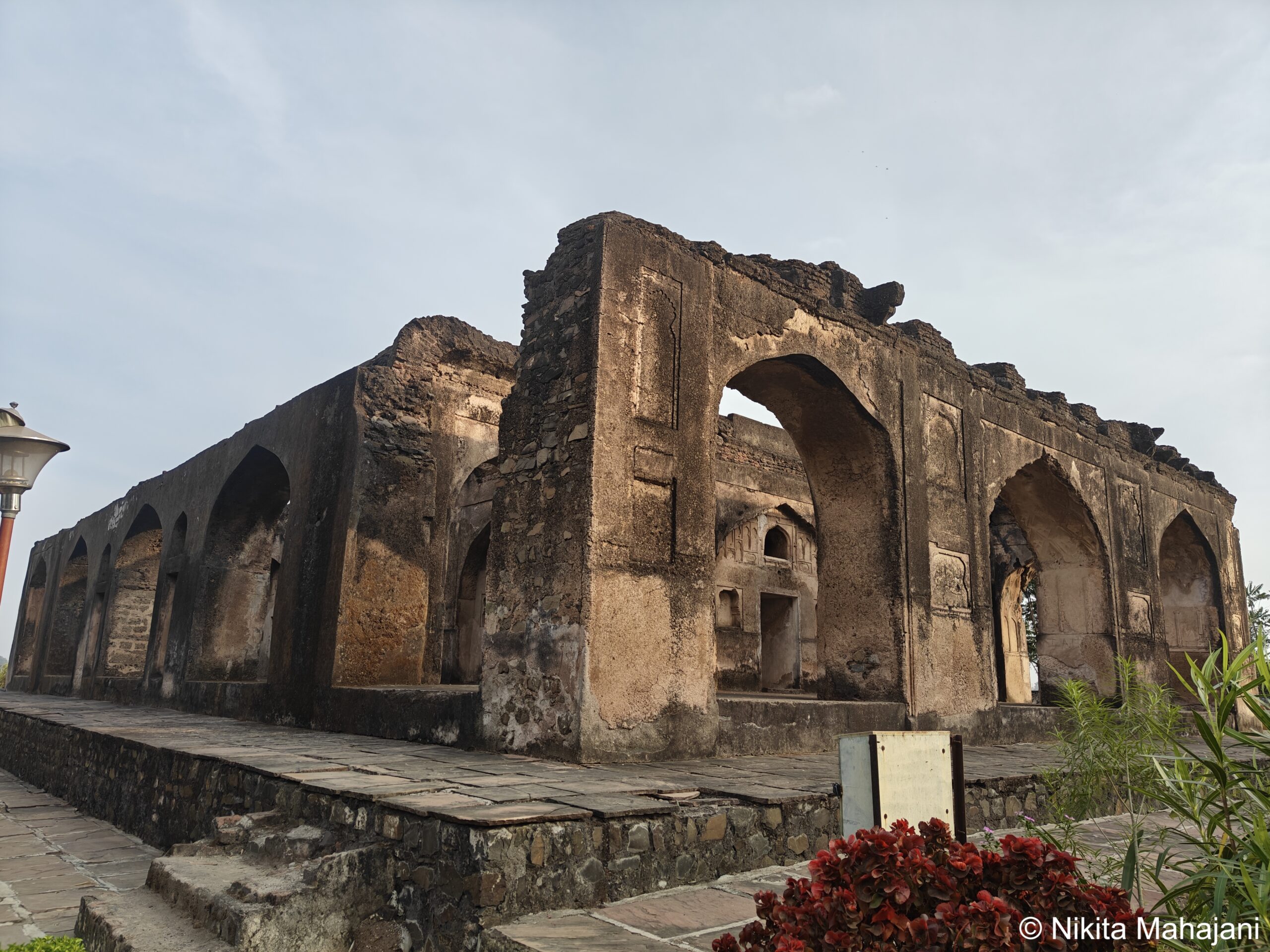
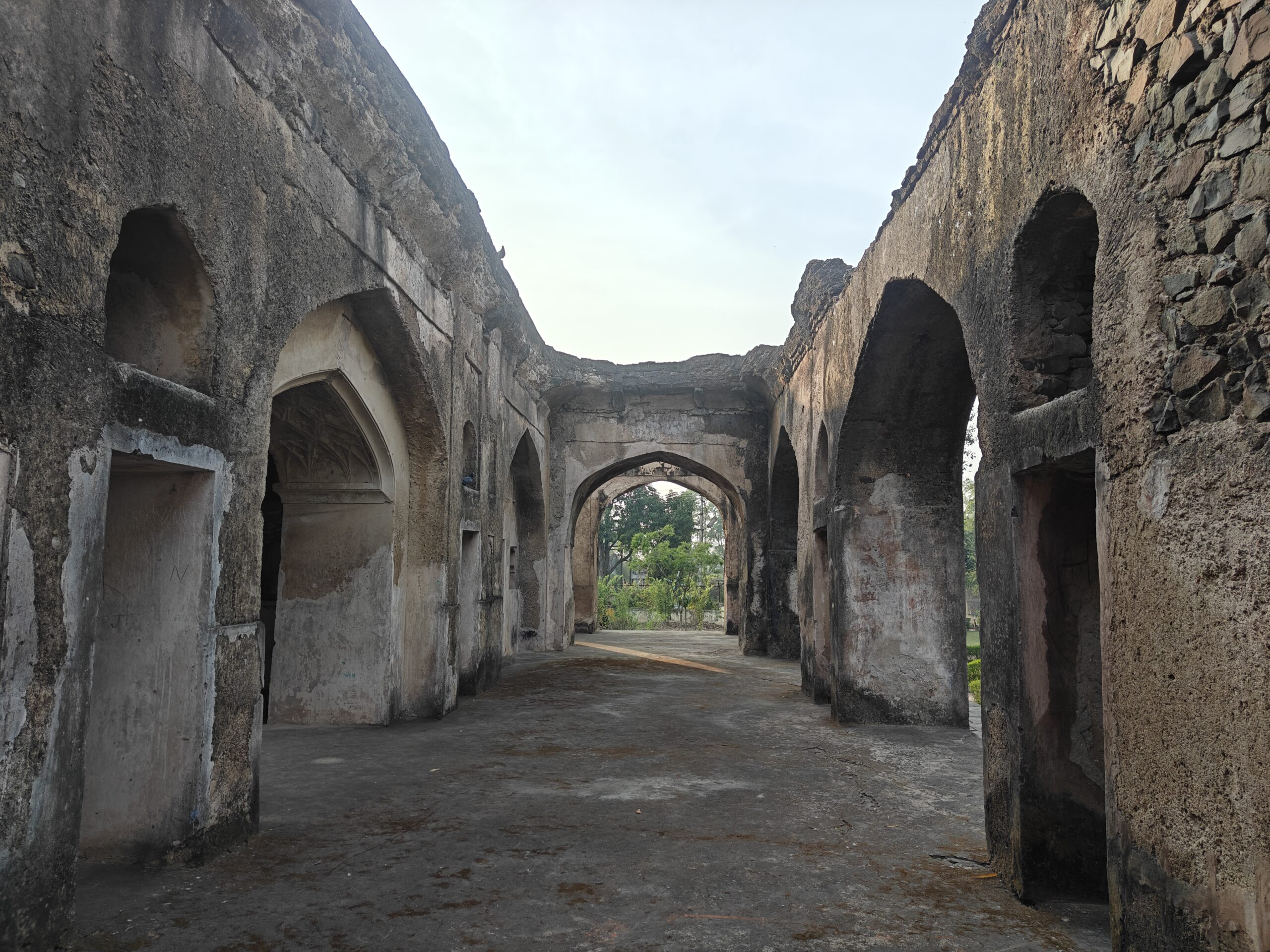
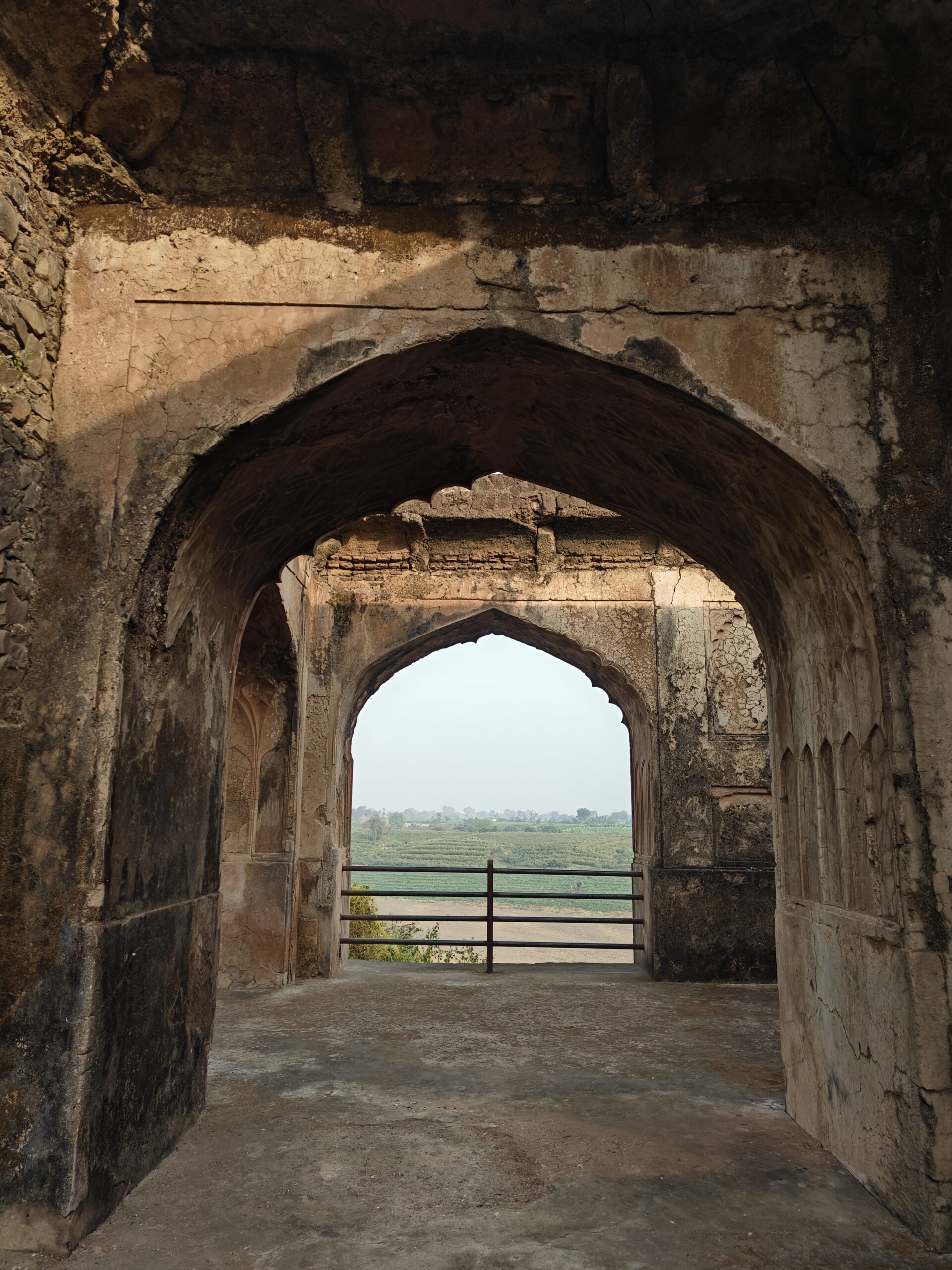
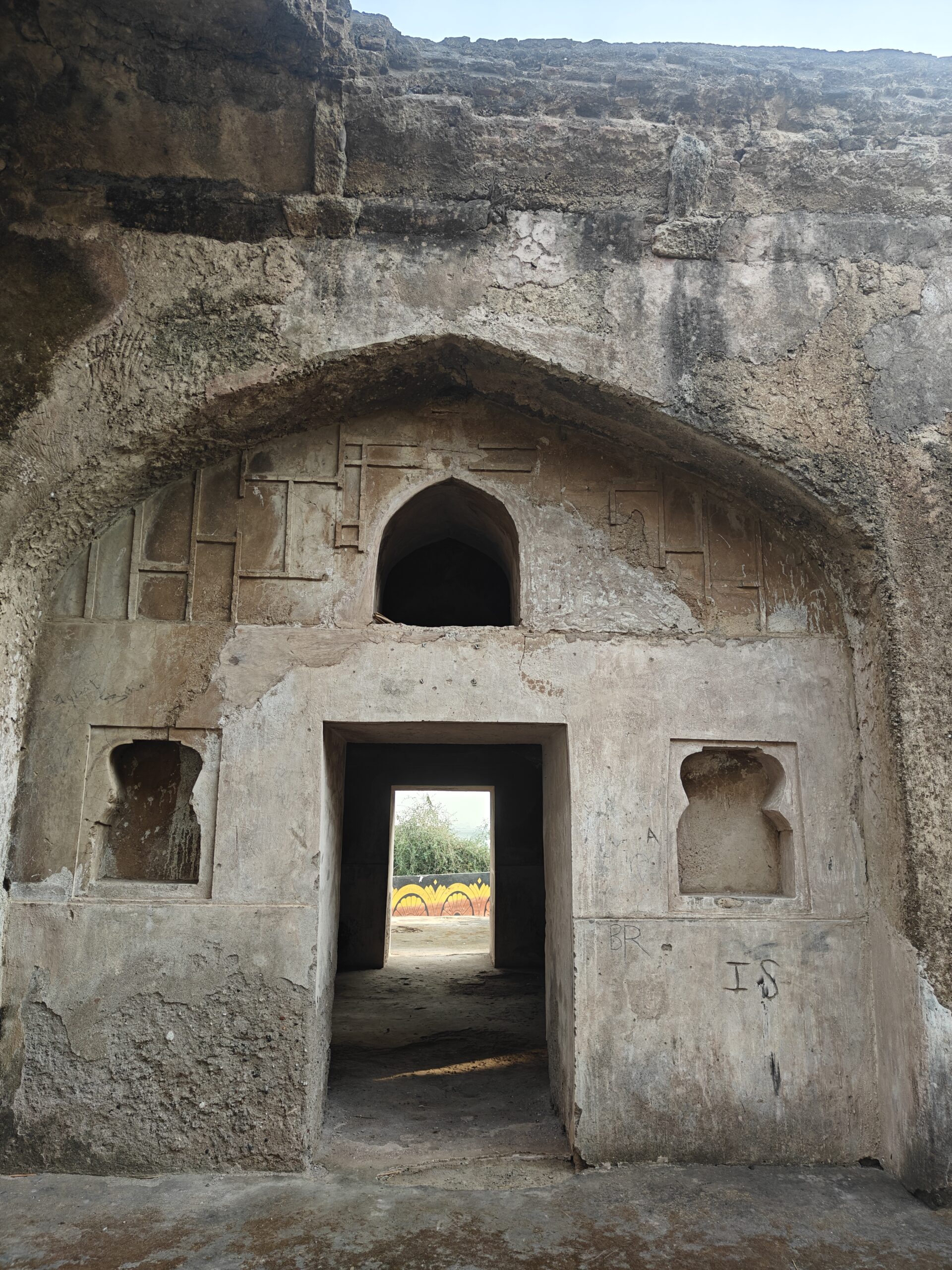
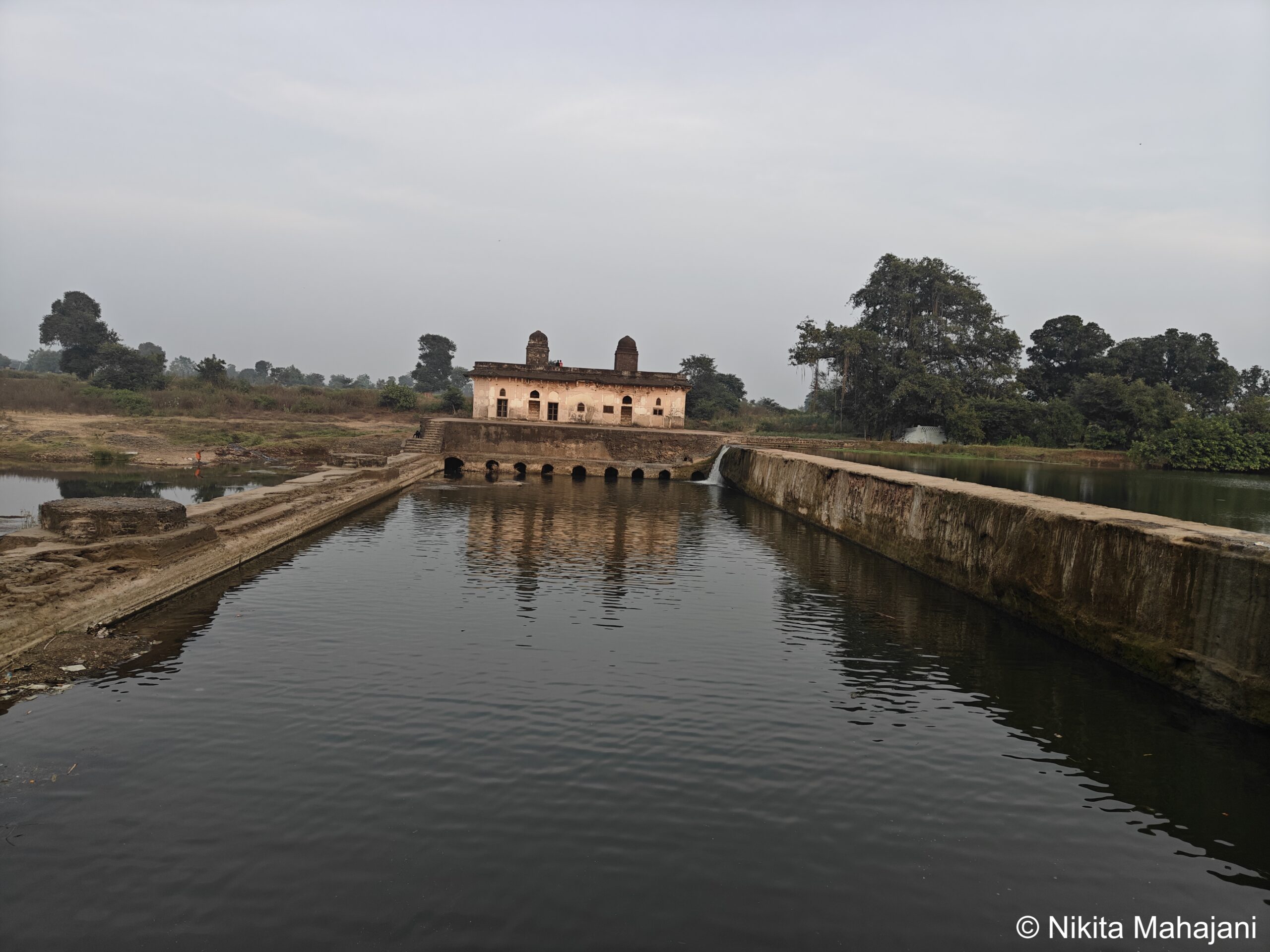
We started the journey to Mahel Gul Aarah in the evening. It is 21kms from Burhanpur. These are two identical mahals which are mirrored on opposite sides of the river. There is a dam wall that connects both the Mahals from the water. Our car reached till the Mahal which was on the landward side (near the highway). Then we had to walk for a few yards to reach the Mahal. It was saddening to know that this place is used as an open toilet by the localites as it was full of human excreta. There is no entry charge. We just had to enter our names in the visitor’s entry book with the guard.
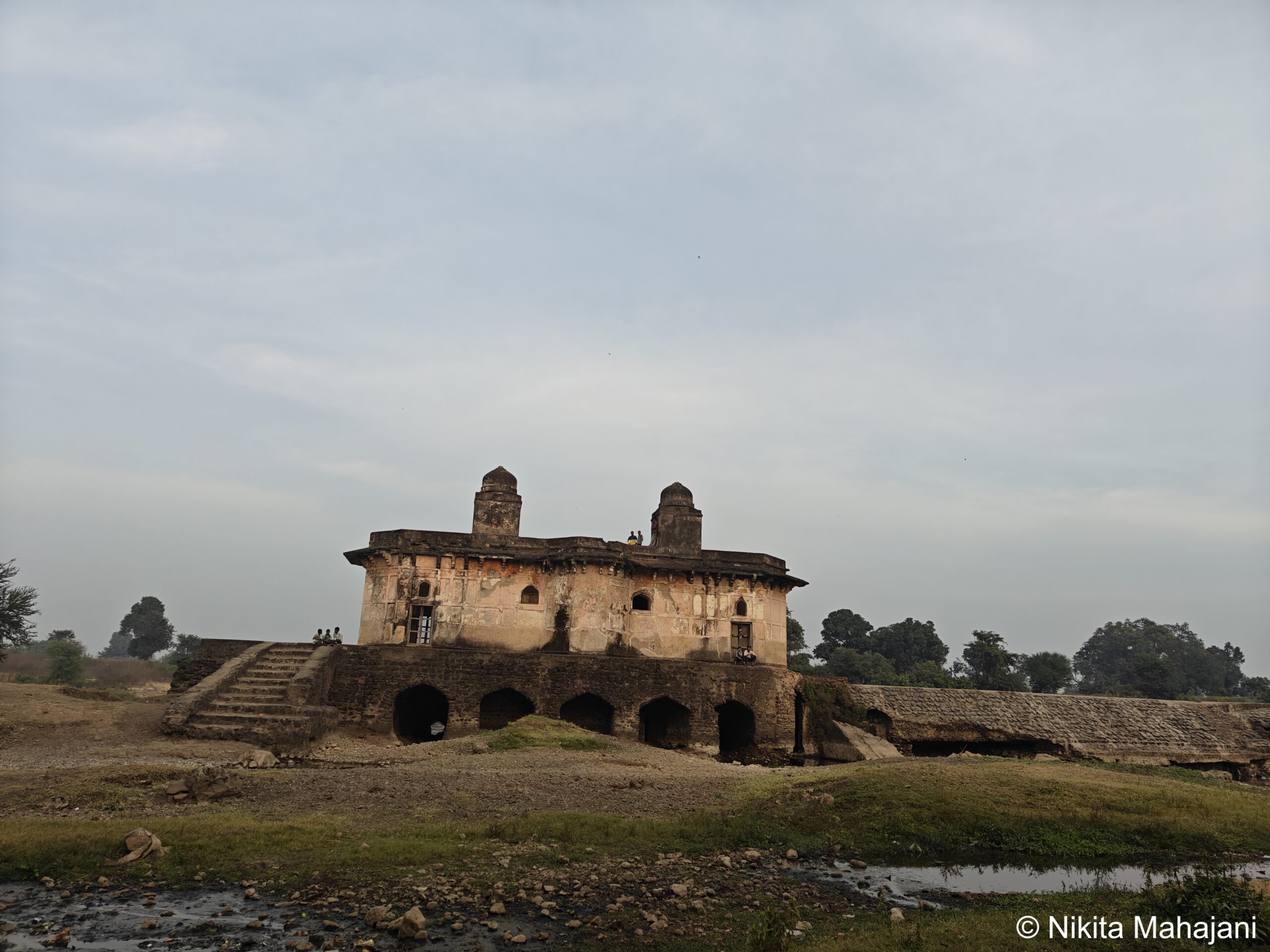
This monument was probably built by Khurram later on Shah Jahan (1627-58) for a lady named Gulara. It consist of a pair of pleasure houses, one each on the opposite banks of the bada utaoli with plain structures accompanied with attractive cupolas. The structures are joined with each other with a fine masonry bund across the rivulet which falls in magnificient cascades. The terrace of this building is accessible and we could view the the twin mahal on the other side of the dam. We enjoyed the sunset from the terrace and proceeded back to Burhanpur.
We enjoyed a delightful dinner at our hotel before heading out for the Sound and Light Show at Shahi Qila. The illuminated fort, accompanied by narrations of its historical significance, created a magical end to our day. During the sound and light show, a big snake was spotted in the first row of the audience which led to a lot a commotion. So everyone left the show.
Burhanpur turned out to be a hidden treasure trove of history, architecture, and culture. This journey was not just about exploring a place but about experiencing the echoes of the past that still resonate in its monuments. If you love history and road trips, Burhanpur is a must-visit destination !
To read the next blog on Day 03: Burhanpur & Asirgarh, click here.
Where did we eat ?
Hotel Highrise Regency, Burhanpur.
Hotel Kanhaiyya pure veg, Ahilyanagar.
Hotel Ajanta Green Restaurant & Resort
Veggie Delight Fine dining Restaurant, Burhanpur.