To read the previous blog on Junnar-Jawhar-Nashik Day 2&3 click here
Day 4: Spiritual Sojourn in Nashik
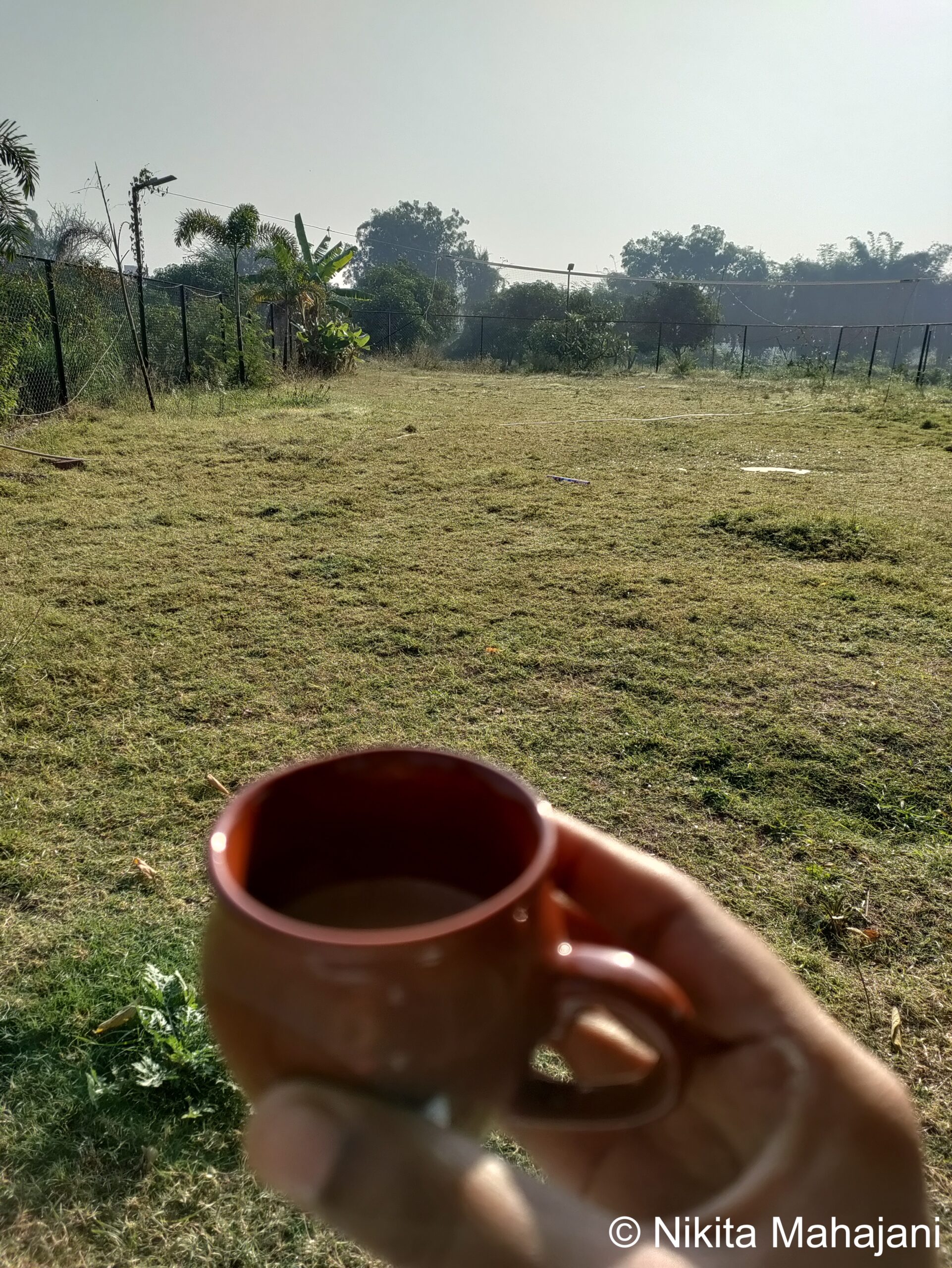
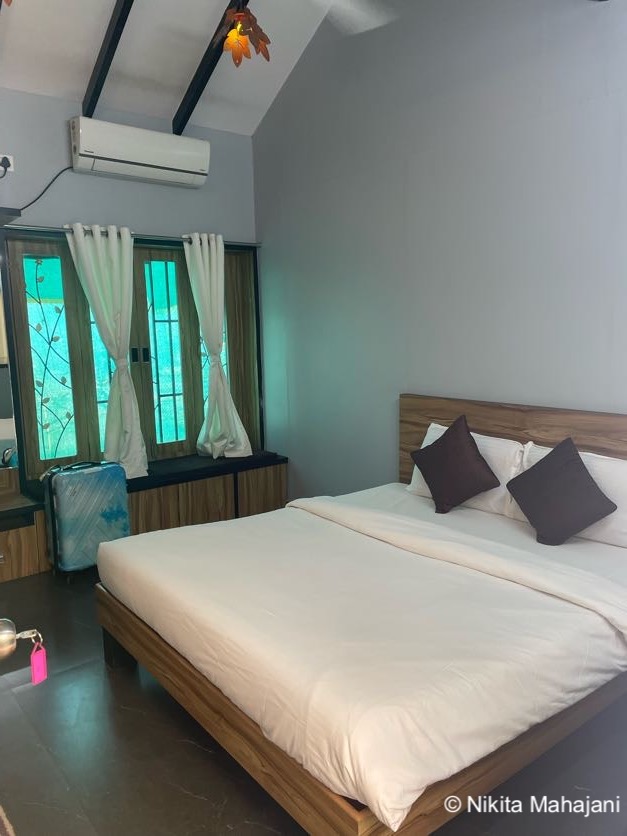
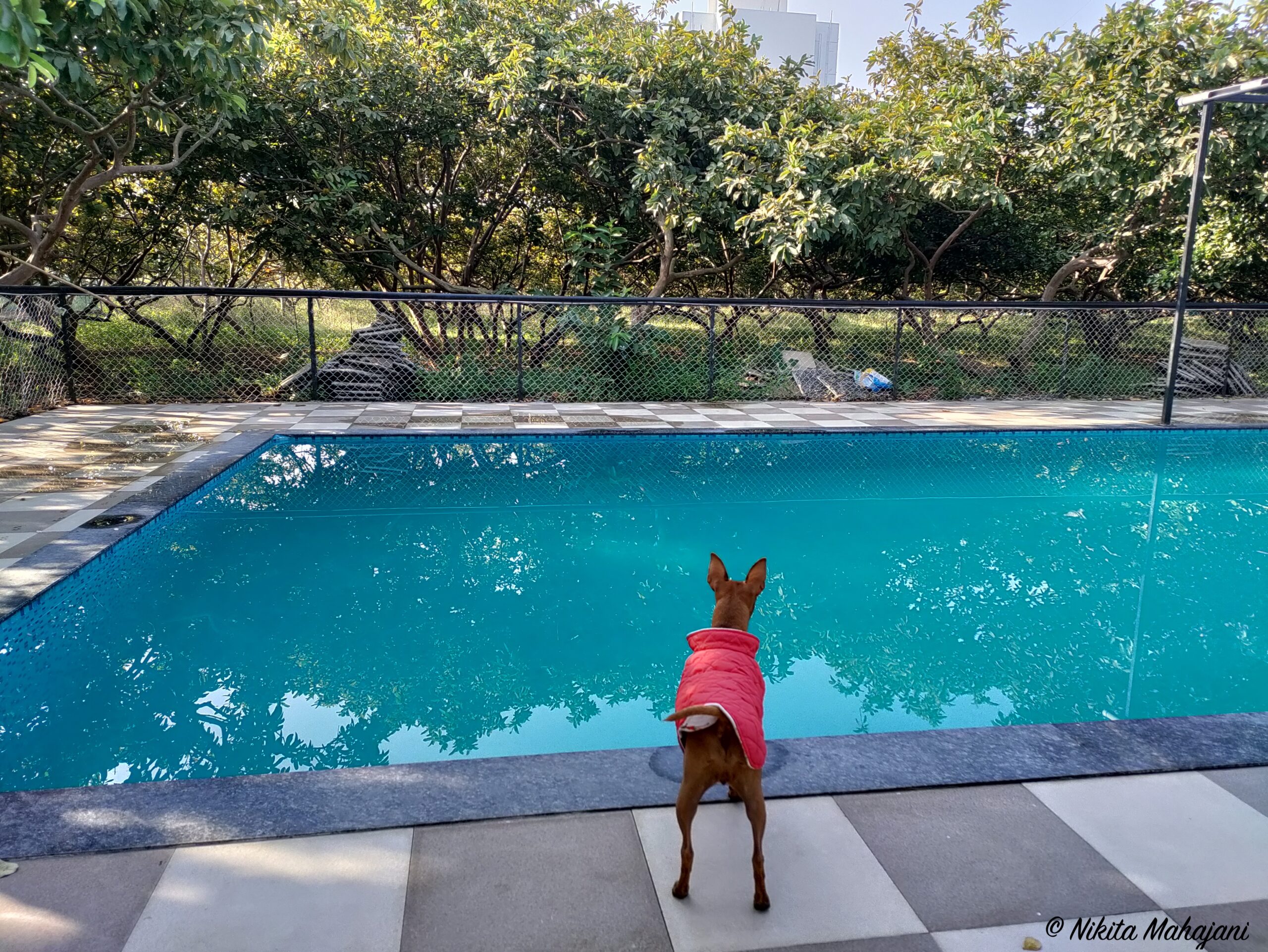
On 25th December, we left Jawhar and drove toward Nashik. After checking into Raghunandan Resort, we had lunch. Raghunandan Resort is surrounded by lush greenery, with guava, mango, and various other trees creating a serene and picturesque environment. It also features a beautiful swimming pool, adding to its charm. Though located slightly off the main road, the resort offers a peaceful and relaxing retreat. Situated just 10 minutes from Sula Vineyards, the resort boasts impeccably clean rooms and a great ambiance. It is a fully pet-friendly property with no restrictions on pet movement. Additionally, there are friendly indie dogs on the premises. The entire property is securely fenced with a gated entrance, making it safe for pets to roam freely without a leash. After having an afternoon nap, we set out to explore the spiritual side of Nashik.

Nashik holds great religious significance in India, primarily because it is believed to be the place where Lord Rama resided during his 14-year exile. It is also one of the four cities in India that host the Kumbh Mela, along with Allahabad, Haridwar, and Ujjain. This grand festival is held on the banks of the Godavari River, which originates nearby in Trimbakeshwar.
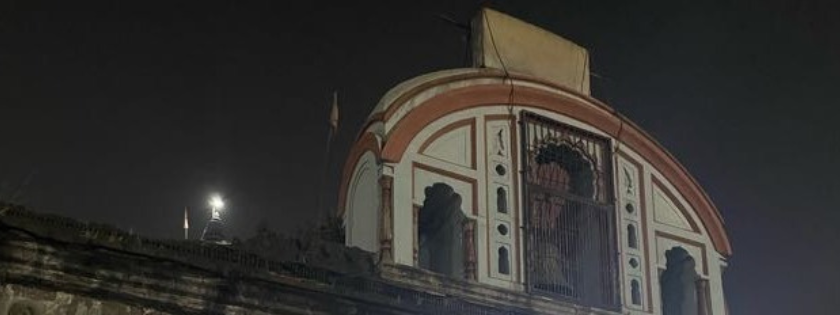
The day was filled with visits to Nashik’s famous temples, including Sundar Narayan Mandir, Shri Kalaram mandir, and Kapaleshwar Mandir, each offering a unique cultural experience. We also visited the Panchavati Ghat and the Naroshankar Mandir.
We parked the car near the Panchavati ghats and explored the riverside temples by walking. Since all these temples are located on the ghats of the river, we could take our pet dog along and there were no restrictions. Sophie enjoyed a quiet walk by the river. Although we did not take her inside any temple. This area is quite crowded. We went walking to Kalaram Mandir.
Kalaram Mandir

The Kalaram Temple is an ancient Hindu temple dedicated to Lord Rama, located in the Panchavati area of Nashik. It is one of the city’s most significant Hindu shrines. The temple gets its name from the black-colored statue of Lord Rama, as “Kalaram” translates to “Black Rama.” The sanctum also houses statues of Goddess Sita and Lakshman. Thousands of devotees visit the temple daily.
The construction of the temple, completed around 1792, was funded by Sardar Rangarao Odhekar. According to legend, he dreamt of a black statue of Lord Rama submerged in the Godavari River. Acting on this vision, he retrieved the idol and built the temple. The site where the statues were discovered became known as Ramkund.
At the temple’s main entrance stands a black idol of Lord Hanuman. Additionally, within the premises, an ancient tree bears a stone with the footprints of Lord Dattatreya.
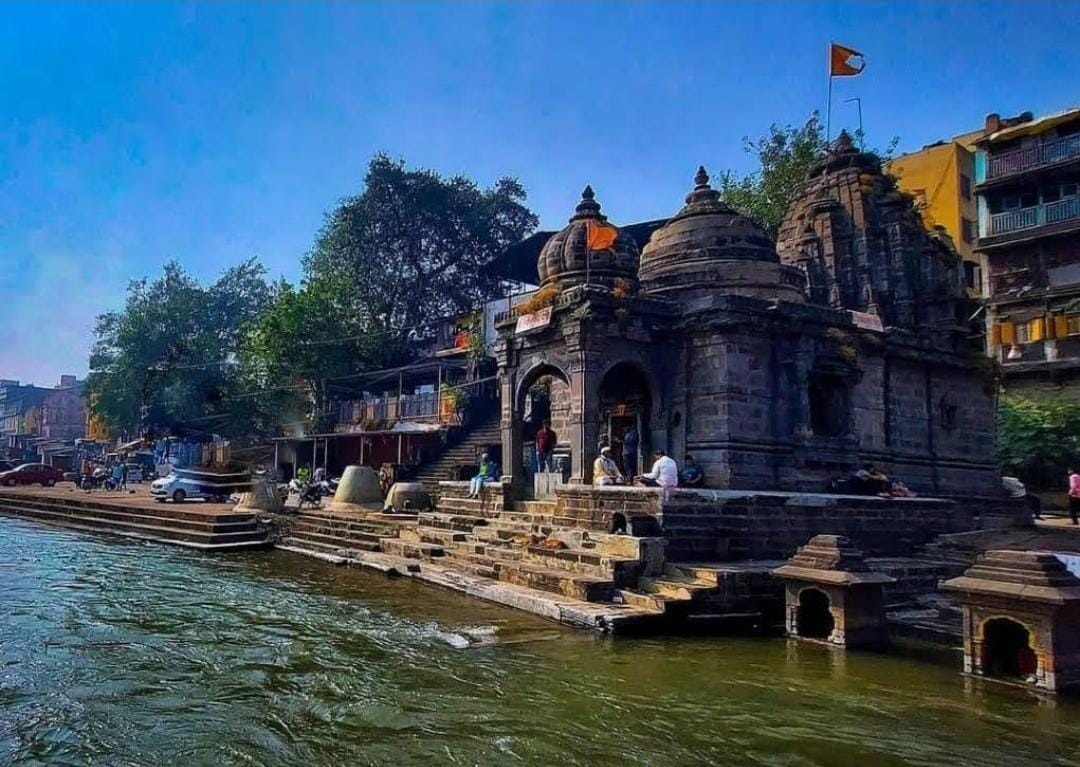
Sundar Narayan Mandir
It was built in 1756 by Gangadhar Yashwant Chandrachud. It showcases a blend of simple Mughal-inspired architecture with intricate stone carvings. Dedicated to Lord Vishnu, the temple also venerates Goddesses Saraswati and Lakshmi. A unique feature of its design is that on March 21, the equinox, the first rays of the rising sun directly illuminate the idols.
Inside the sanctum, the temple houses idols of Sundar Narayan alongside Goddess Lakshmi and Vrunda, with His vehicle, Garuda, positioned in front. According to legend, Goddess Vrunda once cursed Lord Vishnu, causing His complexion to turn black. To rid Himself of the curse, He bathed in the Godavari River and regained His beautiful form, hence the name “Sundar” Narayan.
The temple’s arched niches and finely carved stones reflect the influence of the Mughal era. Additionally, it features idols of a standing Ganesha, Kaal Bhairav, and a seated Maruti.

Naroshankar Mandir
Built in 1747 AD by Chieftain Sardar Naroshankar Rajebahaddur, a brave soldier of the Peshwa regime (1706–1775), the Naroshankar Temple stands on the banks of the Godavari River, attracting numerous pilgrims and devotees. One of its most distinctive features is the bell house at the entrance, which holds a massive bronze bell suspended above the temple’s 11-foot-high façade, overlooking the river.
This bell serves as a significant historical relic, originally brought from Vasai Fort on India’s west coast. It was taken after the Maratha army, led by Chimaji Appa (brother of Shrimant Peshwa Bajirao), triumphed over the Portuguese in Bassein. Transported by hanging around an elephant’s neck, the bell was later awarded to Naroshankar for his pivotal role in the Maratha victory.
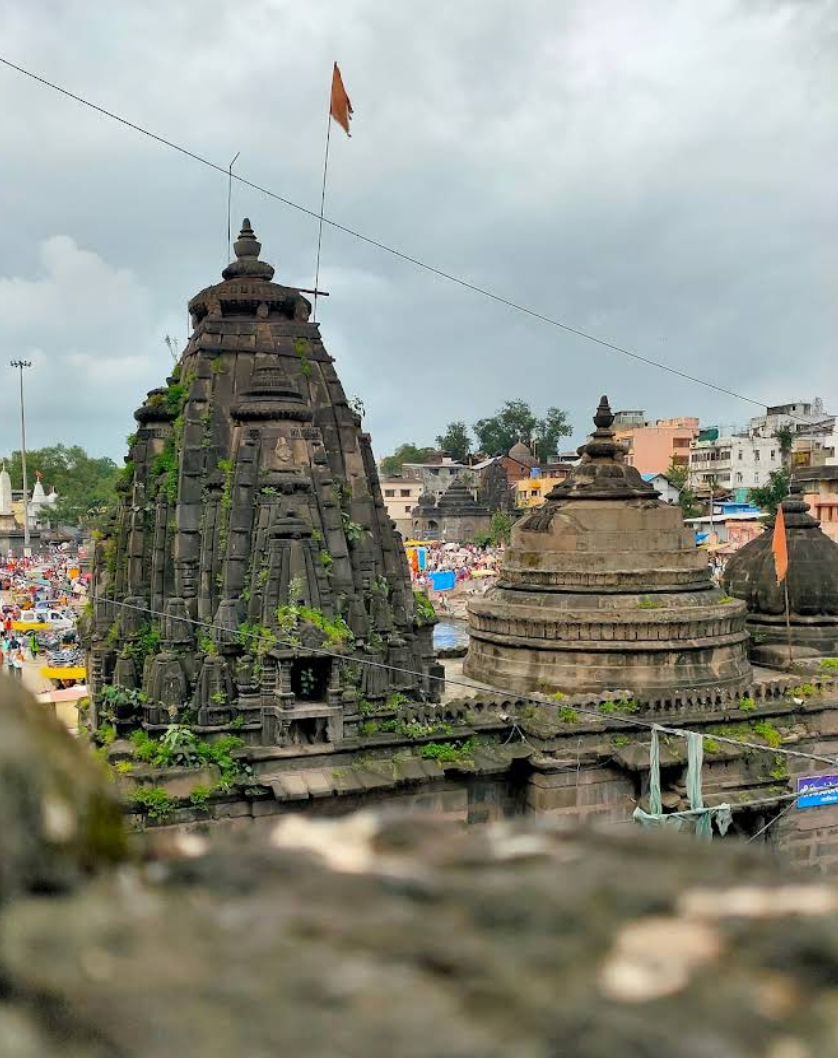
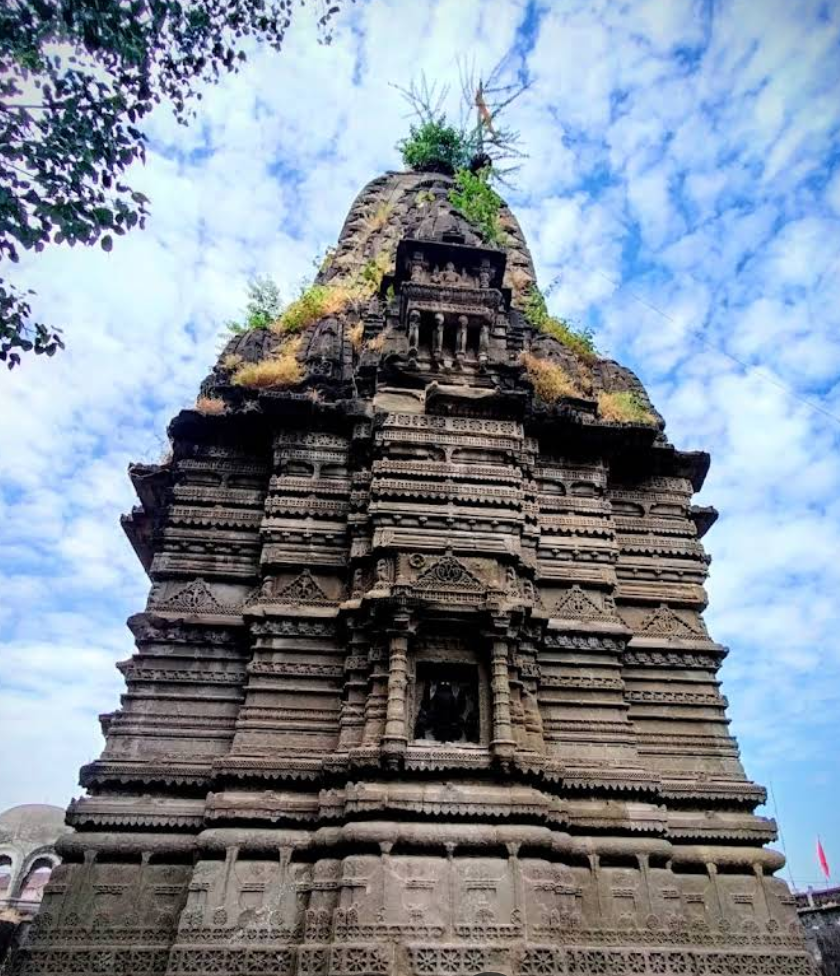
The temple’s architecture reflects influences from Gujarat and Rajputana styles. Built from black stone, it rests on a raised platform and features intricate carvings and exquisite sculptures on its outer walls. The main and subsidiary temple shikharas are adorned with ornate depictions of animals such as lions and elephants, as well as trees and birds. The Rajputana influence is particularly evident in the arched chhatris flanking the bell at the entrance.

With its grand arches framing the colossal bell, the serene Godavari River flowing below, and the vast blue sky above, the Naroshankar Temple commands a striking and majestic presence.

We explored the Panchvati area before heading to Ganga Ghat, one of the main ghats on the Godavari River in Nashik. The ghat is home to several ancient temples and the sacred Rama Kund, where the water is considered holy. Many devotees visit to take a ritual bath, though the water quality is not very clean.
Ganga Ghat is also a significant site for the Kumbh Mela, a grand gathering of saints and devotees held every 12 years. The last Kumbh Mela in Nashik took place in 2015, and the next one is scheduled for 2027. This event, known as the Simhastha Kumbh Mela, begins when Jupiter and the Sun align in the Leo (Simha) zodiac sign according to the Hindu calendar, coinciding with the lunar phase of Amavasya (new moon).
According to Hindu mythology, during the Samudra Manthan (churning of the ocean) for Amrit (the nectar of immortality), Lord Indra instructed his son Jayant to protect the sacred pot (Kumbha) from demons. While carrying it, drops of nectar fell at four locations—Haridwar, Prayagraj (formerly Allahabad), Ujjain, and Trimbak (Nashik). This is why the Kumbh Mela is held at these four sites every 12 years. It is believed that bathing in these waters during the festival helps one attain moksha (spiritual liberation).
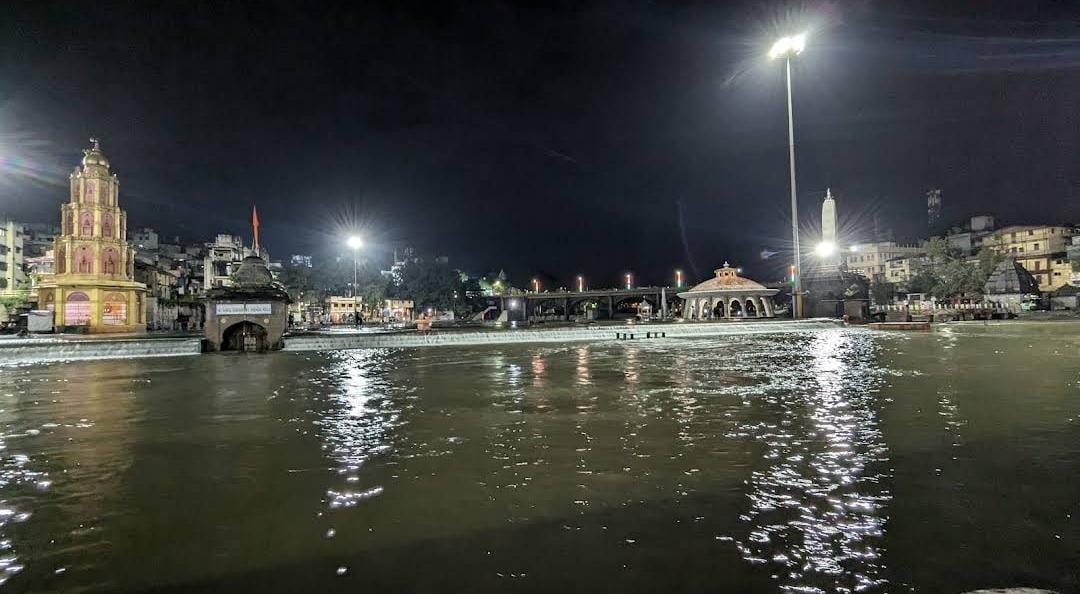
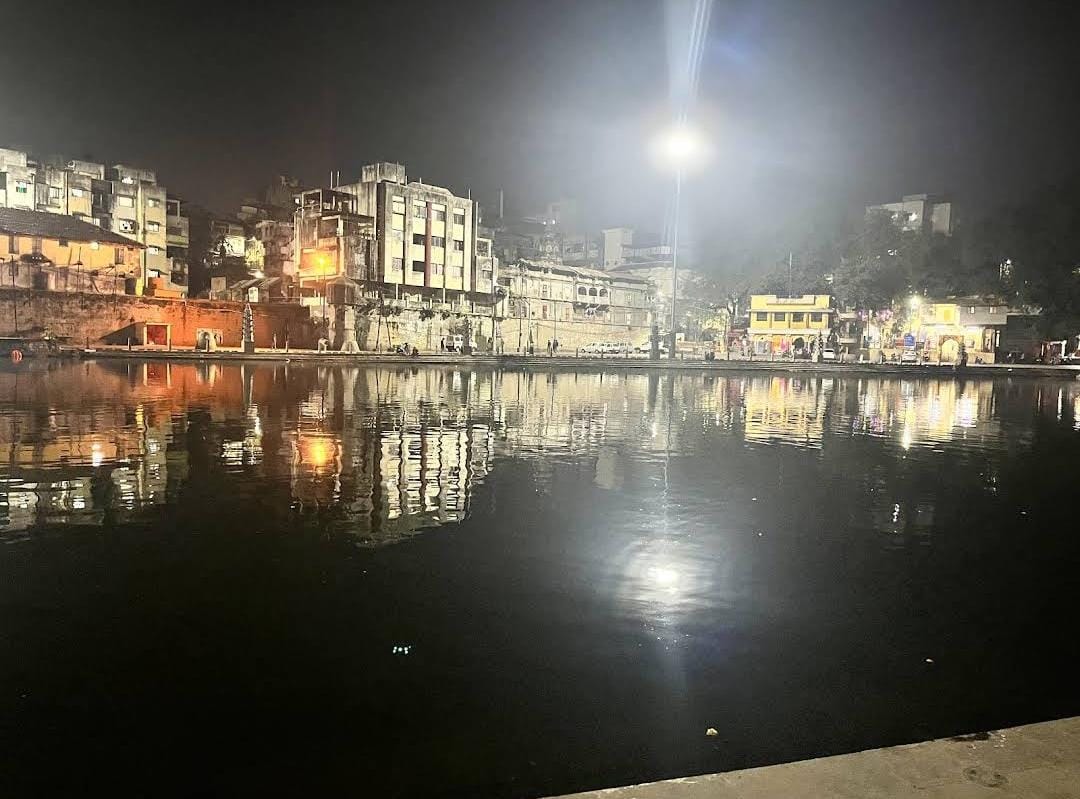
In the evening, we returned to the resort for dinner and a well-deserved rest.
To read the next blog on Junnar-Jawhar-Nashik Day 5 click here
Where did we stay?
Mayurangan Resort, Junnar
Prakriti Agro Farm Resort, Jawhar
Raghunandan Resort, Nashik

[…] To read the next blog on Junnar-Jawhar-Nashik Day 4 click here […]
[…] To read the previous blog on Junnar-Jawhar-Nashik Day 4 click here […]