
To read the previous blog click here.
Part 2
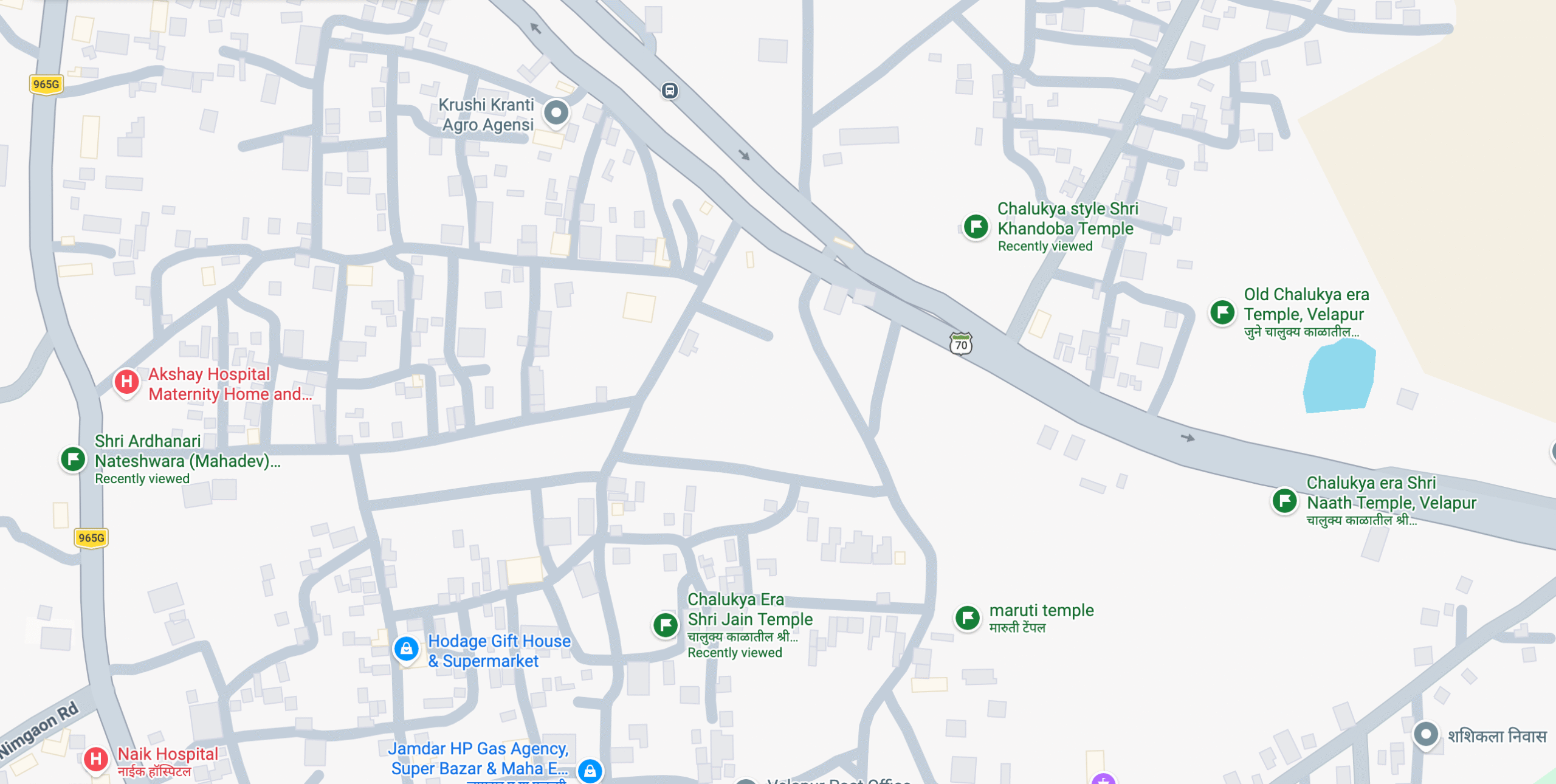
After having lunch and checking out from Hotel Center Point, we started the journey to Pune at 12 noon. The weather was extremely hot. Velapur falls on the way from Solapur to Pune. We planned to visit the ancient temples of Velapur on the way.
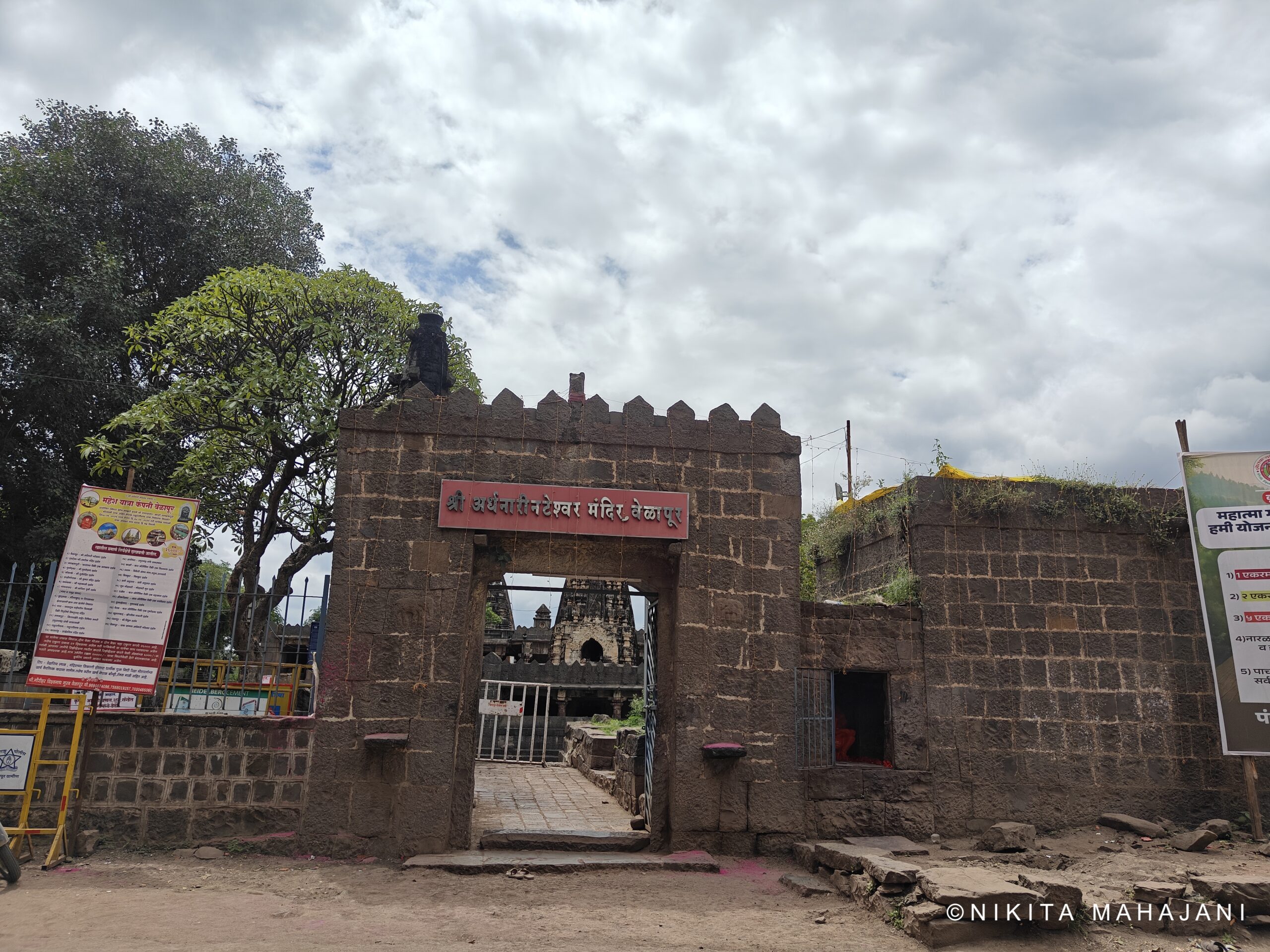
Shri Ardhanarinateshwar Mandir, Velapur
We reached Shri Ardhanarinateshwar Mandir, Velapur at 2:00pm. There is no parking as such. Entry to the temple is free of cost.
Here’s a warm, travel-blog–friendly paraphrase—informative but easy to read, like you’re telling a story to a fellow traveller:
Ardhanarishvara literally means “the Lord who is half woman.” It is a powerful and beautiful form where Lord Shiva and Goddess Parvati exist together in a single body, symbolising balance, unity, and the inseparable nature of masculine and feminine energies—known in philosophy as Purusha and Prakriti. Creation and life, the form reminds us, can only exist when these two forces come together.
In this form, the right half represents Shiva—strength, wisdom, and consciousness—while the left half embodies Parvati—compassion, creativity, and nurturing energy. Though they appear as opposites, the sculpture tells a deeper truth: they are not separate at all, but two expressions of the same divine essence.
Ardhanarishvara also reflects the harmony between the spiritual and the material worlds. Shiva’s ascetic nature and Parvati’s life-giving presence show that renunciation and creation, destruction and nurturing, are deeply interconnected. The form quietly teaches us that life needs both strength and tenderness, logic and emotion—and that one cannot exist without the other.
Visually, the deity is striking: a single figure split down the middle. One side bears Shiva’s matted hair, serpent, and tiger skin, while the other is adorned as Parvati, dressed in a saree and jewellery. Beyond its artistic beauty, Ardhanarishvara suggests something profound—that the divine transcends gender, and that every human being carries both masculine and feminine energies within. Even the name reflects this idea, combining the Sanskrit words Ardha (half), Nari (woman), and Ishvara (lord).
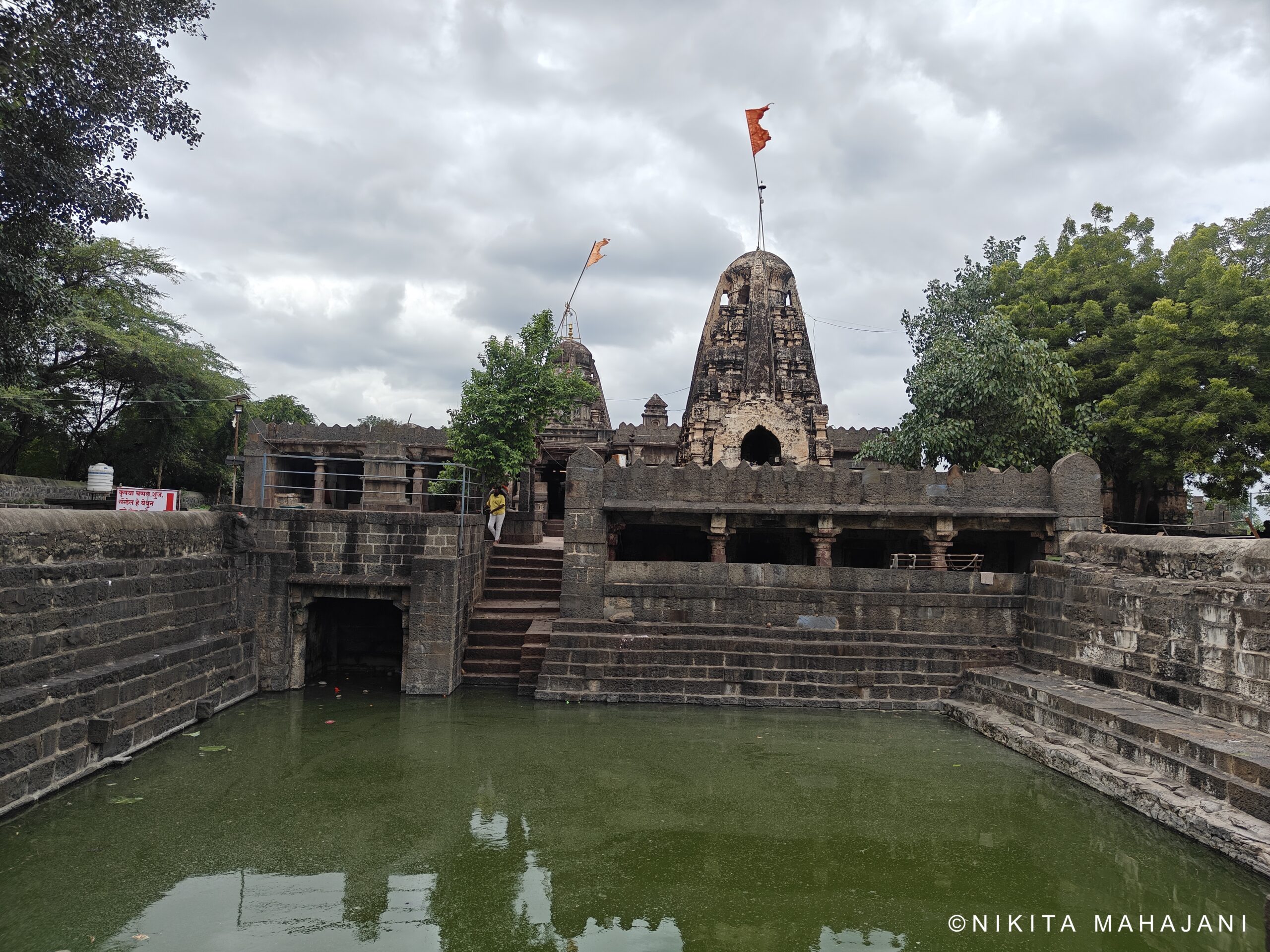
The temple was constructed in the 12th century by Bramhadev Rana and his brother Baidev Rana during the reign of the Yadav ruler Ramchandradev. It houses a remarkable idol of Lord Shiva and Goddess Parvati shown in an embrace. Sculpted from a single block of black stone, this half male–half female form is an outstanding example of temple artistry. A finely carved image of Nandi is placed at the feet of the deity, and a sacred water tank lies within the temple courtyard.
Also known as the Vateshwar–Jogeshwar Mandir, the temple is regarded as one of the most beautiful and finely crafted Shiva temples.
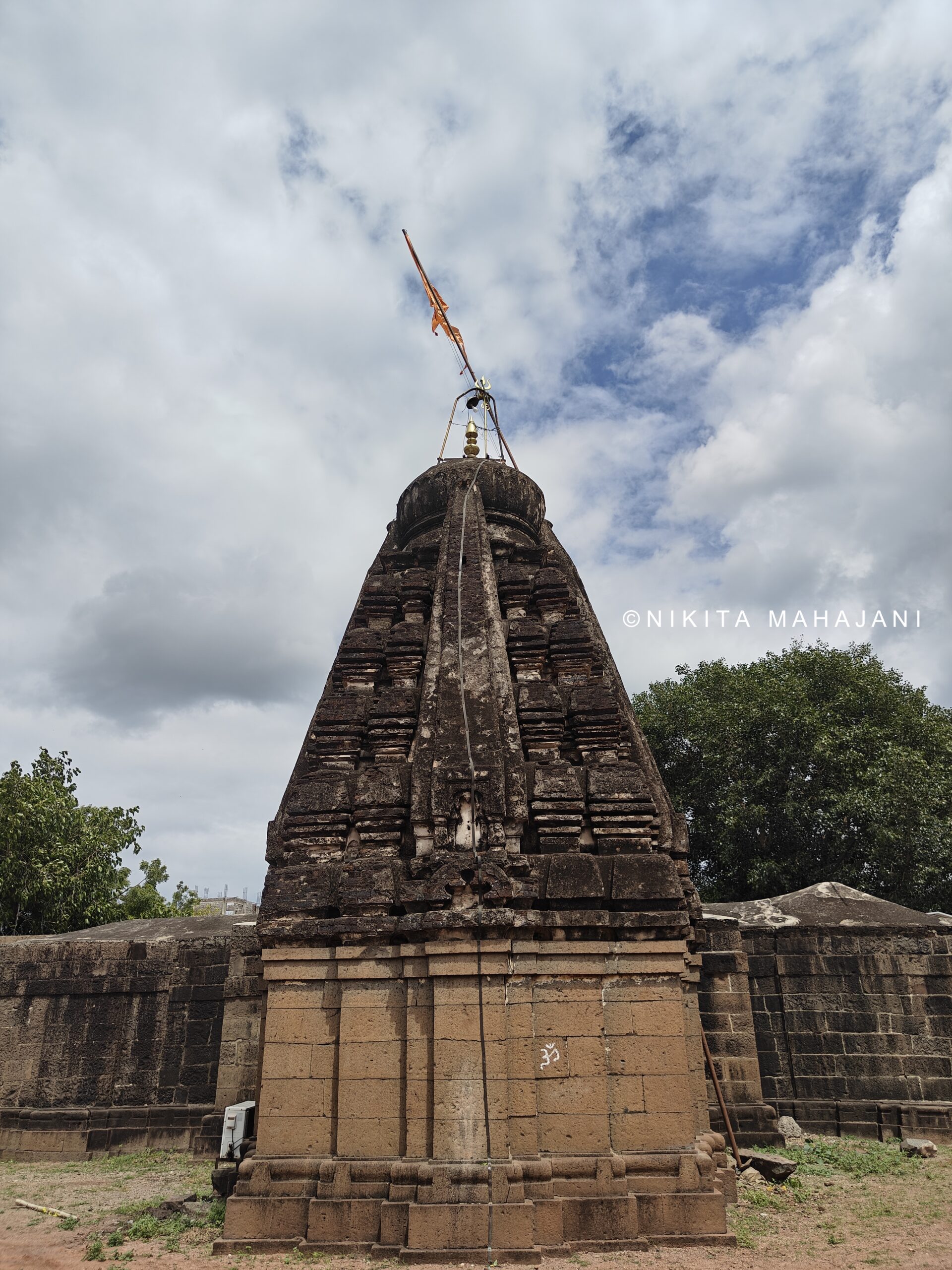
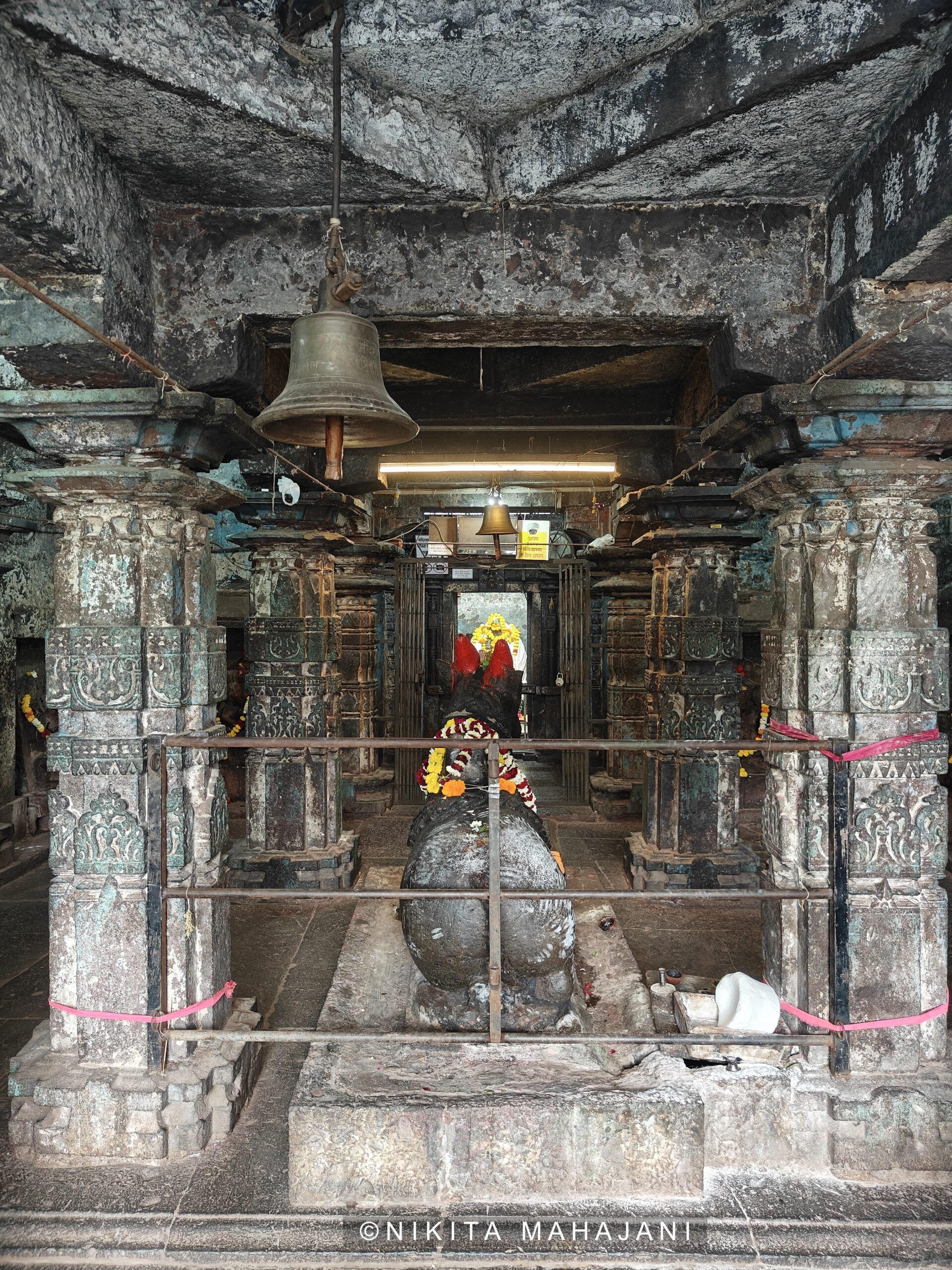
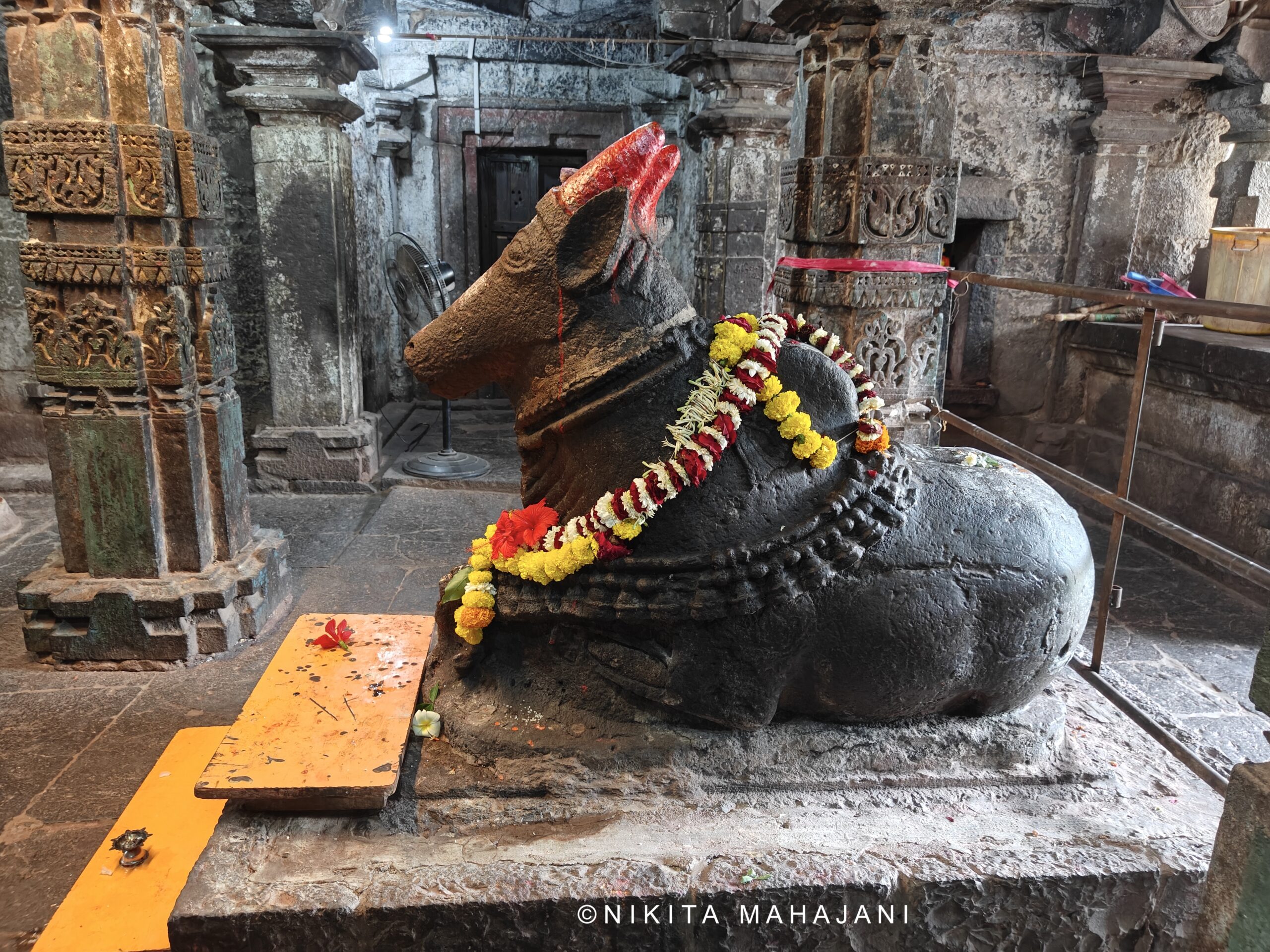
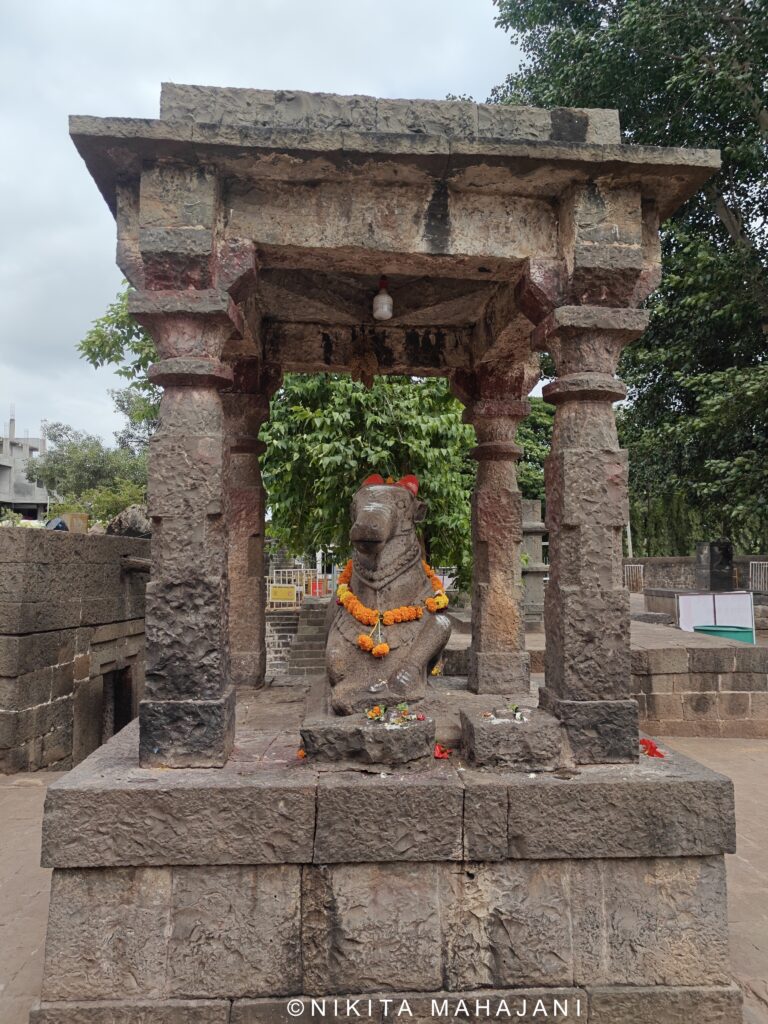
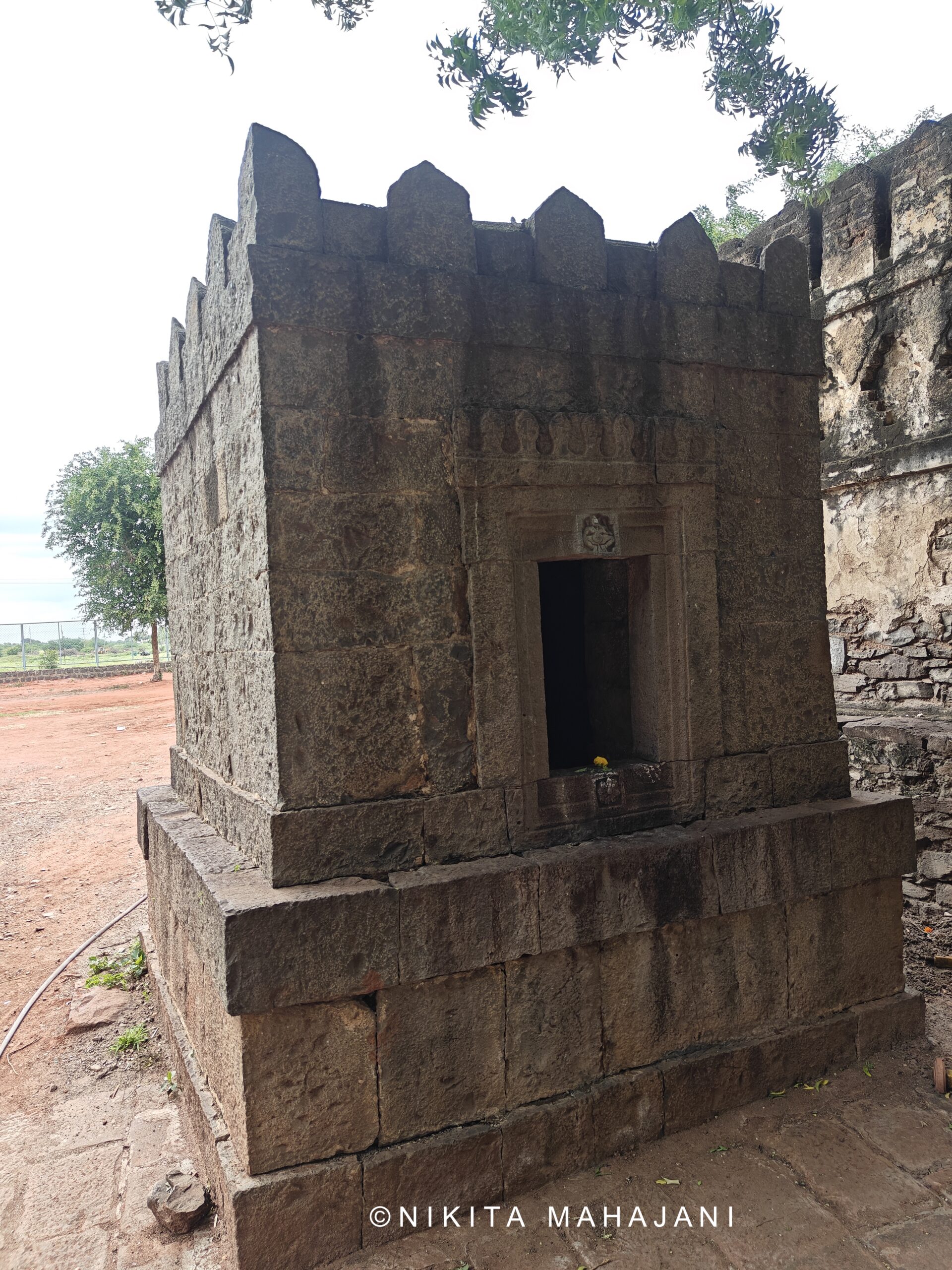
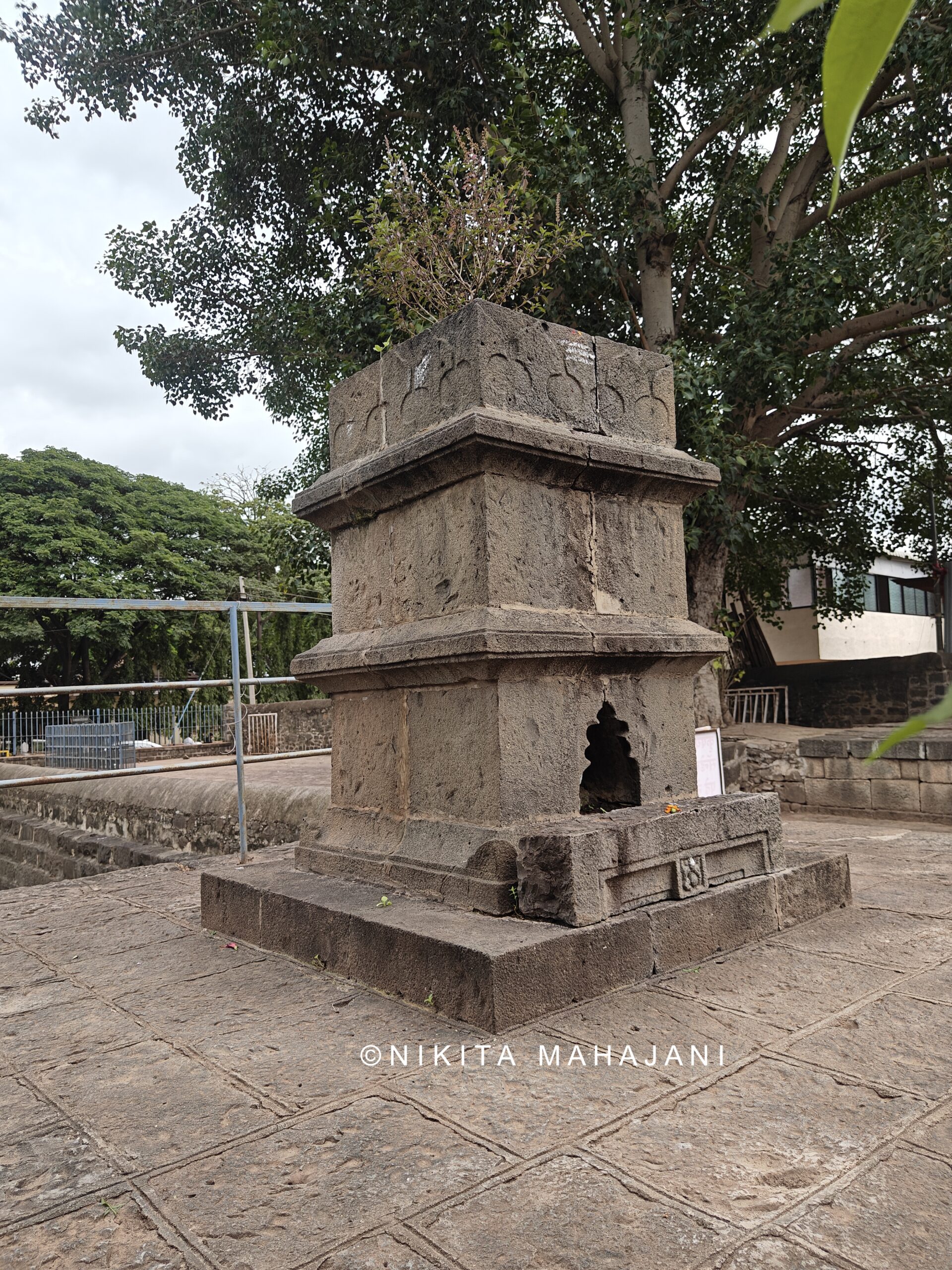
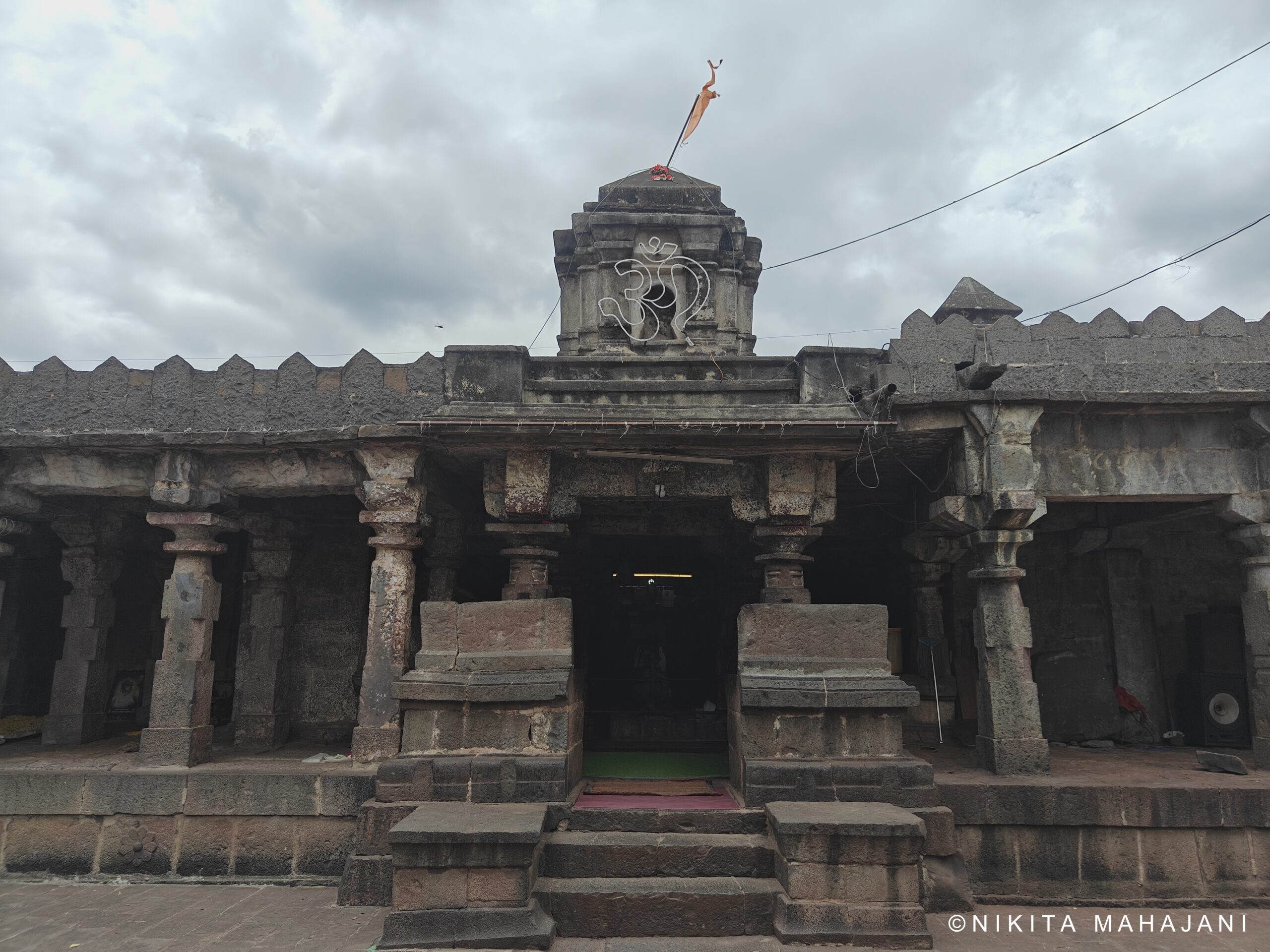
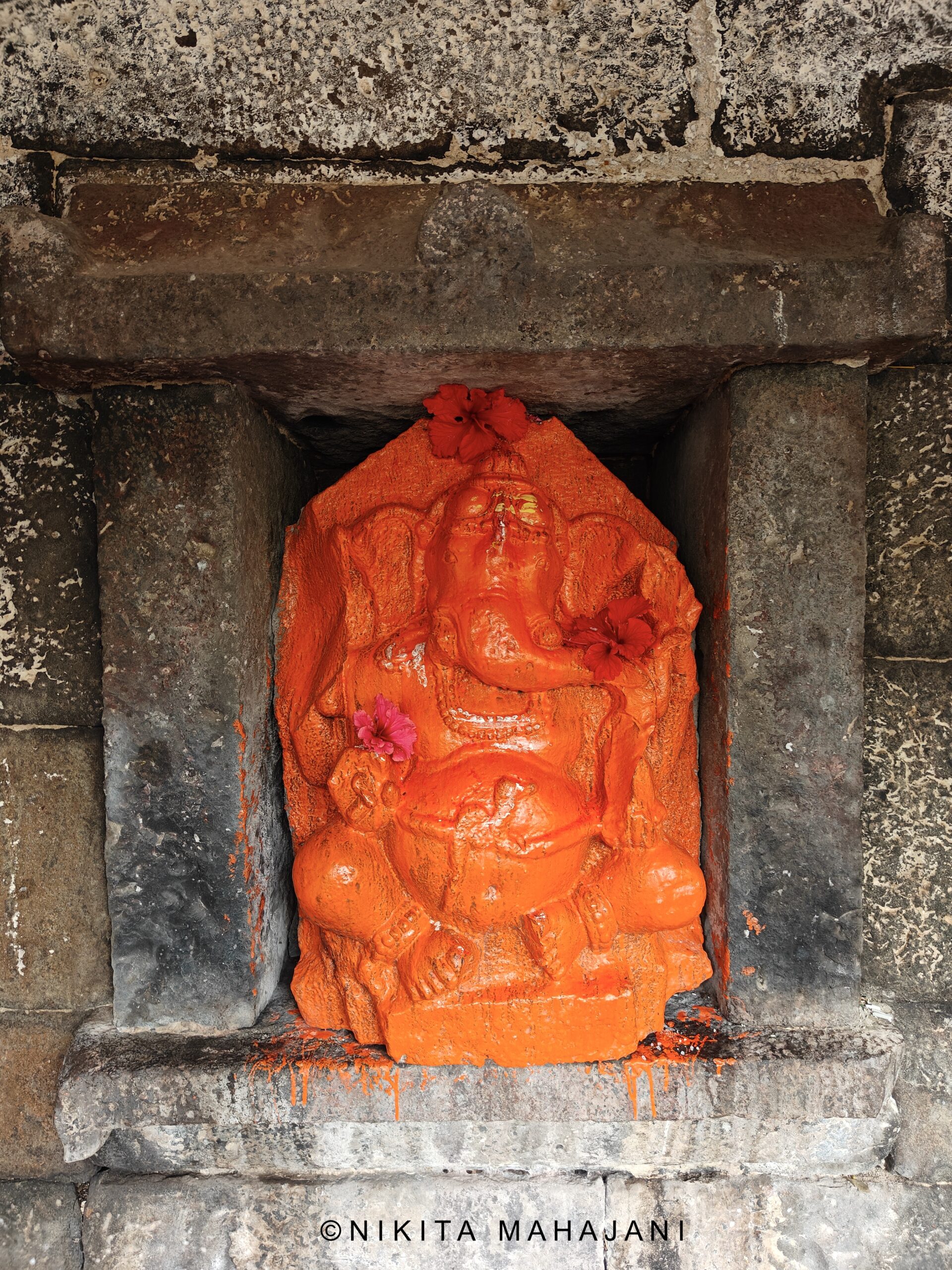
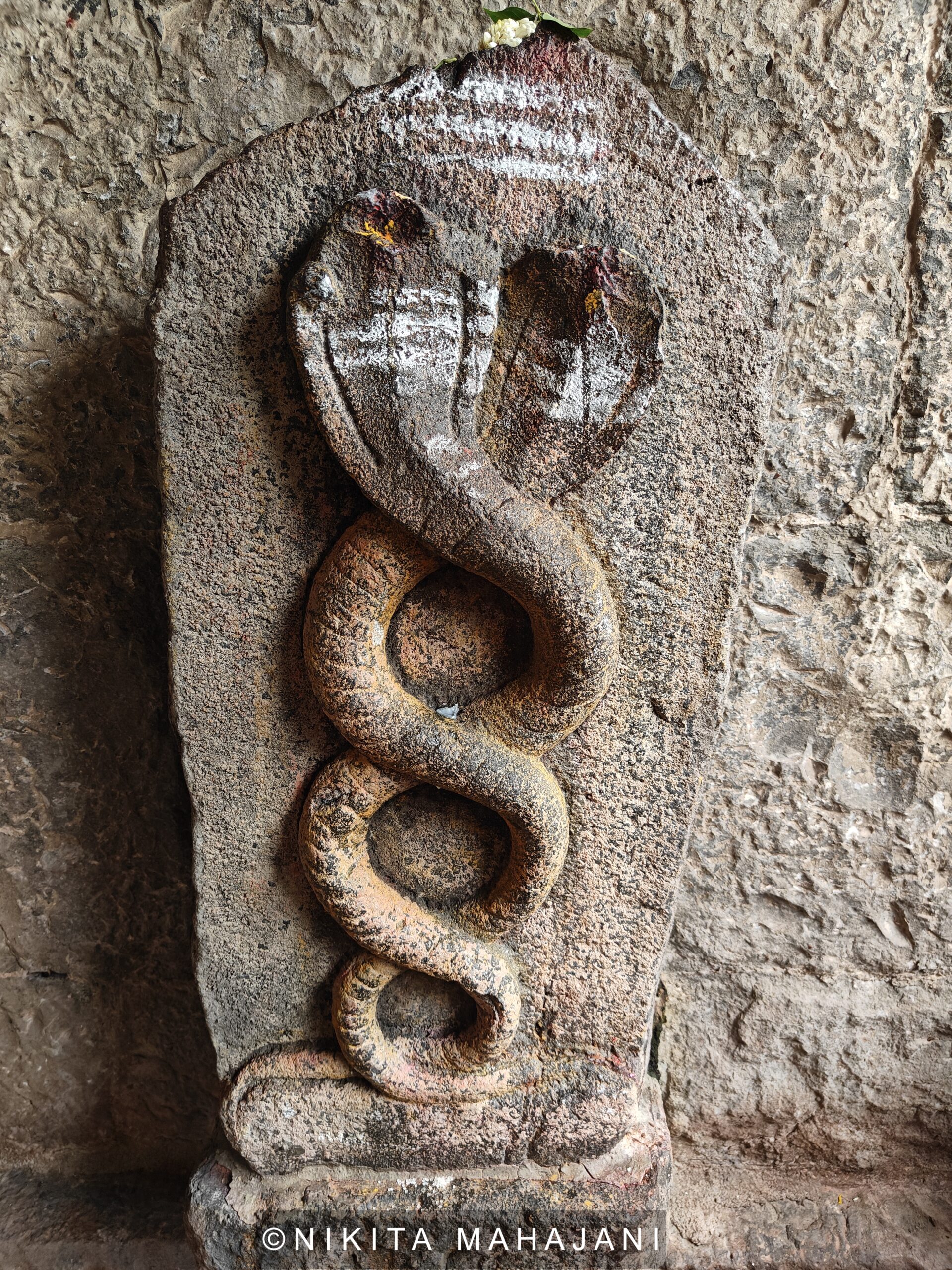
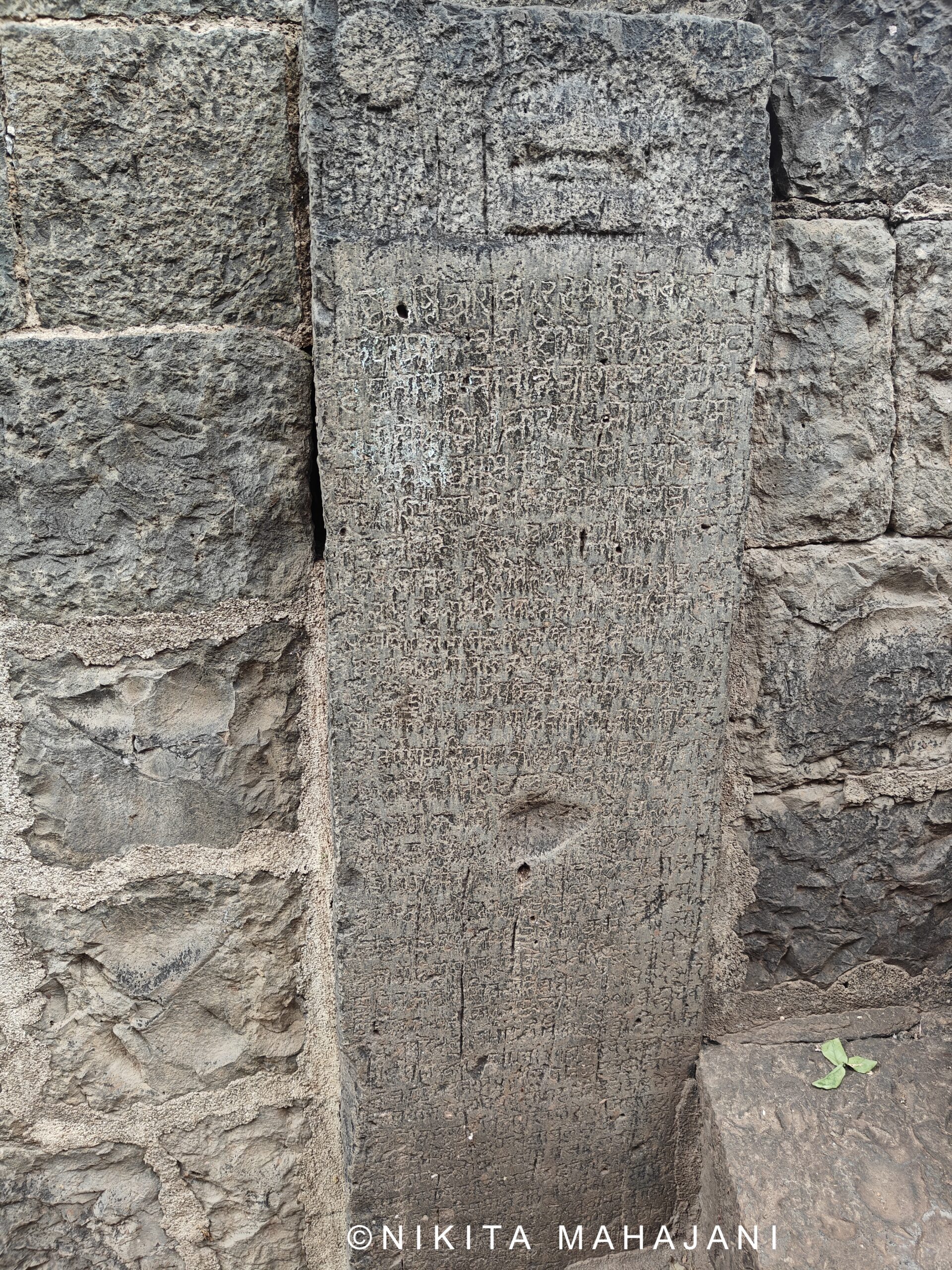
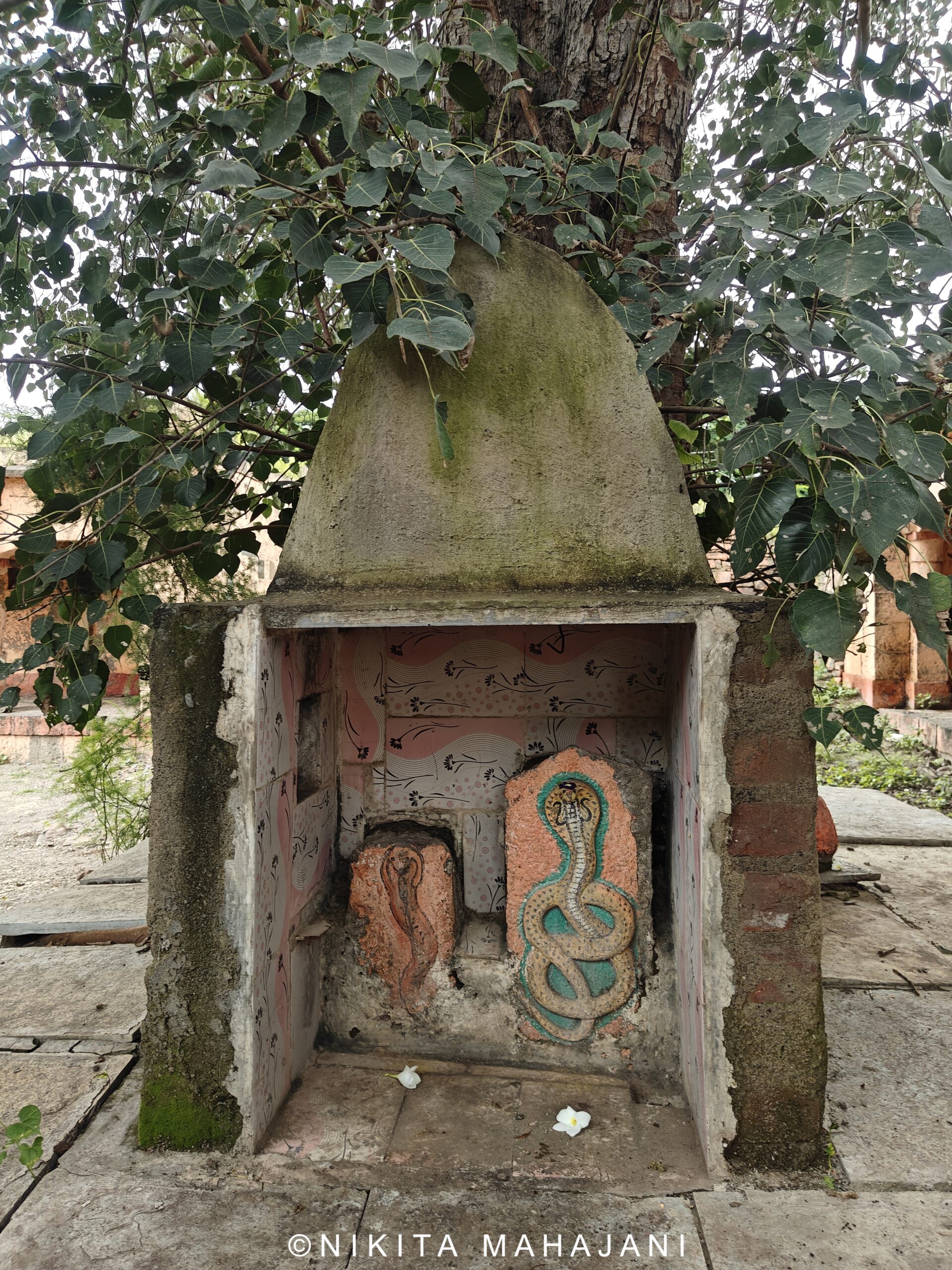
There are small tertiary shrines, Nagshilas, ancient inscriptions, tulsi vrindavan (holy basil plant) in the premises of the temple.
From here, we went to have tea and snack at Khomane Gulacha Chaha which is just before highway.
Shri Khandoba Temple, Velapur
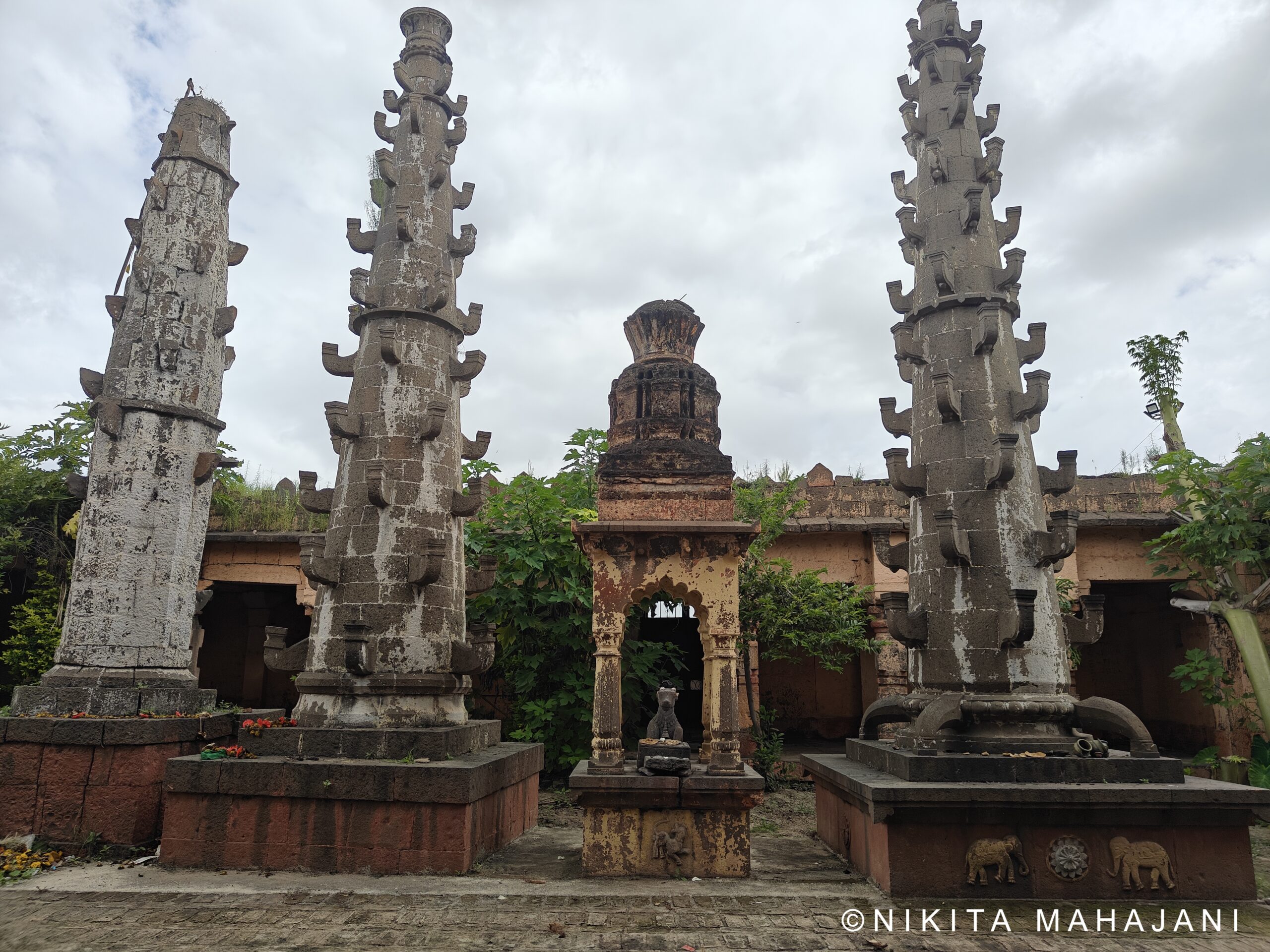
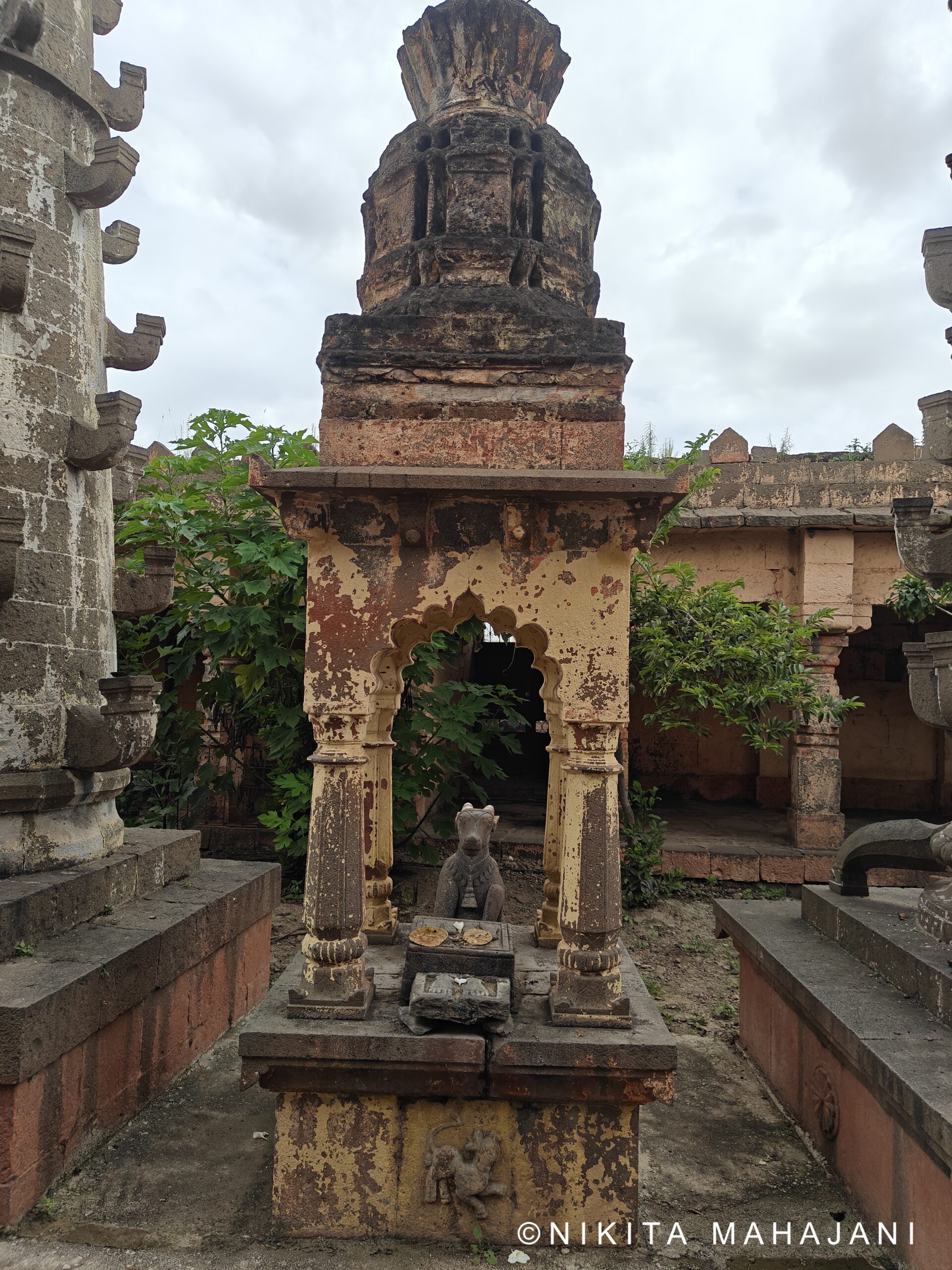
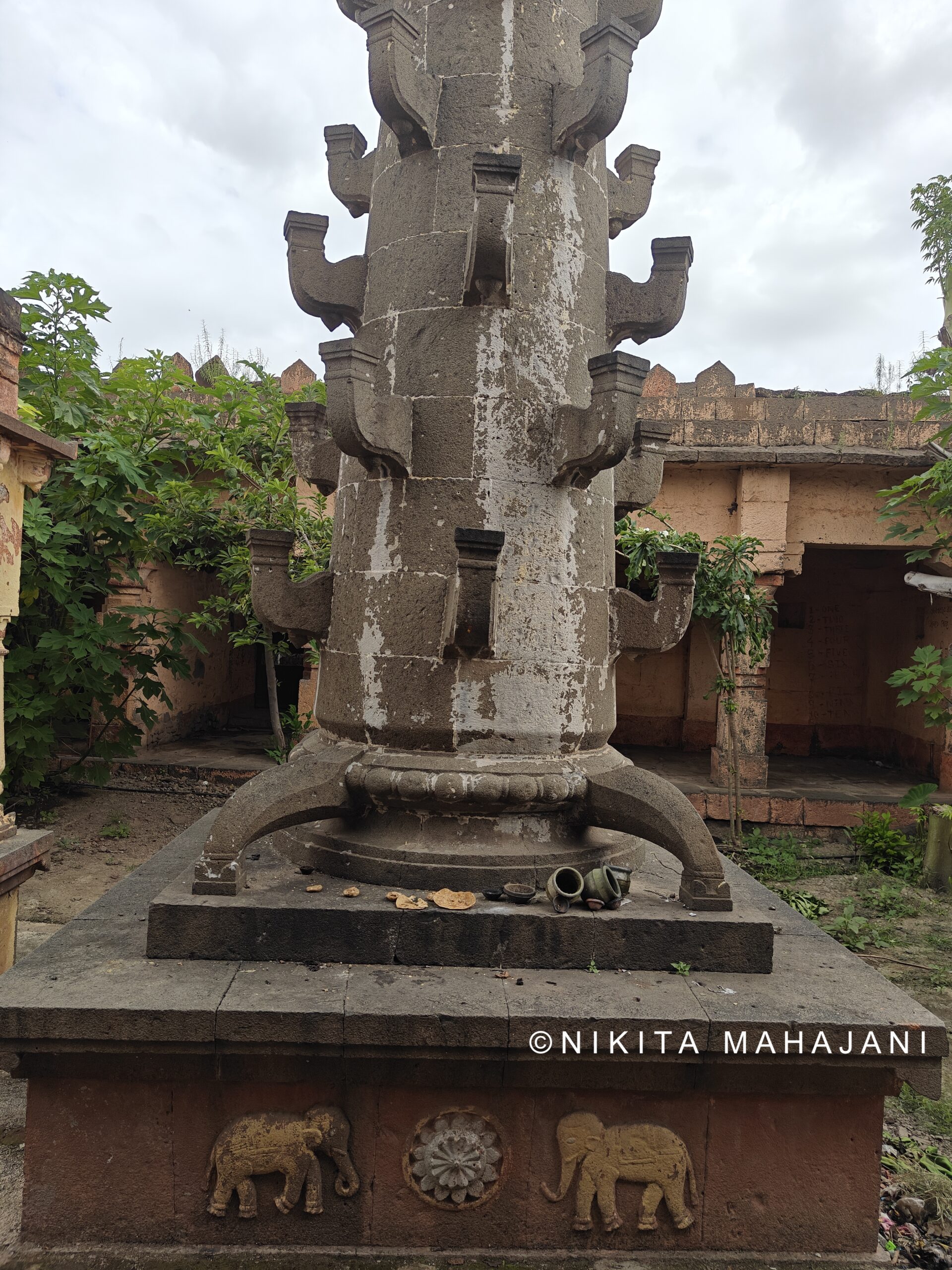
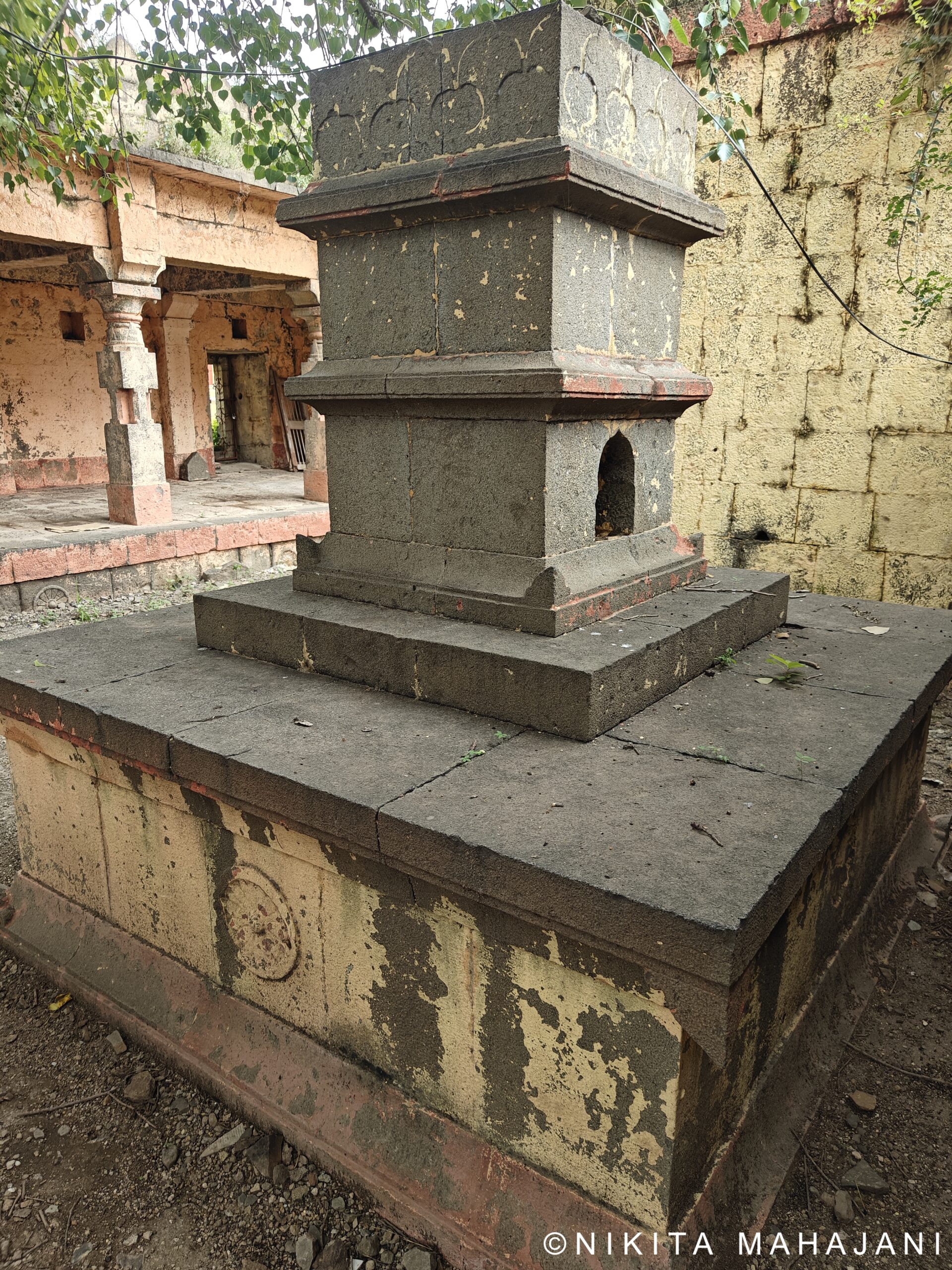
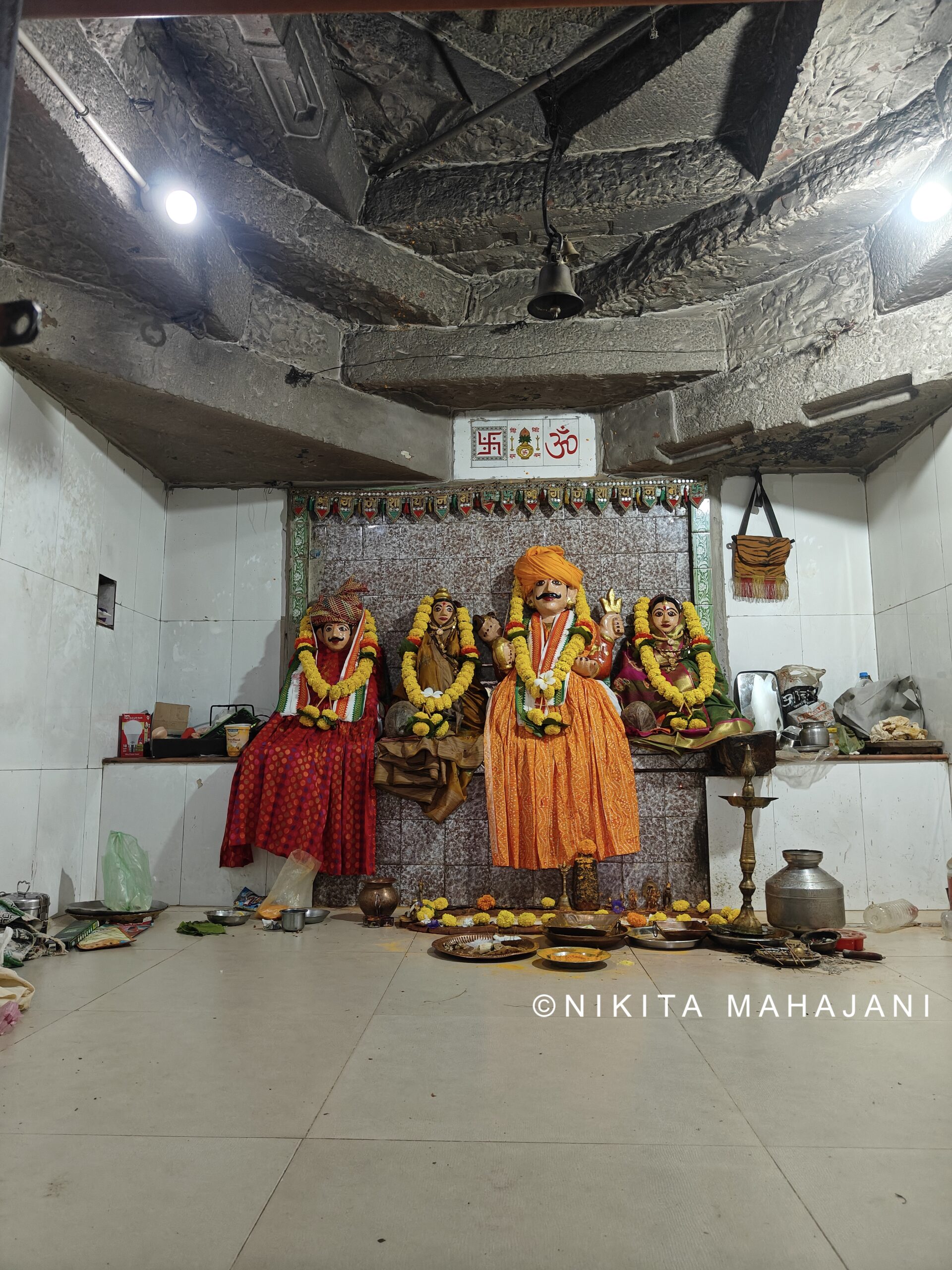
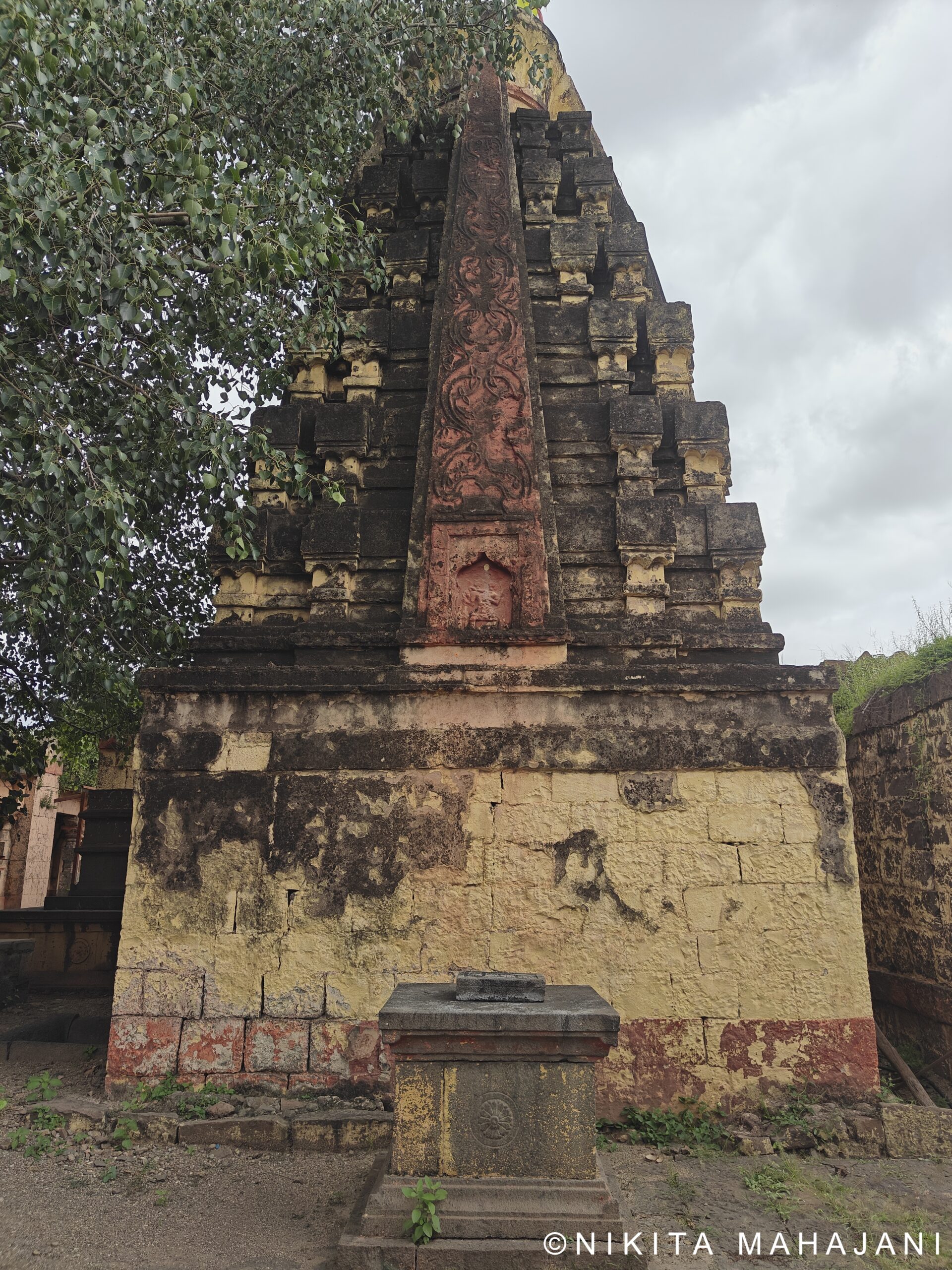
Shri Khandoba Temple, Velapur is on NH-70 (Pune – Pandharpur road). It has semi covered arcaded passages on all sides and the main temple is in the centre of the courtyard. There are three huge deep stambhas in front of the temple.
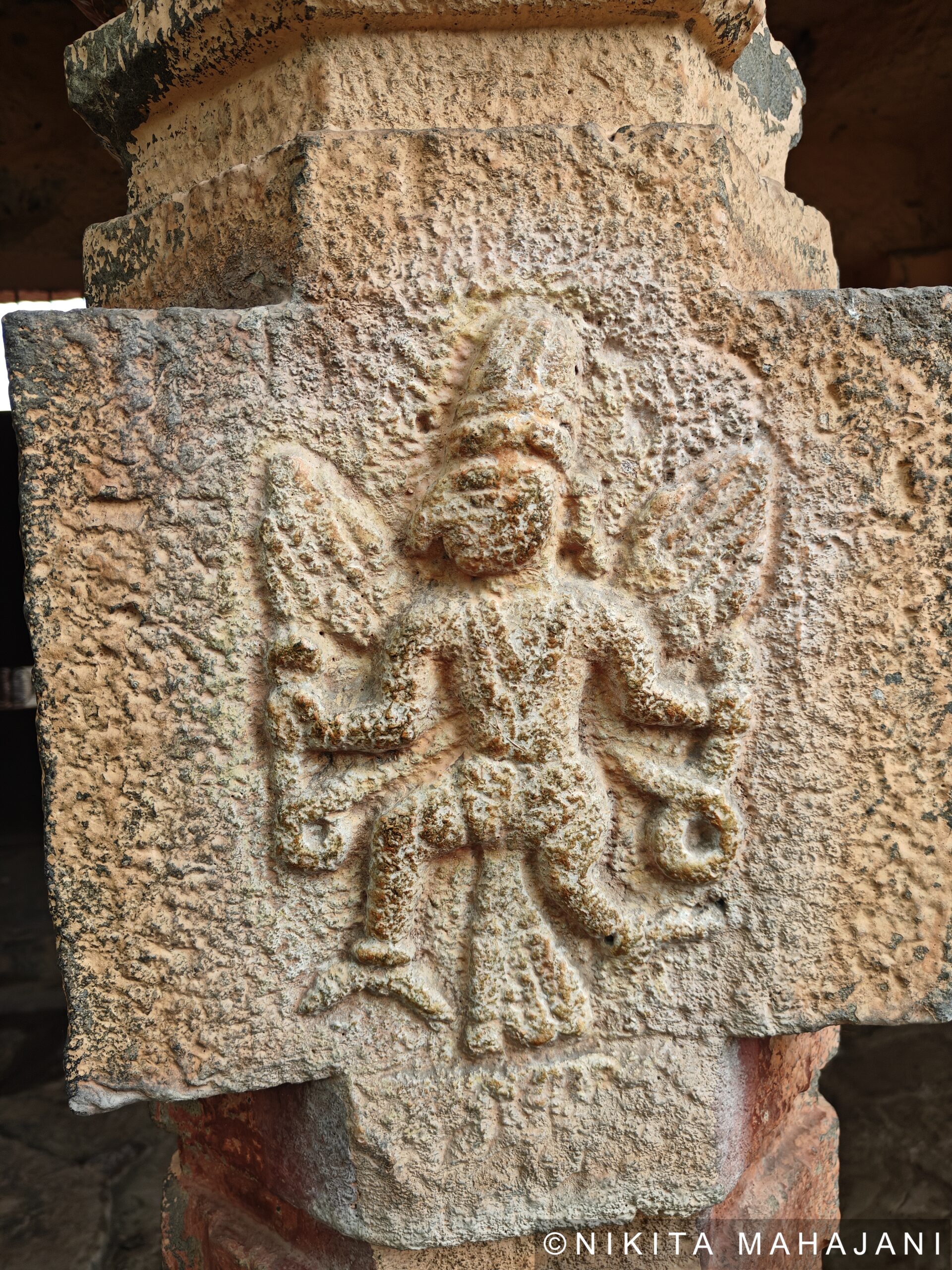
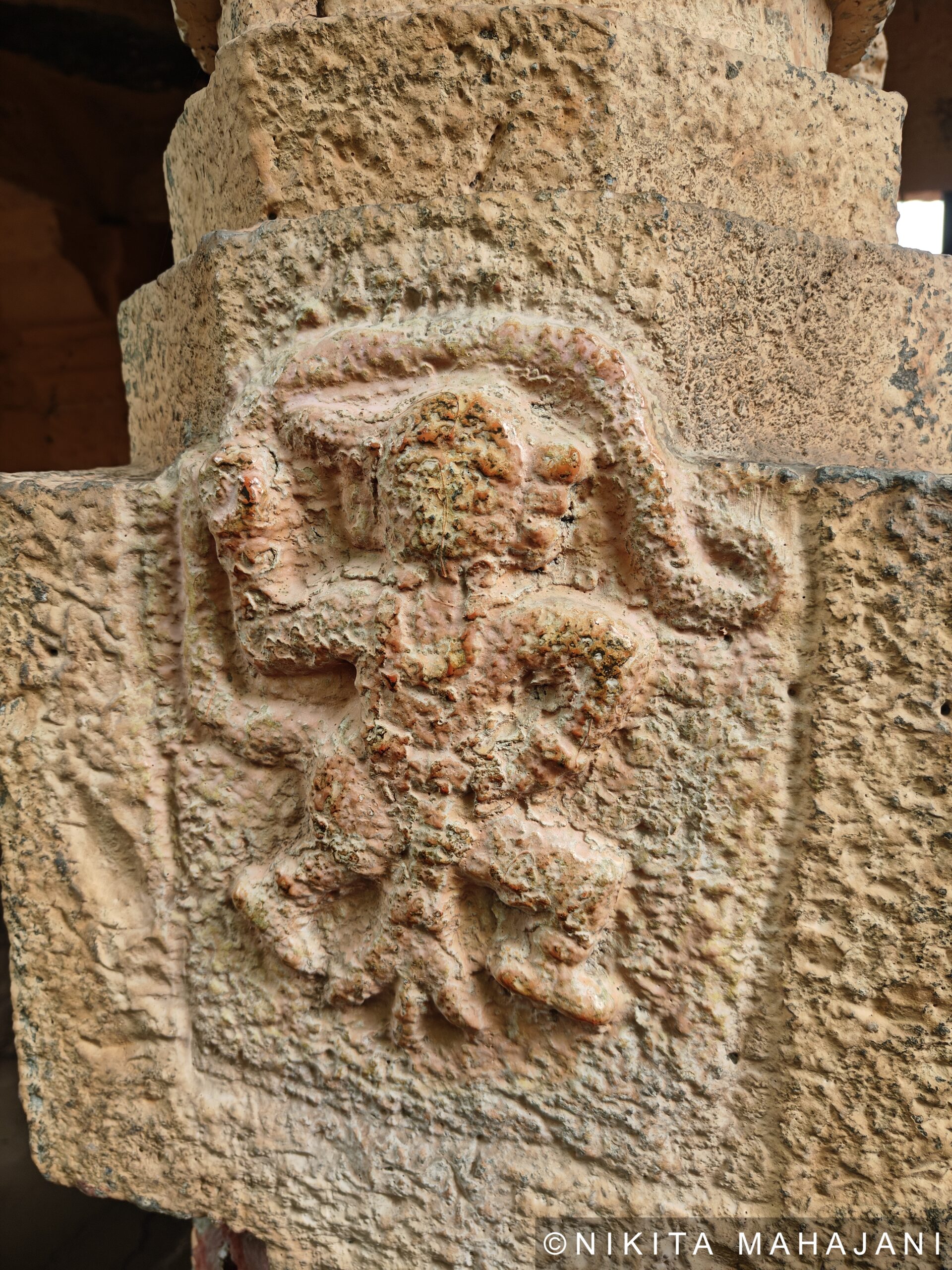
The column capitals have carvings of kinnara, hanuman, etc.
Old Chalukya era Temple, Velapur
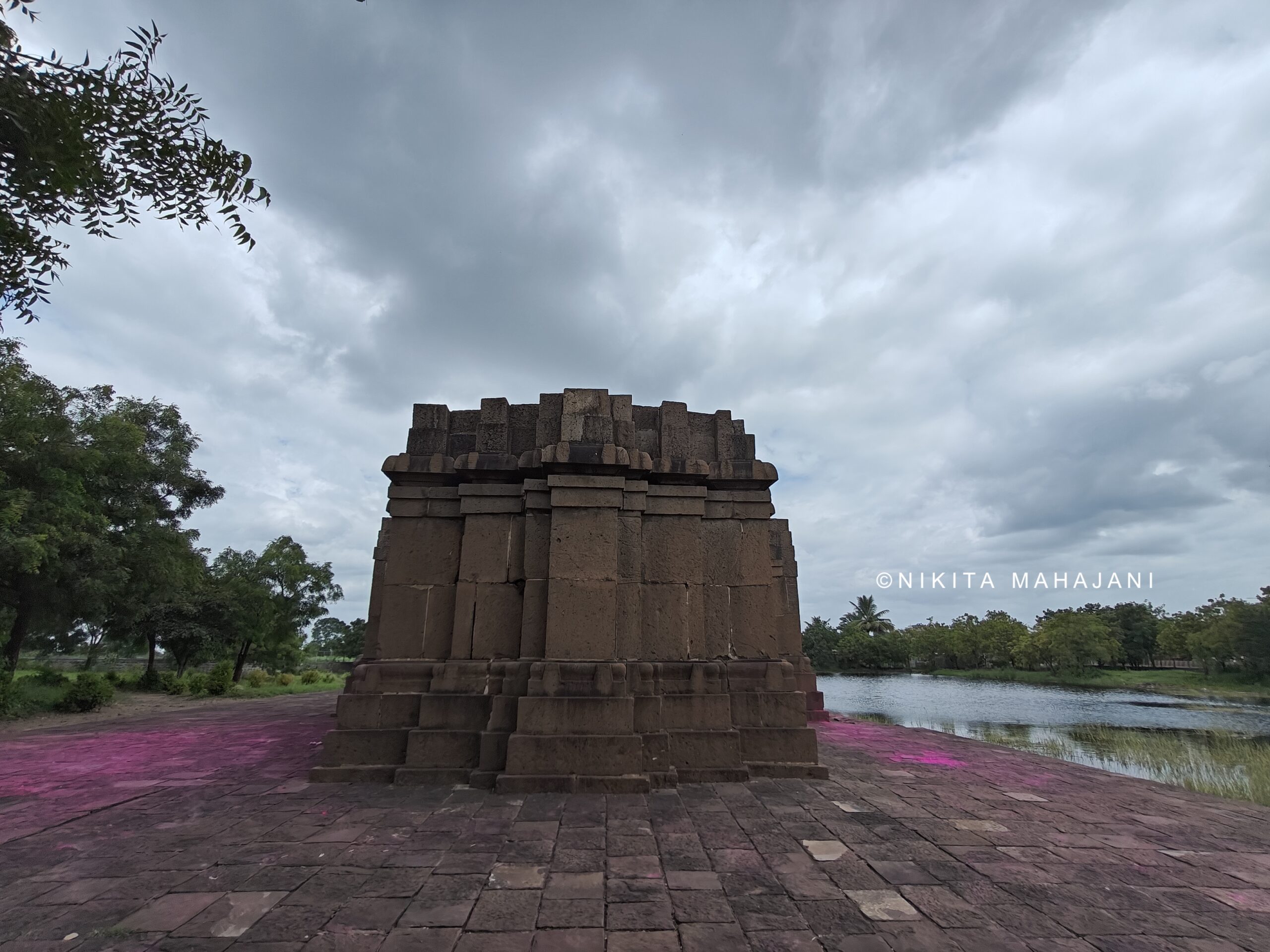
The Old Chalukya era Temple, Velapur is also on NH-70 (Pune – Pandharpur road). Since we visited this temple on the day after Ganesh visarjan, the entire premises were full of pink powder. It looked like a lot of local people had come for visarjan in the water body abutting the temple. The temple has entrances from all three sides.
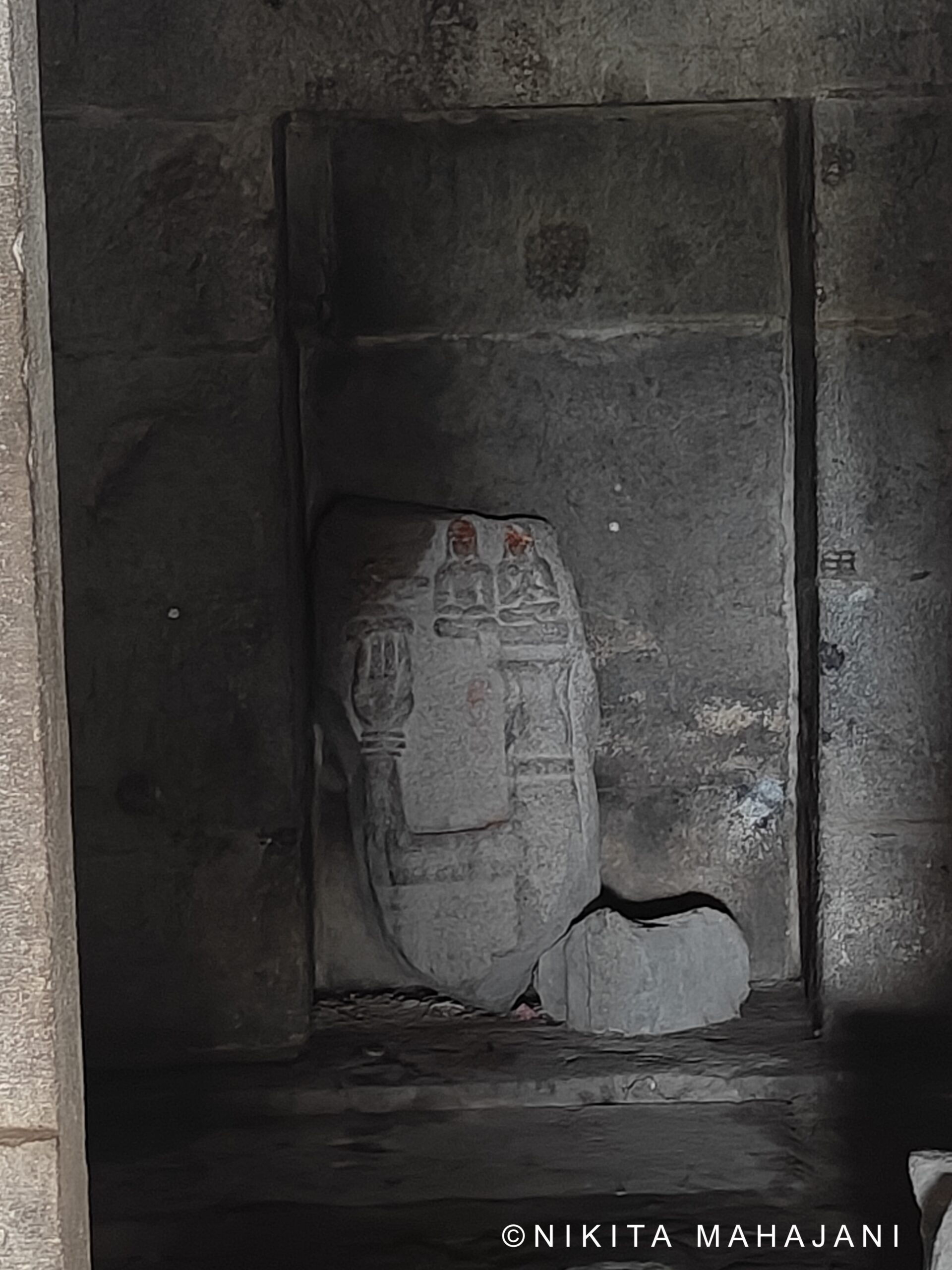
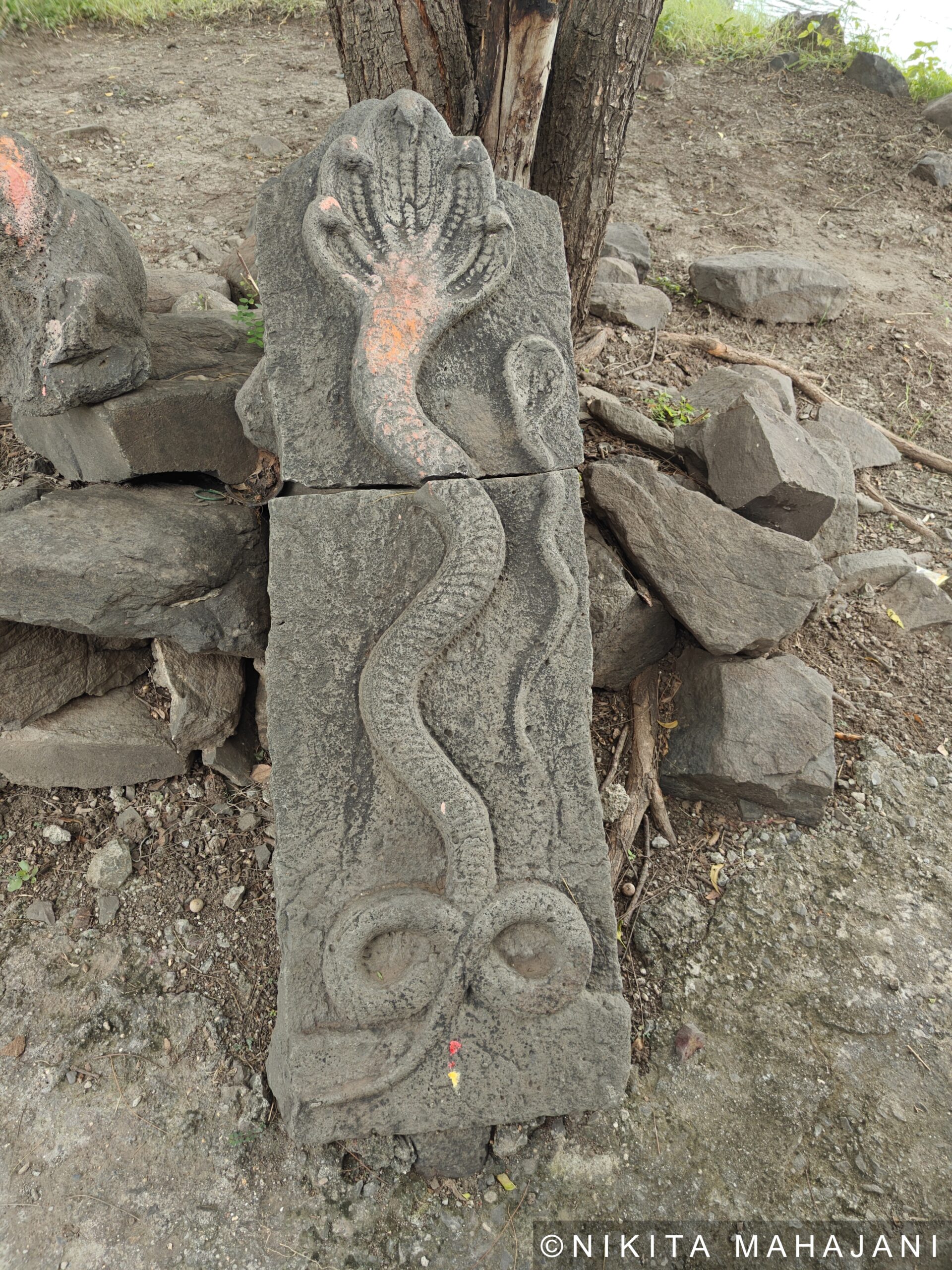
There are satishilas and nagshilas lying in the premises of the temple.
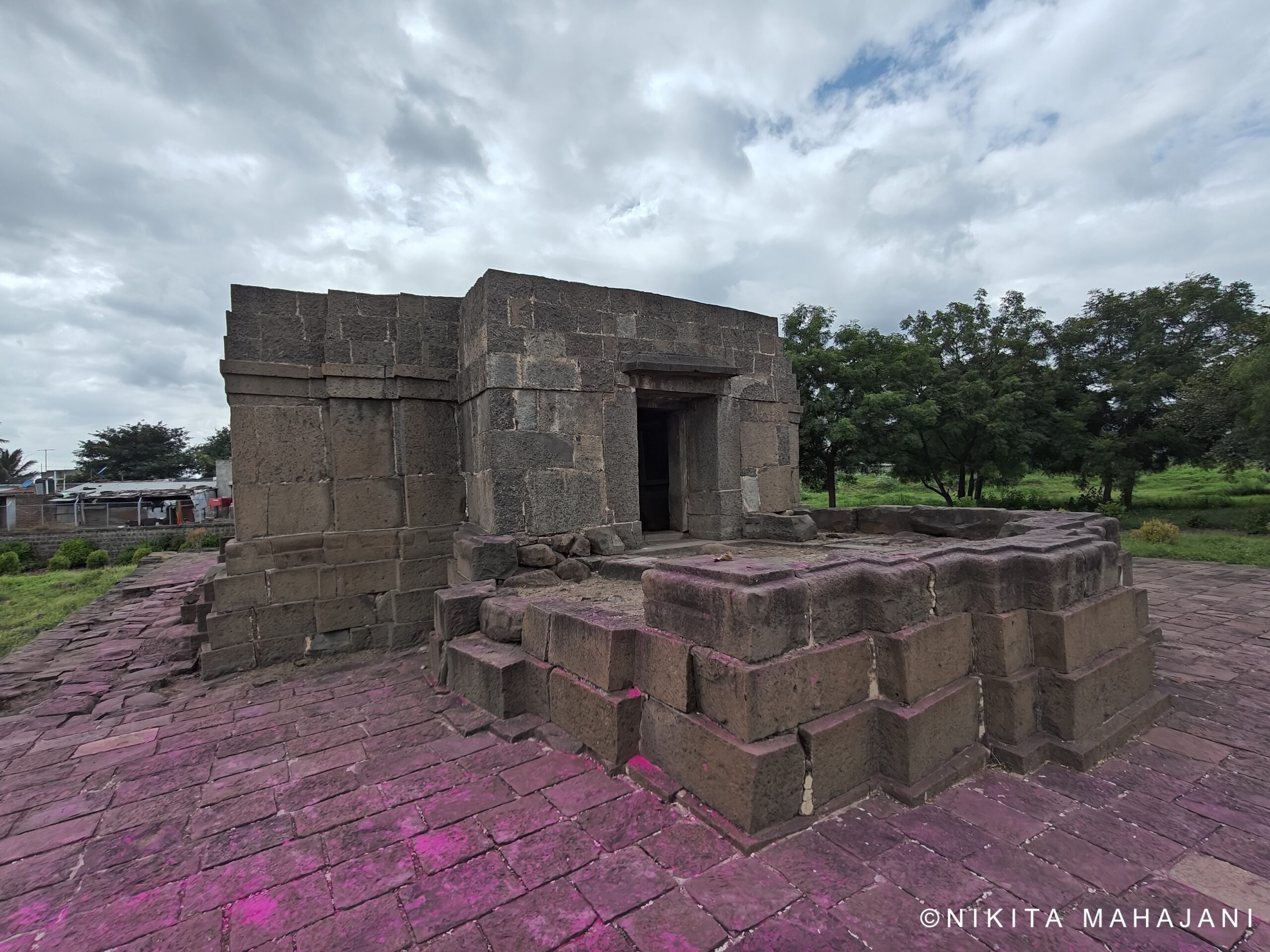
There one more small shrine in the same temple premises.
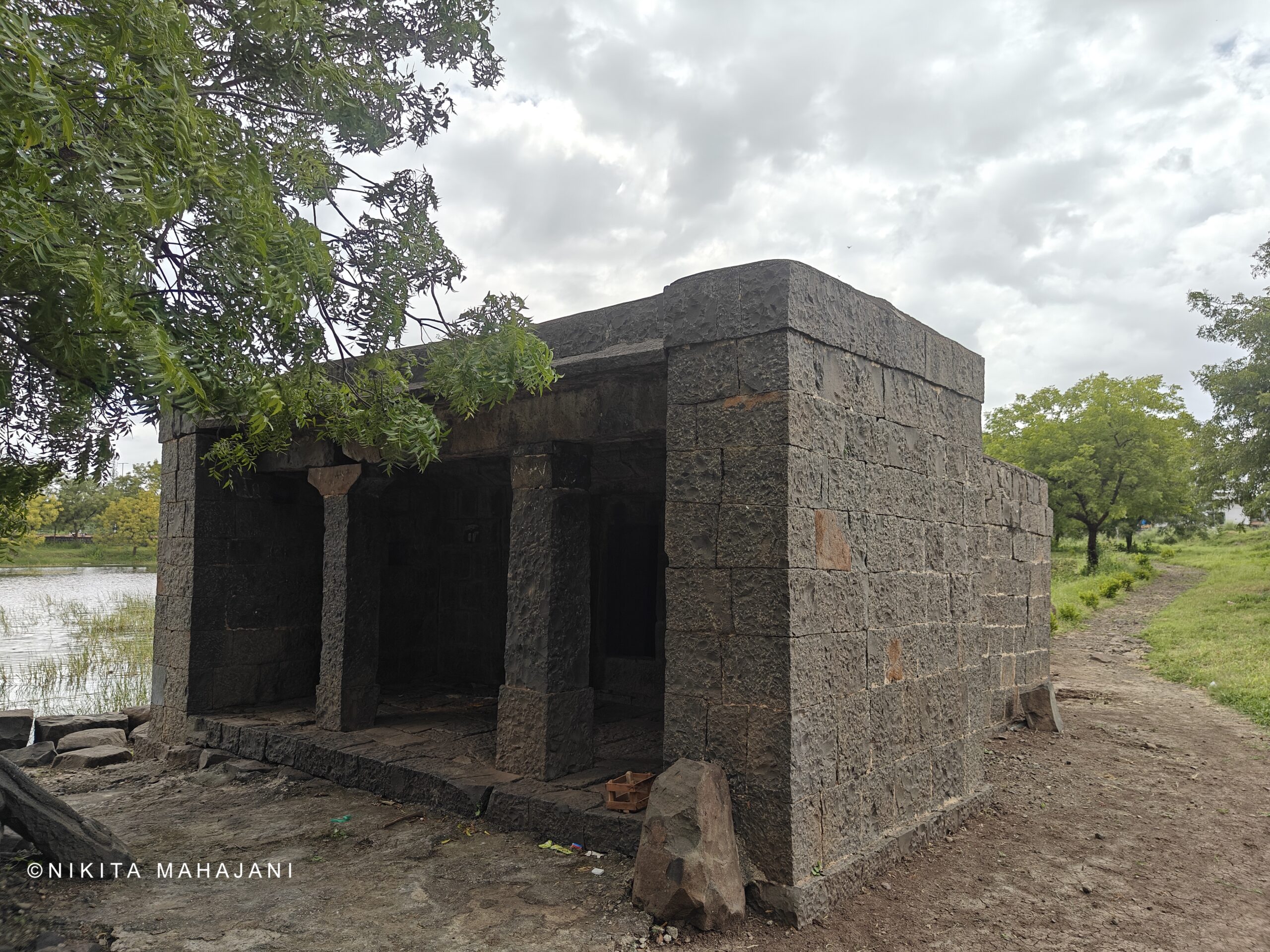
Chalukya era Shri Naath Temple, Velapur
The Chalukya era Shri Naath Temple, Velapur can be entered from three sides.
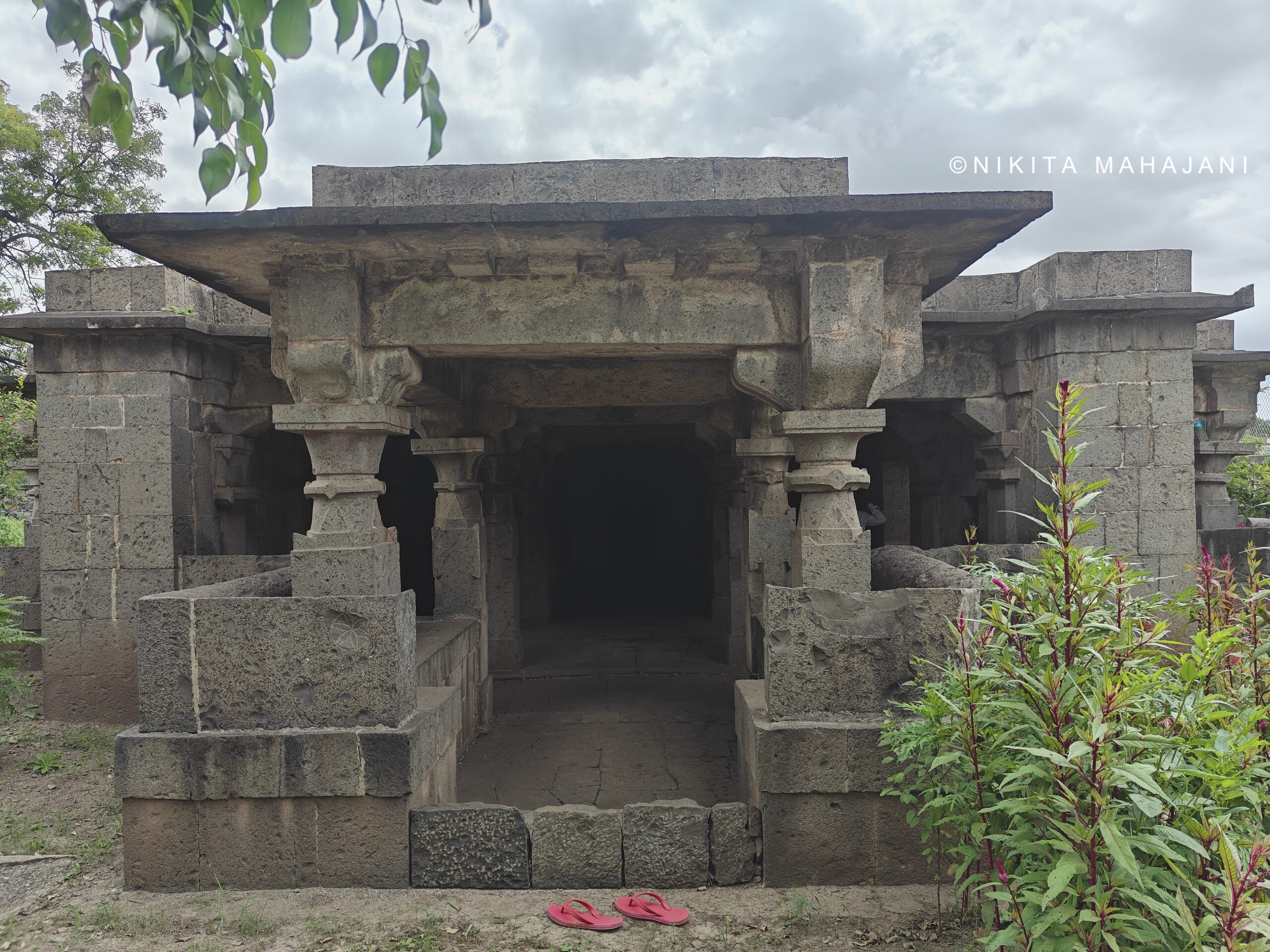
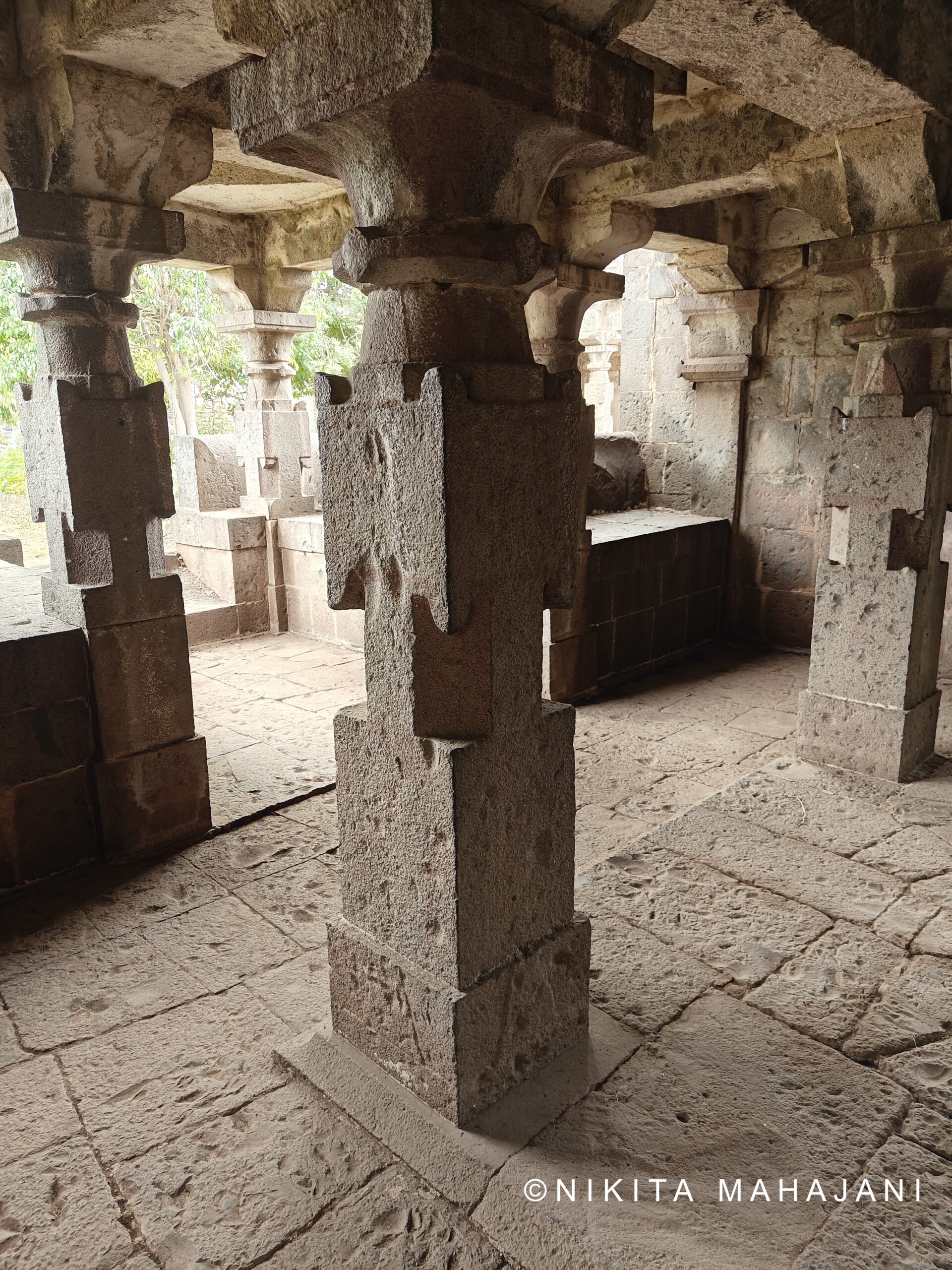
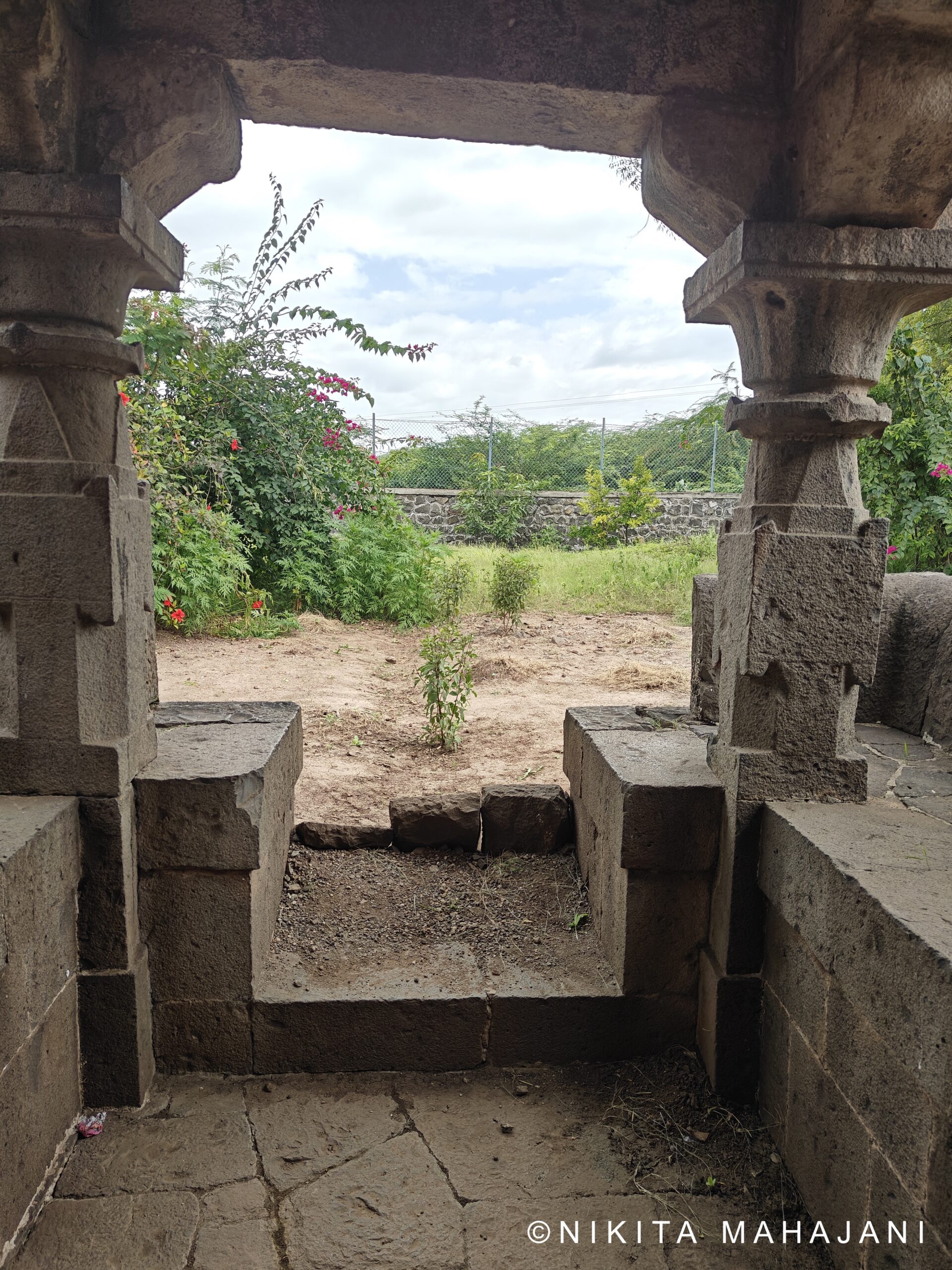
There is one more small shrine in the same plot.
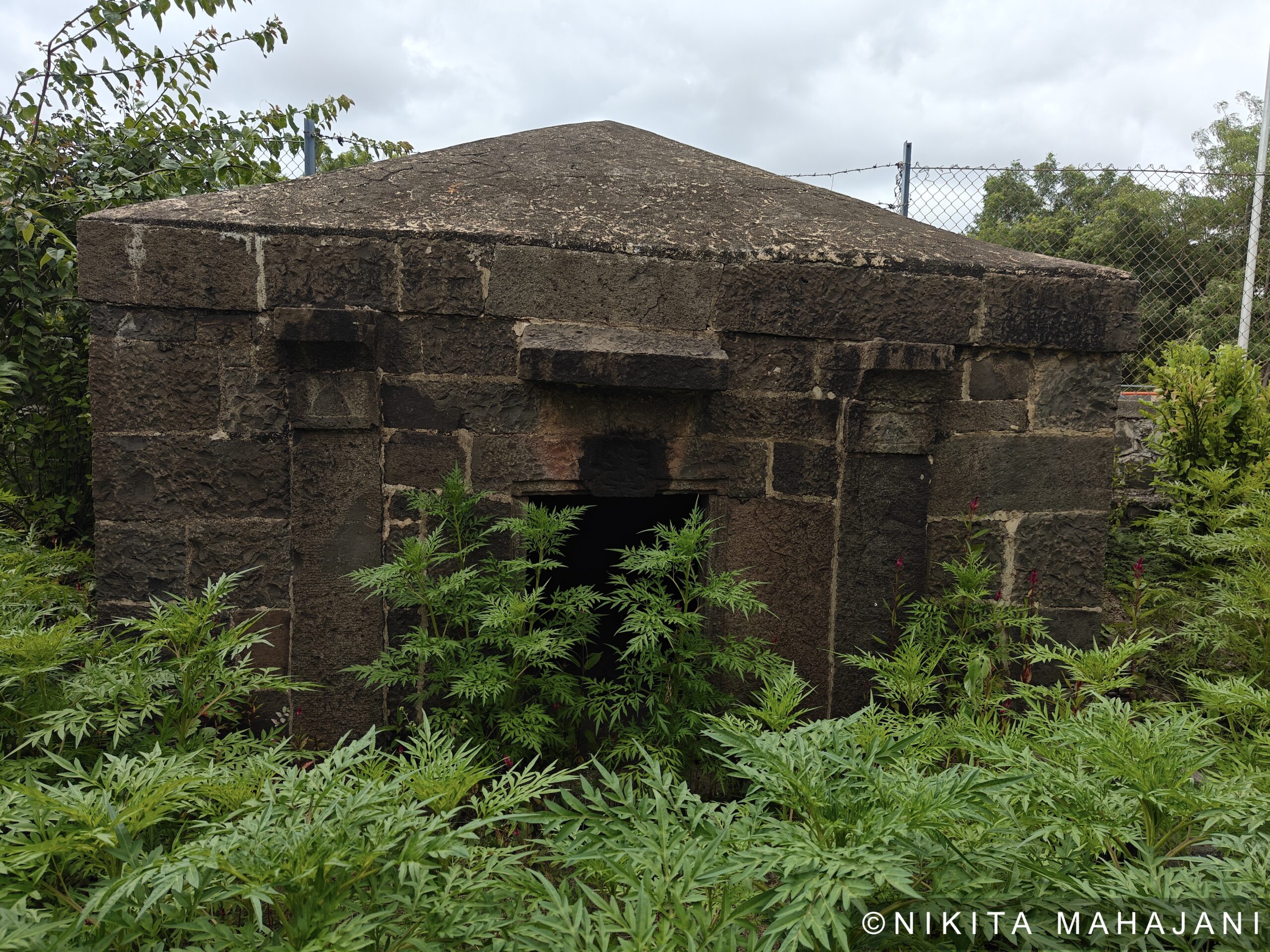
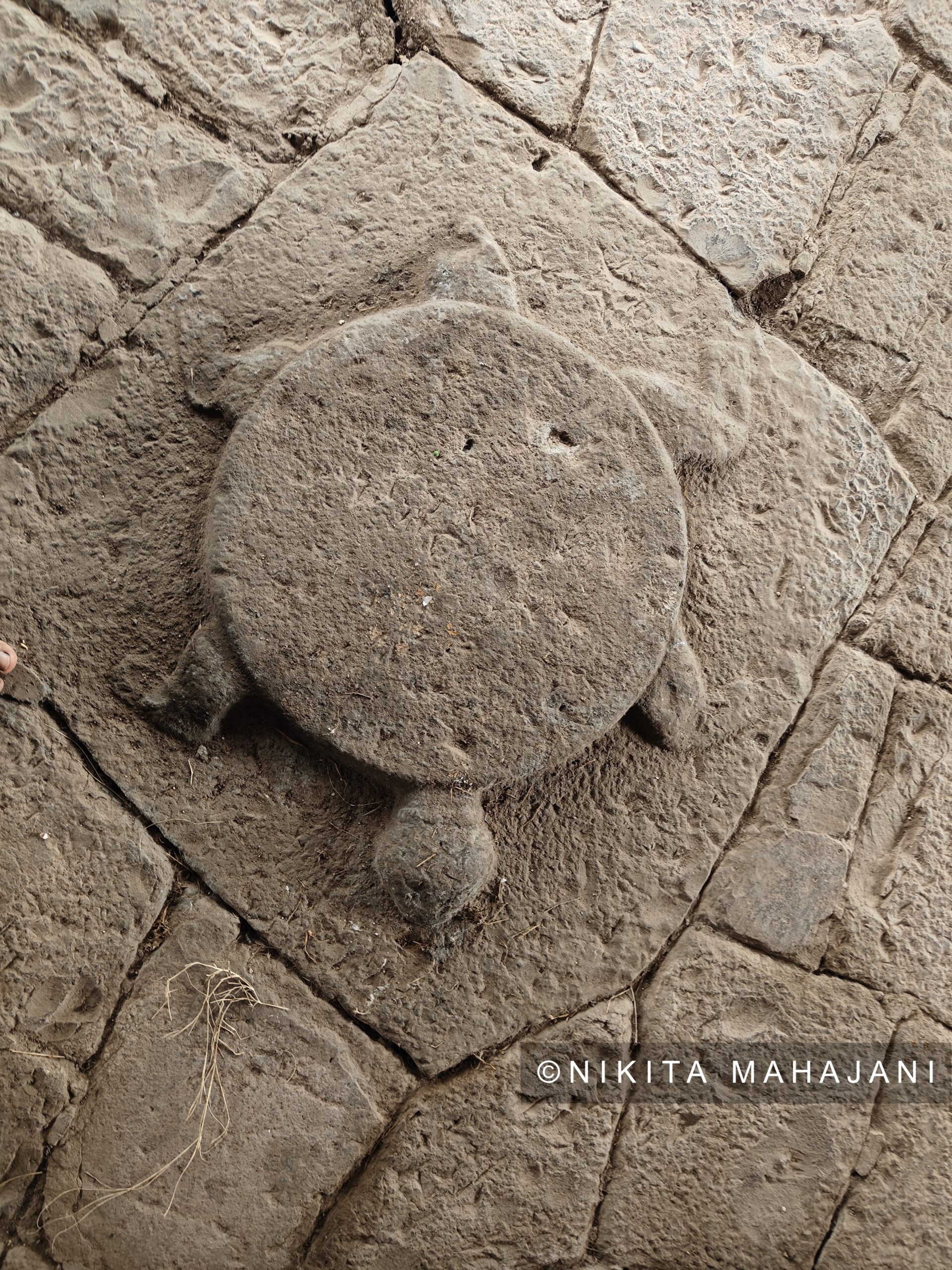
After visiting all these temple, we continued the journey back to Pune. We reached Pune at 6:30pm. That marks the end of our three days road trip to Solapur & Dharashiv.


